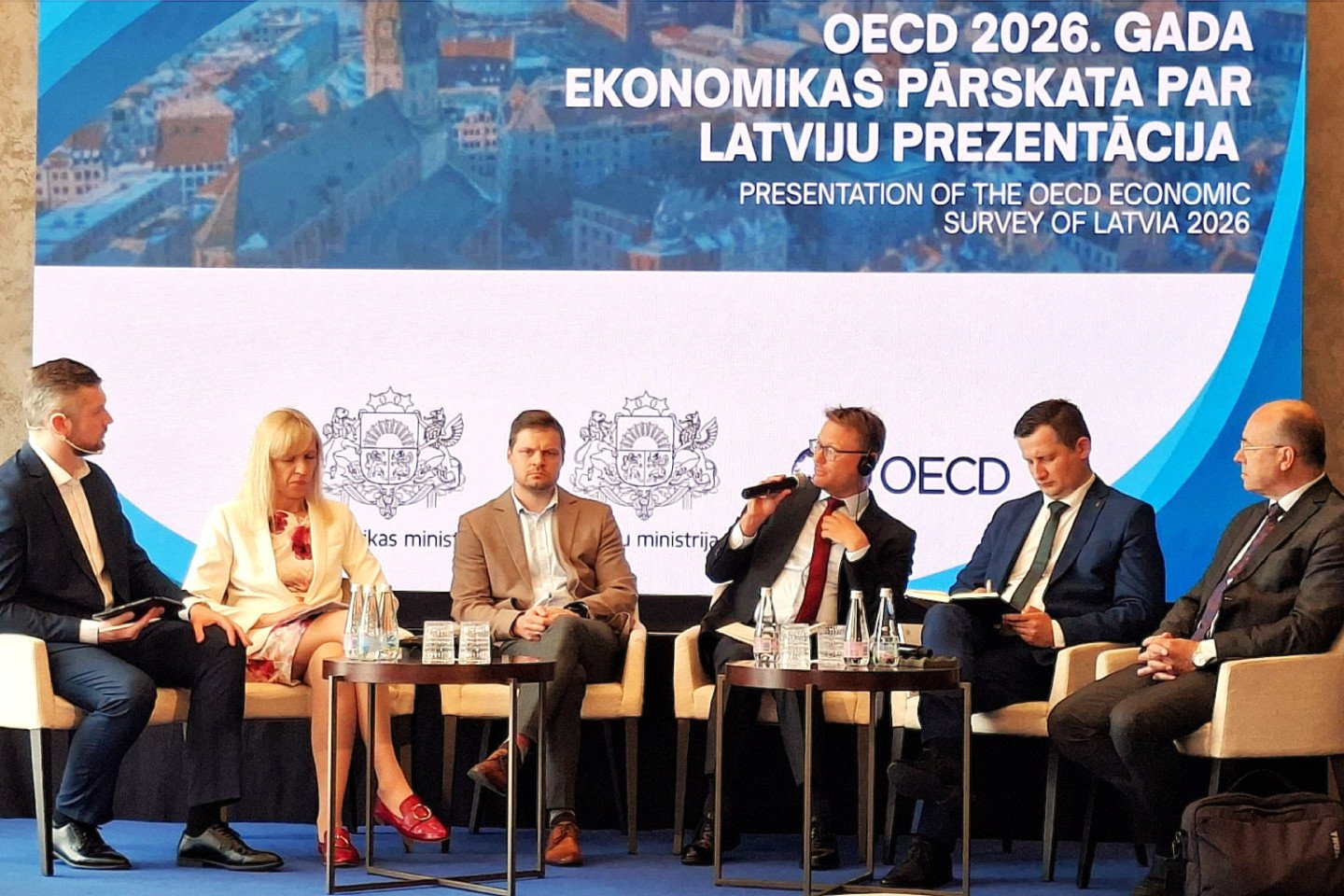
On the tenth anniversary of its participation in the Organization for Economic Cooperation and Development (OECD), Latvia received a request from this organization to raise taxes, supposedly for the benefit of the poor, but in reality so that Latvia would be able to pay its debts to international usurers.
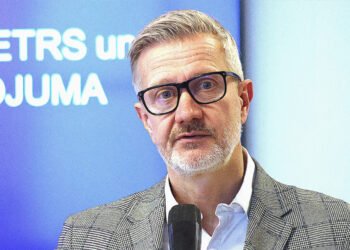
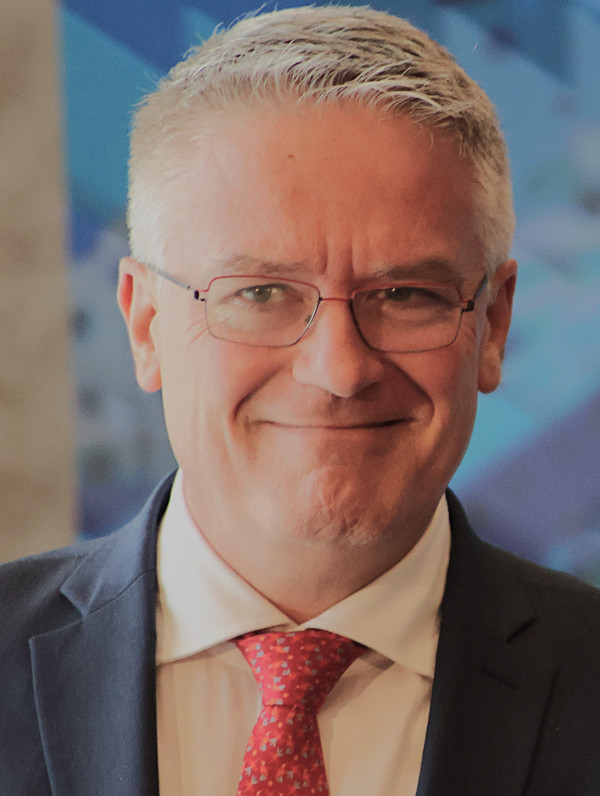
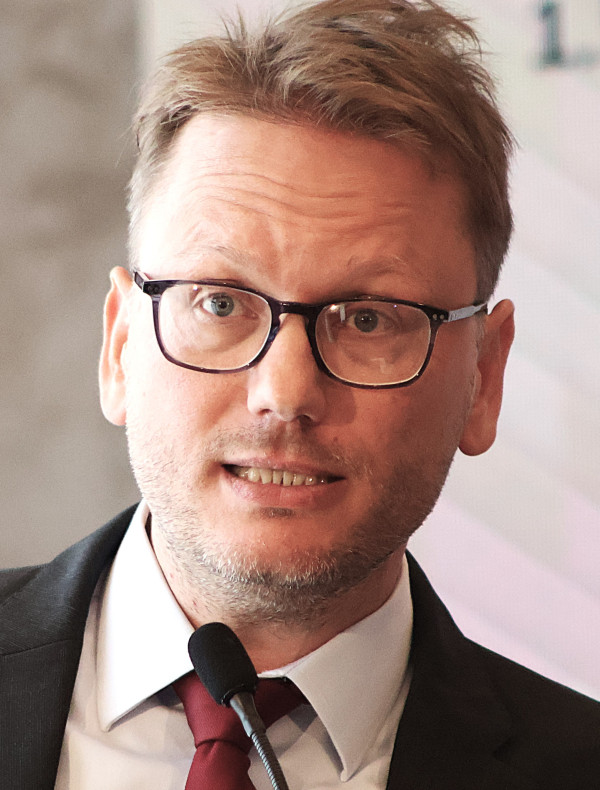
10 years and a few days have passed since June 3, 2016, “Neatkarīga” wrote that “Latvia has achieved another long-desired goal. Prime Minister Māris Kučinskis and the Secretary General of the Organization for Economic Cooperation and Development (OECD) Anhels Gurija signed an agreement on Thursday in Paris on Latvia’s entry into the elite club of rich countries.” Countries pay for membership in the club, but in return they receive a report every two years on the places in which the respective country ranks among the members of the club according to various creators. There are also recommendations on what the country should do to increase its place in these lists. The fifth report and wishes of the OECD (from the name of the organization in English, Organization for Economic Co-operation and Development) were brought to Riga by the current Secretary General of the OECD, Matias Kormans (pictured).
Latvia is reminded that the debts will have to be returned
- Korman’s address began with a greeting appropriate to the situation, including a few words in Latvian. In the continuation of expressing kindness, he noted Latvia’s success in bringing the standard of living closer to the average of OECD countries. Latvia’s economy has shown resilience in a difficult international environment, which was facilitated by reforms, including the implementation of OECD recommendations. The reforms have improved the conditions for investment and business growth. So far everything would be nice, but then he showed with words and pictures that the improvements were made on debt. Namely, Latvia’s national debt has increased and will continue to increase with the current policy, crossing the boundary line established by the European Union and recognized in Latvia, which is expressed as 60% of the gross domestic product (GDP):
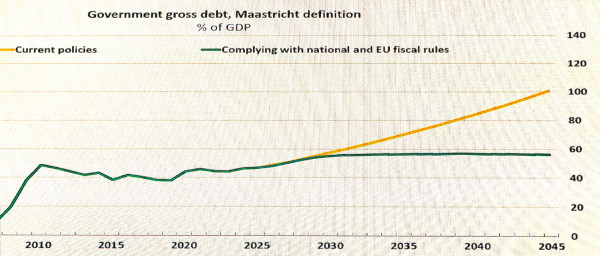
Here is a realistic assessment of both the Latvian state policy and the recommendations of the OECD itself. Although Latvia, this time in the person of Economy Minister Viktors Valaiņš, again promised to follow these recommendations, even with their help, Latvia will not be able to accelerate the GDP growth rate in line with the growth rate of the national debt, nor reduce the growth rate of public expenditure to match the GDP growth. In that case, it remains to raise taxes so that the state can pay the interest on its debt and thus convince creditors to increase loans to Latvia. Director of the Fiscal Policy Department of the Ministry of Finance, Nils Saks (not the psychotherapist Nils Saks-Konstantinovs, who uses a double surname to distinguish these people) noted that now five editions of OECD recommendations for Latvia are indeed being rewritten every time and that there has never been such an emphasis on raising taxes in these recommendations.
By referring to tax increases, the OECD shows the logical consequences of changes in Latvia’s state policy and, even more so, in the rhetoric regarding the budget deficit. Latvia entered the OECD with the slogan of a deficit-free budget as a goal that at some point seemed achievable and almost achieved. The budget deficit recorded in 2017 is 77.6 million euros and in 2019 – 45.9 million euros, which is hardly distinguishable from zero when compared to the billion or even several billion euros that Latvia now borrows every year. Climbing over the limits of the budget deficit began with the excuse of covid and with the need for military protection continues. Thanks to the OECD for warning that such policies will have consequences.
Demands money at any price
The materials provided by the OEDC include the “2026 OECD Economic Review of Latvia: Summary and Recommendations” published in Latvian. The OECD recommendations are quoted below from this document.
The document is spread over nine pages, giving way to many good wishes, with which the main wish to raise taxes is covered. For example, in the same sentence regarding the stabilization of the national debt, it is stated that “increasing the efficiency of spending” and “increasing tax revenues, including from income, property and environmental taxes, as well as strengthening tax administration and collection” are needed. Be that as it may, the disparity between such recommendations is clearly visible. We can only hold a discussion about “increasing the efficiency of expenditures”, which, regardless of how wide, loud and interesting it is, does not lead to any actions with measurable results, but “increasing tax revenues” can be expressed clearly and brightly with the sums of money in state revenues.
The quintessence of the OECD recommendations is expressed in the reasoning about local governments. If even after the merger of municipalities in 2021, “capacity limitations remain in sparsely populated and remote municipalities”, then “administrative capacity would help to be strengthened… using market values to increase real estate tax revenues”. Therefore, the problem of a lack of residents in sparsely populated areas can be solved by imposing a higher tax on those who still remain in such municipalities as individuals or at least as real estate owners who already live elsewhere.
The absurdity produced by the OECD can be explained in two ways. In the most subtle case, the OECD, in a form that does not cause direct ideological objections, organizes the crowding of the remaining population of Latvia in Riga, so that the country can return to debt collectors the money that the country is currently spending on roads. etc. for infrastructure maintenance also in the rest of the country. In a rougher version, the OECD resembles a debt collector who needs to get some amount of money from the debtor immediately and has no interest in what will happen to the debtor and his total debts afterwards. The presentation of the OECD employee responsible for Latvia, Roberts Grudke (pictured), led to the second assumption.
Why sugar and inheritance taxes are needed
OECD The arrival of 2026 in Latvia created a background against which Latvian officials can show that they understand Latvia’s problems better than foreigners. Jurgis Miezainis, the parliamentary secretary of the Ministry of Economy, mentioned Estonia, which damaged the GDP by raising the value added tax rate. This was a direct perceived objection to the OECD recommendations. It was even more instructive that he highlighted the population decline along with the decline in the birth rate as Latvia’s problem, which gave this process a fundamental character that cannot be corrected by immigration. In such a situation, the OECD comes up with two proposals for further strangulation of the birth rate. It is necessary to increase the real estate tax so that people cannot afford such a large living area, which, in general, with other favorable conditions, could lead to filling this area with children. No, the people of Latvia, according to the opinions of the OECD advisors, should live on a couple of square meters each, where no children can be squeezed in. And we should not leave too much hope for the children when the square meters that are now occupied by the grandmother become free. It turns out that what Latvia currently lacks the most is inheritance tax.
The OECD’s 2026 recommendations are a hopeless tangle of contradictory statements. It must be agreed that after raising tax rates, the implementation of tax collection measures should be followed by the restoration of general income declaration, etc. measures, but this contradicts the wishes to reduce the costs of maintaining the state apparatus. The tax increase was announced with reservations that the poor will be entitled to tax, including property tax discounts or additional benefits, which again increases the burden and size of the state apparatus. A lower tax burden on lower income leads not only to concealing the actual salary, but also to an actual lower salary for simple work for people and simple sectors of the economy in the country. The recommendation for special taxes on vodka and sugar recalls the 18-19 years. century and even earlier times, when countries filled their coffers with revenues from alcohol, salt and colonial goods.
There are two possible versions about the futility of the OECD recommendations, which agree on the assumption that these recommendations still show something. Perhaps Latvia is being shown in a crooked mirror, created by the incompetence of the OECD bureaucracy and unwillingness to delve into the problems of a dwarf country and its natives, unknown to them. But maybe the mirror is not to blame and it shows in what contradictions Latvia is entangled.