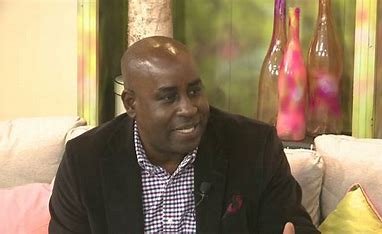
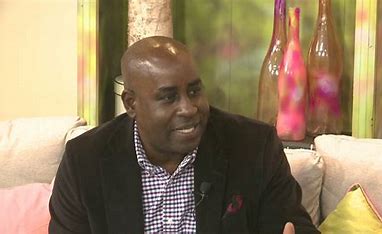


By Garfield Joseph, MMA

Father’s Day is often a day of joy—children wrapping gifts, families gathering, fathers being honored for their strength and sacrifice. Yet for many, it is also a day of silence. A day when the absence of a father is felt more sharply than ever. The empty chair at the table, the unanswered questions, the longing for a voice that never came—these are the realities for countless sons and daughters.
But into that silence comes a greater truth: there is a Father who never leaves. The Son of Man, wounded for our transgressions and bruised for our iniquities, steps into the void left by missing fathers. He carries the abandoned, comforts the forgotten, and whispers to every child, You are mine.

This is the story of Father’s Day—not only of earthly fathers who give and guide, but of the eternal Father who heals the wounds of absence and redefines what it means to be loved.

The Origin and Purpose of Father’s Day
Father’s Day began in the early 20th century, first popularized in the United States as a complement to Mother’s Day. Its purpose was simple yet profound: to honor the men who shaped lives with patience, courage, and sacrifice. Over time, it became a global tradition, reminding us that fatherhood is not merely biological—it is a calling, a responsibility, and a gift.

Here in Antigua and Barbuda, Father’s Day is marked by family gatherings, church services, and community celebrations. It is a day to pause and give thanks for the men who have stood as pillars of strength. Yet it is also a day to reflect on the deeper meaning of fatherhood, and to acknowledge those who have felt its absence.
The Pain of Missing Fathers

There are children who grew up with empty chairs at the table, birthdays without a father’s voice, milestones without his encouragement. Abandonment leaves scars that are not easily healed. It breeds questions: Why did he leave? Was I not enough? It creates a void that no material gift can fill.
The absence of a father can shape a child’s sense of worth, leaving them to wrestle with feelings of rejection and loneliness. Father’s Day, for them, is not a celebration but a reminder of what was lost. And yet, even in this pain, there is hope.
Wounded Yet Healed
The Scriptures tell us of one who was wounded for our transgressions and bruised for our iniquities. His sacrifice was not only an act of redemption but also the ultimate expression of fatherhood. For what greater love can a father show than to lay down his life for his children?
Unlike earthly fathers who may falter, this Father’s love is unbreakable. His scars are not signs of defeat but of victory—victory over sin, despair, and death itself. For those who feel abandoned, He is the Father who never leaves. For those who feel rejected, He is the Father who calls them beloved. For those who feel unworthy, He is the Father who restores dignity.
What a Father He Is
What a Father He is—our great Father! He comforts in sorrow, strengthens in weakness, and corrects in love. He is patient when we stumble, merciful when we stray, and joyful when we return. His fatherhood is not bound by time or place; it stretches across generations and nations, binding us together as His children.
He is the Father who sits with the child who wonders why their earthly father left. He is the Father who whispers, You are mine. He is the Father who turns wounds into wisdom, pain into purpose, and loneliness into belonging.
The Narrative Arc of Fatherhood
The story of Father’s Day begins with gratitude for earthly fathers. It acknowledges the pain of missing fathers. And it culminates in the revelation of the ultimate Father—the Son of Man—who embodies all that fatherhood was meant to be. His wounds tell the story of love that costs everything yet gives everything. His presence assures us that we are never abandoned. His scepter reminds us that authority is not about distance but about dwelling with us.
Thus, the arc of fatherhood moves from human to divine, from fragile to eternal, from absence to presence. It is a story that calls us to honor our fathers here on earth while lifting our eyes to the Father above.
Closing: A Call to Honor and Heal
As we celebrate Father’s Day, let us honor the men who have stood faithfully in their role. Let us also extend compassion to those who carry the pain of missing fathers. And above all, let us give thanks to our great Father, who fills every void, heals every wound, and calls every child His own.
Tomorrow, when we say “Happy Father’s Day,” may it be more than a greeting. May it be a balm for the brokenhearted, a reminder to the abandoned, and a song of praise to the Father who never leaves. For in Him, we find the fullness of fatherhood: wounded yet victorious, bruised yet merciful, present yet eternal.
What a Father He is—our great Father.
Advertise with the mоѕt vіѕіtеd nеwѕ ѕіtе іn Antigua!
We offer fully customizable and flexible digital marketing packages.
Contact us at [email protected]