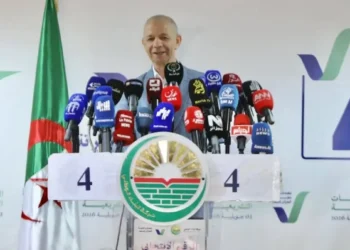
Among the first fruits of Algeria’s success in exiting the GAVI gray list:

father-in-law
Expressiveness
A new evaluation of “Gavi Moon” by 2029, and transparency measures are continuing
The declaration of suspicion is ongoing and the monitoring and rehabilitation program extends until 2029
In the first direct gains of the country’s exit from the gray list of the Financial Action Task Force (GAVI), foreign banks officially lifted any reservations or strict regulatory measures that they had imposed on financial transfers to and from Algeria, which would facilitate international financial transactions and reduce administrative burdens and additional costs that economic customers might face.
On the other hand, Algeria is preparing for a new phase called preserving this gain, by submitting, by 2029, to a new international assessment led by the Financial Action Team for the Middle East and North Africa (GAFIMOAN) according to the “GAFI” methodology for the year 2022, which focuses on measuring the effectiveness of the national system and its field results instead of being satisfied with the presence of legal texts. The relevant professional bodies have also begun implementing a preparatory program extending until 2029, which includes preparing annual risk maps, obliging the offices of auditors to create evidentiary files documenting compliance, training and oversight procedures, as well as programming the first field inspection and oversight operations in the year 2028, in preparation for this crucial international date.
Muhammad Yahyawi: This is how Algeria succeeded in the battle to maintain credibility
The President of the National Council of the National Chamber of Auditors, Mohamed Yahyaoui, considered that removing Algeria from the gray list of the International Financial Action Group (GAVI), which was approved during the group’s general meeting held in Paris on June 19, 2026, represents an important step in the path of restoring international confidence, but it does not constitute the end of the path, but rather the beginning of a new phase that requires constant vigilance and continuous proof of the effectiveness of the system for combating money laundering and terrorist financing.
Yahyaoui explained, in a statement exclusively to Echorouk, that Algeria, which had been included in the gray list since October 2024, was able to exit it after the evaluation visit conducted by FATF experts to Algeria during the month of April 2026, appreciating the collective efforts made by various public institutions, regulatory bodies, the financial sector, and concerned professionals, which allowed achieving this goal in a period not exceeding two years.
The spokesman stressed that this decision constitutes a strong message regarding the stability and transparency of the financial system and the national payment system. It also reduces the burdens that were burdening Algerian economic traders, by ending the strict control procedures that were imposed by foreign banks almost automatically on financial transfers coming from or heading to Algeria, which would restore the flow of funds and international transactions in normal conditions and improve the business and investment climate.
However, the President of the National Council of the National Chamber of Auditors stressed that maintaining this gain requires collective awareness, explaining that exit from the gray list is not a final culmination, but rather the beginning of a new phase during which Algeria will be subjected to a more stringent test within the framework of the third cycle of mutual evaluation expected on the horizon of the year 2029, which will be supervised by the Financial Action Team for the Middle East and North Africa (GAFIMOAN) in accordance with the methodology of the Financial Action Task Force for the year 2022.
Yahyawi pointed out that the next evaluation will not only focus on the availability of legal and regulatory texts, but will primarily measure the effectiveness of the national system and its ability to achieve tangible and measurable results in the field of combating money laundering and terrorist financing, which requires all actors to move from the stage of completing the legislative framework to the stage of proving actual implementation and field results.
In this context, he highlighted that bookkeepers, accounting experts, and certified accountants bear a pivotal responsibility during the next phase, as they are non-financial professions defined in accordance with the standards of the Financial Action Task Force, as well as in accordance with the provisions of Law 05-01, amended and supplemented, and the regulatory decision on combating money laundering and the financing of terrorism issued in April 2026.
He added that these professional groups are considered “early warning guards” within the financial system, as they have direct responsibilities related to prevention and detection of suspicious operations, stressing that each office is obligated to establish written internal procedures for combating money laundering and terrorist financing, appoint a compliance officer, and verify the identity of real customers and beneficiaries on a regular basis, in addition to declaring to the Financial Inquiry Processing Cell every suspicion that requires reporting in accordance with the applicable legal provisions.
In this context, the President of the National Council of the National Chamber of Accountants announced the launch of a multi-year work program extending from 2026 to 2029, which aims to prepare the profession for the next international maturity and enhance its readiness for evaluation requirements.
He explained that this program is based on four basic axes: preparing and disseminating sectoral guidelines for the benefit of professional offices, promoting compulsory continuous training by including the patterns and methods associated with money laundering operations prevailing in the Algerian economic fabric, in addition to establishing a system for supervision and control of members of the profession supported by statistics and indicators that can be exploited during evaluation processes, in addition to obligating each office to prepare an integrated evidentiary file that includes approved procedures, training records, supervisory work, and completed statements.
Yahyaoui called on all auditors to immediately engage in this path, stressing that the credibility of the Algerian financial arena, which was restored after great efforts, will depend in the coming years on the ability of each professional to provide evidence, documents and statistics that prove his actual commitment to the requirements of combating money laundering and the financing of terrorism.
The speaker concluded by emphasizing that early preparation and proactive action constitute the basic guarantee for preserving the gains achieved and avoiding any risks that may lead in the future to re-listing Algeria on the lists subject to international monitoring.
Details of the program and preparations to undergo the new assessment within 3 years
On the other hand, a five-page guidance document prepared by the National Council of the National Chamber of Account Governors, of which Echorouk received a copy, revealed an action plan extending until the year 2029 aimed at strengthening the compliance of auditor offices with the requirements of combating money laundering and the financing of terrorism, in anticipation of the third cycle of mutual assessment to which Algeria will be subjected in accordance with the methodology of the International Financial Action Task Force (GAFI) for the year 2022.
These guidelines came directly after the official announcement of Algeria’s removal from the FATF gray list on June 19, 2026. The document considered that this decision represents the end of the reform and recovery phase and the beginning of a new phase based on consolidating the gains and ensuring their sustainability until the next evaluation date expected on the horizon of the year 2029.
The document confirmed that the upcoming evaluation will not only focus on the existence of legal and regulatory texts related to combating money laundering and terrorist financing, but will focus primarily on the effectiveness of the national system and its practical effectiveness, by measuring the results achieved on the ground in accordance with approved international standards.
In this context, the document stressed that bookkeepers are among the designated non-financial professions directly concerned with the requirements of combating money laundering and terrorist financing, especially with regard to preventive measures, declaring suspicious operations, and contributing to enhancing the transparency of the true beneficiaries of companies and economic entities.
According to the document, all offices will be required to adopt an approach based on risk assessment, by preparing a risk map that will be updated at least annually, taking into account the nature of clients, contribution structures, real beneficiaries, and politically exposed persons, as well as the risks of sensitive sectors such as real estate, import and export, construction, and trade in high-value goods.
The evaluation process also includes studying the risks associated with high-risk countries and regions and cross-border transfers, in addition to complex or economically unjustified operations and reliance on intermediaries or remote means of dealing.
The document stipulates the adoption of three levels of control and vigilance, including simplified vigilance for low-risk cases, regular vigilance as the default system, and then enhanced vigilance for clients and operations classified as high risk.
Mandatory internal procedures for all bookkeepers
The National Chamber obligated all offices, regardless of their size, to prepare written internal procedures for combating money laundering and terrorist financing, with the appointment of a compliance officer who will be the official address of the Financial Inquiry Processing Cell.
It also stressed the necessity of verifying the identity of clients and real beneficiaries from the beginning of the professional relationship, and retaining supporting documents throughout the legal deadlines, in addition to following up on unusual operations and subjecting them to continuous examination and analysis.
The new commitments also included organizing periodic training courses for employees and partners, and developing an internal control system that allows proving the actual application of the approved procedures.
The document devoted important space to the issue of declaring suspicion, considering it one of the most prominent indicators that international evaluators rely on when evaluating the effectiveness of the national system.
It warned that recording a very weak or almost non-existent number of statements issued by the profession may be interpreted as a deficiency in the control system, and not as evidence of the integrity of transactions or the integrity of clients.
Among the suspicious indicators mentioned in the document are the extensive and unjustified use of cash, the disproportion between declared activity and financial flows, operations that lack a clear economic logic, the refusal to reveal the identity of the real beneficiary, in addition to unjustified increases in capital or the creation of complex legal structures without clear justification.
She also stressed that a declaration of suspicion must be made as soon as the professional becomes suspicious, regardless of the value of the operation, while adhering to complete confidentiality and not informing the client, while decisions not to declare must also be documented and justified.
The document revealed a work program extending from 2026 to 2029, which begins with adopting guidelines and appointing compliance officers within offices, then launching mandatory training programs and providing practical tools that include models for risk maps and warning indicators.
Implementing the first inspections and oversight of offices, scheduled for 2028
In the year 2028, the first thematic inspections and oversight of offices will begin and the preparation of professional statistics on the level of compliance and the number of suspicious statements will begin, with the year 2029 being allocated to the final preparation for the international evaluation by simulating the evaluation processes and collecting the required evidence and documents.
The document concluded by emphasizing that preserving the gains achieved by Algeria by exiting the gray list requires collective and continuous mobilization from various actors, calling on the offices of auditors to begin forming integrated evidentiary files documenting all procedures, formations, oversights, and decisions taken during the period extending from 2026 to 2029.