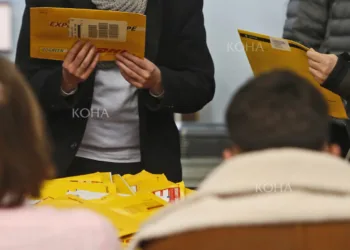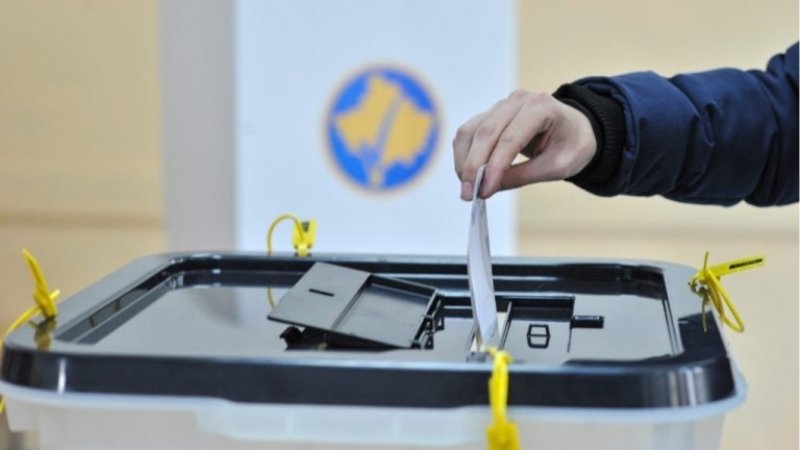
Within ten days, the counting of all the votes of the June 7 elections was completed.
The Vetëvendosje movement, as the first entity, received 382 thousand 865 votes or 47.13 percent of the total, a result that provides 53 seats in the Assembly.
The Democratic Party won 157 thousand 893 thousand votes or 19.44 percent and secured 22 mandates.
The Democratic League has received 135 thousand 559 votes or 16.69 percent, which translate into 18 seats, while the Alliance has won 54 thousand 731 votes or 6.74 percent, which secures 7 seats in the Assembly.
Counting of postal votes, conditional votes and those from the Voters with Special Needs Program was also completed on Wednesday.
The next step in the process is recounting. The CEC’s plan is to include about 8 percent of ballot boxes in this process.
With this distribution of mandates, the Vetëvendosje Movement has the opportunity to form the government without the need for a coalition with other Albanian parties.
But for the election of the president, an issue for which the country went to early elections, an agreement between the political parties is needed.
With the 53 deputies of Vetëvendosje and the 10 deputies of the non-Serb communities, an agreement with the PDK would ensure 85 votes in the Assembly.
This number agrees with the position of the chairman of the LVV, Albin Kurti, who during the efforts to elect the president in April had stated that a quorum of 85 or 86 deputies provides security for a successful process.
An agreement with the LDK would secure 81 votes, just one more than the constitutional minimum of 80 deputies needed to consume the first and second rounds of voting for president.
More difficult is the possibility of forming a government without Self-determination.
PDK, LDK and AAK together have 47 deputies.
To secure a majority of 61 votes, they would need 14 more deputies, which means that, in addition to the non-Serb communities, the votes of the Serbian List would also be needed.
After the terrorist attack in Banjska in 2023, the Albanian parties did not cooperate with the Serbian List, as its former vice-president, Milan Radoicic, took responsibility for organizing the attack where Sergeant Afrim Bunjaku was killed.