Friday, June 19, 2026
    The GeoStrategic Consensus
    No Result
    View All Result
    • Login
    • HOME
    • AMERICAS
      • Argentina
      • Brazil
      • Canada
      • Chile
      • Colombia
      • Costa Rica
      • Cuba
      • Dominican Republic
      • Ecuador
      • El Salvador
      • Greenland
      • Guatemala
      • Honduras
      • Mexico
      • Nicaragua
      • Panama
      • Paraguay
      • Peru
      • United States
      • Uruguay
      • Venezuela
    • ASIA-PACIFIC
      • Australia
      • Brunei Darussalam
      • Cambodia
      • China
      • Federated States of Micronesia
      • Fiji
      • Indonesia
      • Japan
      • Kiribati
      • Laos
      • Malaysia
      • Marshall Islands
      • Mongolia
      • Myanmar
      • Nauru
      • New Zealand
      • North Korea
      • Palau
      • Papua New Guinea
      • Philippines
      • Samoa
      • Singapore
      • Solomon Islands
      • South Korea
      • Taiwan
      • Thailand
      • Timor-Leste
      • Tonga
      • Tuvalu
      • Vanuatu
      • Vietnam
    • CARICOM
      • CARICOM – Non-English
        • Haiti
        • Suriname
      • CARICOM Associates
        • Anguilla
        • Bermuda
        • British-Virgin-Islands
        • Cayman-Islands
        • Curacao
        • Turks-and-Caicos
      • CARICOM English
        • Antigua and Barbuda
        • Barbados
        • Belize
        • Dominica
        • Grenada
        • Guyana
        • Jamaica
        • Montserrat
        • Saint Kitts and Nevis
        • Saint Lucia
        • Saint Vincent and the Grenadines
        • The Bahamas
        • Trinidad and Tobago
    • EURASIA
      • Armenia
      • Azerbaijan
      • Balarus
      • Georgia
      • Kazakhstan
      • Kyrgyzstan
      • Moldova
      • Russia
      • Tajikistan
      • Turkmenistan
      • Ukraine
      • Uzbekistan
    • EUROPE
      • Albania
      • Andorra
      • Austria
      • Bosnia and Herzegovina
      • Bulgaria
      • Croatia
      • Cyprus
      • Czech Republic
      • Denmark
      • Estonia
      • Finland
      • France
      • Germany
      • Greece
      • Holy See
      • Hungary
      • Iceland
      • Ireland
      • Italy
      • Kosovo
      • Latvia
      • Liechtenstein
      • Lithuania
      • Luxembourg
      • Malta
      • Monaco
      • Montenegro
      • Netherlands
      • North Macedonia
      • Norway
      • Poland
      • Portugal
      • Romania
      • San Marino
      • Serbia
      • Slovakia
      • Slovenia
      • Spain
      • Sweden
      • Switzerland
      • United Kingdom
    • MIDDLE EAST AND NORTH AFRICA
      • Algeria
      • Bahrain
      • Egypt
      • Iran
      • Iraq
      • Israel
      • Jordan
      • Kuwait
      • Lebanon
      • Lybia
      • Morocco
      • Oman
      • Palestinian Territories
      • Qatar
      • Saudi Arabia
      • Syria
      • Tunisia
      • Turkey
      • United Arab Emirates
      • Western Sahara
      • Yemen
    • SOUTH ASIA
      • Afghanistan
      • Bangladesh
      • Bhutan
      • India
      • Maldives
      • Nepal
      • Pakistan
      • Sri Lanka
    • SUB-SAHARAN AFRICA
      • Angola
      • Benin
      • Botswana
      • Burkina Faso
      • Burundi
      • Cabo Verde
      • Cameroon
      • Central African Republic
      • Chad
      • Comoros
      • Cote d’Ivoire
      • Democratic Republic of the Congo
      • Djibouti
      • Equatorial Guinea
      • Eritrea
      • Eswatini
      • Ethiopia
      • Gabon
      • Gambia
      • Ghana
      • Guinea
      • Guinea Bissau
      • Kenya
      • Lesotho
      • Liberia
      • Madagascar
      • Malawi
      • Mali
      • Mauritania
      • Mauritius
      • Mozambique
      • Namibia
      • Niger
      • Nigeria
      • Republic of the Congo
      • Rwanda
      • Sao Tome and Principe
      • Senegal
      • Seychelles
      • Sierra Leone
      • Somalia
      • South Africa
      • South Sudan
      • Sudan
      • Tanzania
      • Togo
      • Uganda
      • Zambia
      • Zimbabwe
    • HOME
    • AMERICAS
      • Argentina
      • Brazil
      • Canada
      • Chile
      • Colombia
      • Costa Rica
      • Cuba
      • Dominican Republic
      • Ecuador
      • El Salvador
      • Greenland
      • Guatemala
      • Honduras
      • Mexico
      • Nicaragua
      • Panama
      • Paraguay
      • Peru
      • United States
      • Uruguay
      • Venezuela
    • ASIA-PACIFIC
      • Australia
      • Brunei Darussalam
      • Cambodia
      • China
      • Federated States of Micronesia
      • Fiji
      • Indonesia
      • Japan
      • Kiribati
      • Laos
      • Malaysia
      • Marshall Islands
      • Mongolia
      • Myanmar
      • Nauru
      • New Zealand
      • North Korea
      • Palau
      • Papua New Guinea
      • Philippines
      • Samoa
      • Singapore
      • Solomon Islands
      • South Korea
      • Taiwan
      • Thailand
      • Timor-Leste
      • Tonga
      • Tuvalu
      • Vanuatu
      • Vietnam
    • CARICOM
      • CARICOM – Non-English
        • Haiti
        • Suriname
      • CARICOM Associates
        • Anguilla
        • Bermuda
        • British-Virgin-Islands
        • Cayman-Islands
        • Curacao
        • Turks-and-Caicos
      • CARICOM English
        • Antigua and Barbuda
        • Barbados
        • Belize
        • Dominica
        • Grenada
        • Guyana
        • Jamaica
        • Montserrat
        • Saint Kitts and Nevis
        • Saint Lucia
        • Saint Vincent and the Grenadines
        • The Bahamas
        • Trinidad and Tobago
    • EURASIA
      • Armenia
      • Azerbaijan
      • Balarus
      • Georgia
      • Kazakhstan
      • Kyrgyzstan
      • Moldova
      • Russia
      • Tajikistan
      • Turkmenistan
      • Ukraine
      • Uzbekistan
    • EUROPE
      • Albania
      • Andorra
      • Austria
      • Bosnia and Herzegovina
      • Bulgaria
      • Croatia
      • Cyprus
      • Czech Republic
      • Denmark
      • Estonia
      • Finland
      • France
      • Germany
      • Greece
      • Holy See
      • Hungary
      • Iceland
      • Ireland
      • Italy
      • Kosovo
      • Latvia
      • Liechtenstein
      • Lithuania
      • Luxembourg
      • Malta
      • Monaco
      • Montenegro
      • Netherlands
      • North Macedonia
      • Norway
      • Poland
      • Portugal
      • Romania
      • San Marino
      • Serbia
      • Slovakia
      • Slovenia
      • Spain
      • Sweden
      • Switzerland
      • United Kingdom
    • MIDDLE EAST AND NORTH AFRICA
      • Algeria
      • Bahrain
      • Egypt
      • Iran
      • Iraq
      • Israel
      • Jordan
      • Kuwait
      • Lebanon
      • Lybia
      • Morocco
      • Oman
      • Palestinian Territories
      • Qatar
      • Saudi Arabia
      • Syria
      • Tunisia
      • Turkey
      • United Arab Emirates
      • Western Sahara
      • Yemen
    • SOUTH ASIA
      • Afghanistan
      • Bangladesh
      • Bhutan
      • India
      • Maldives
      • Nepal
      • Pakistan
      • Sri Lanka
    • SUB-SAHARAN AFRICA
      • Angola
      • Benin
      • Botswana
      • Burkina Faso
      • Burundi
      • Cabo Verde
      • Cameroon
      • Central African Republic
      • Chad
      • Comoros
      • Cote d’Ivoire
      • Democratic Republic of the Congo
      • Djibouti
      • Equatorial Guinea
      • Eritrea
      • Eswatini
      • Ethiopia
      • Gabon
      • Gambia
      • Ghana
      • Guinea
      • Guinea Bissau
      • Kenya
      • Lesotho
      • Liberia
      • Madagascar
      • Malawi
      • Mali
      • Mauritania
      • Mauritius
      • Mozambique
      • Namibia
      • Niger
      • Nigeria
      • Republic of the Congo
      • Rwanda
      • Sao Tome and Principe
      • Senegal
      • Seychelles
      • Sierra Leone
      • Somalia
      • South Africa
      • South Sudan
      • Sudan
      • Tanzania
      • Togo
      • Uganda
      • Zambia
      • Zimbabwe
    No Result
    View All Result
    Agentially
    No Result
    View All Result
    Home MIDDLE EAST and NORTH AFRICA Lebanon

    After the agreement with America…what model awaits the Third Islamic Republic?

    The Analyst by The Analyst
    June 19, 2026
    in Lebanon
    After the agreement with America…what model awaits the Third Islamic Republic?


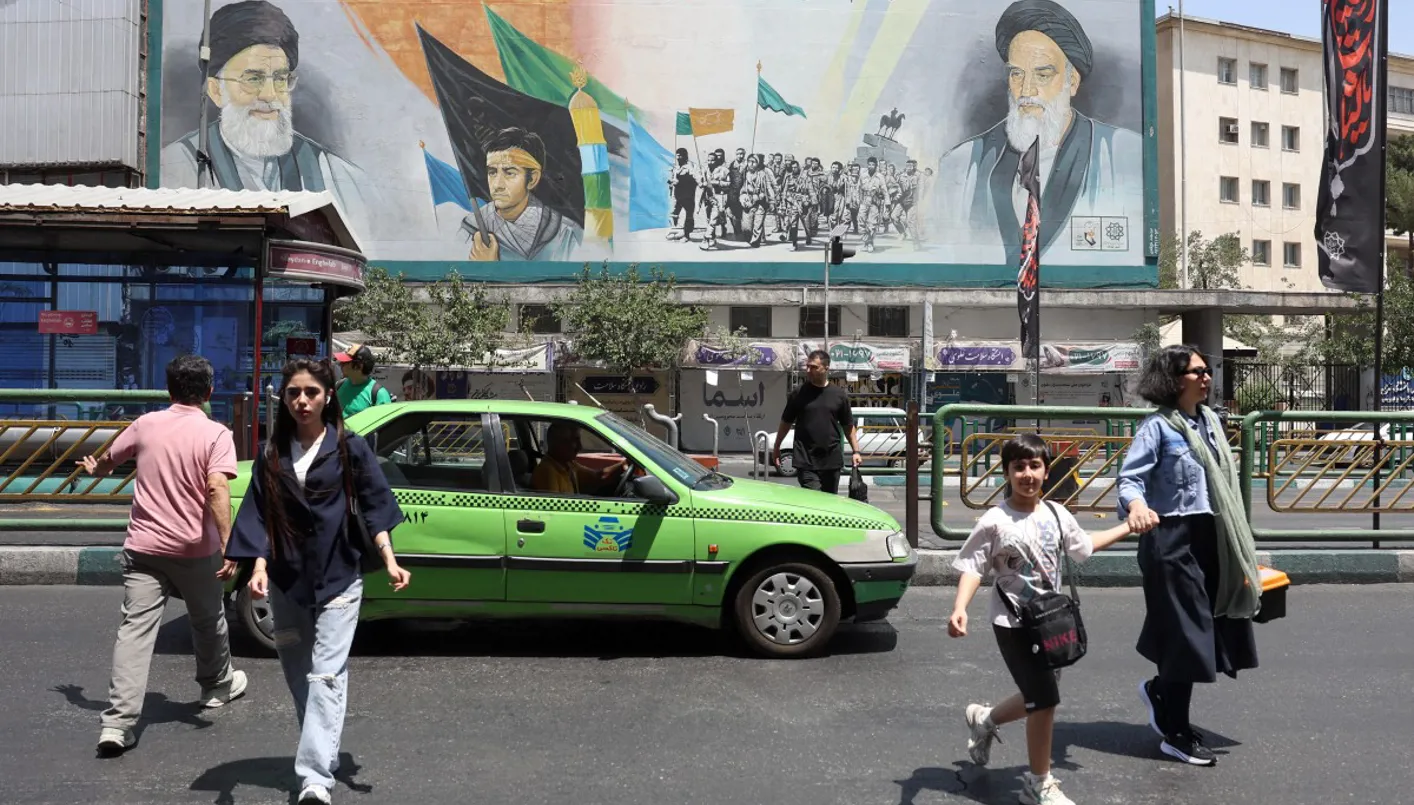
    With the entry of the memorandum of understanding between Iran andUS In effect, attention is turning beyond termination Wartowards the most important question related to the future of the Islamic Republic and the nature of governance in its new phase.

    READ ALSO

    The first round of negotiations between the United States and Iran ‘will not be held’ in Switzerland today… Cancellation of the flights of Vance and the Iranian delegation

    Oil prices rise amid fears of instability

    This memorandum has sparked, and continues to raise, many discussions, starting with opposition Israel And extremists inside Iran, leading to questions about whether the negotiations between the two countries during the next 60 days will lead to a comprehensive agreement, and whether their failure might open the door to a new confrontation.

    But the most important question goes beyond the fate of the negotiations themselves, and relates to the shape of the political system in the next stage, a stage that some describe as the “Third Republic” in Iran’s history.

    This era began with the assassination of the Supreme Leader, Ayatollah Sayyed Ali Khamenei And the succession of his son Mojtaba Khamenei For him, in parallel with the American-Israeli war on Iran, during which a number of senior military and security officials were killed. Some experts believe that the Islamic Republic has found itself facing a new reality, and has become more restricted in its internal and external roles, while some of its officials, at least, have realized that some previous policies were not effective enough.

    On the other hand, the war revealed some elements of Iranian power and tested them practically, most notably missile capabilities and control over… Strait of Hormuz.

    Challenges of the new stage

    The biggest challenge facing Iran is the style of governance, especially in the political and economic spheres. Many are asking a basic question: Will the new leadership that has not yet emerged publicly manage the Islamic Republic in its third phase in the manner that has prevailed for decades? Or will it make fundamental changes to its policies?

    Some analysts believe that the signing of the memorandum of understanding between the two American presidents Donald Trump And Iranian Masoud BazeshkianThis is unprecedented since the Islamic Revolution, and constitutes a pivotal event that “may lead to broader transformations in the future.” On the other hand, others consider that this signing “came as a result of the necessity to end the war, and that Tehran “After a while, it may return to its previous approach.”

    To answer this question, we can benefit from the experiences of Iran’s two main allies: Russia And China.

    The future of the Islamic Republic after this understanding, and perhaps after the possible final agreement within two months, depends on five main variables: the internal power structure, the economic situation, and the role of the Islamic Republic. Revolutionary Guard And the security institutions in running the country, the social pressure and public discontent that turned into bloody unrest last June, and the degree of Iran’s integration into the global economy.

    Soviet scenario…structural collapse

    The model of the collapse of the Soviet Union is repeated in Iran if several conditions are met.

    First, the Iranian economy, due to US sanctions, corruption, and weak management, will become chronically unable to meet the needs of the state and society.

    Secondly, the ideology of the Guardianship of the Jurist loses its ability to produce political legitimacy.

    Third, the division between political elites will deepen and cohesion within power will decline.

    When external pressures coincide with internal crises, a structural collapse may occur similar to what happened in the Soviet Union after the policies of glasnost and perestroika during the era of Mikhail Gorbachev, which ended with the collapse of the Union and the Eastern Bloc.

    However, the data indicate that the probability of this scenario being realized is not high, because the factors of disintegration are still weaker than the factors of cohesion. The success of the understanding with Washington in reviving the economy and improving the financial situation may limit the possibilities of collapse, even in the absence of political reforms.
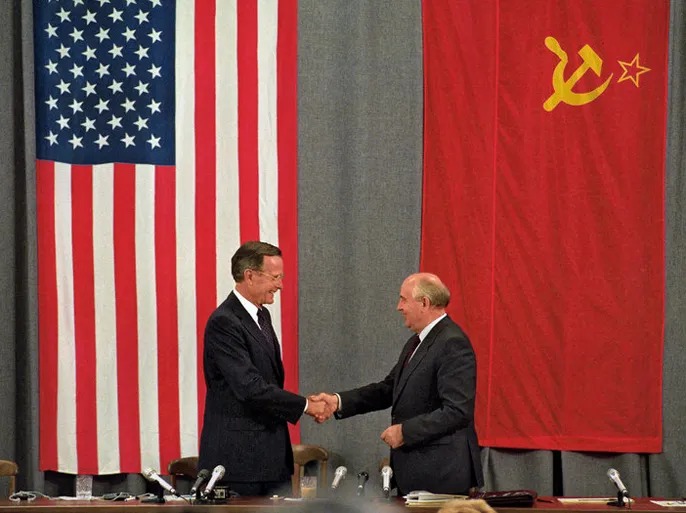
    Former Soviet President Mikhail Gorbachev (right) shakes hands with former US President George H. W. Bush in Moscow, July 1991. (Reuters)

    Former Soviet President Mikhail Gorbachev (right) shakes hands with former US President George H. W. Bush in Moscow, July 1991. (Reuters)

    The Chinese scenario: an open economy and a closed policy

    The Chinese model after Mao Zedong is based on maintaining the existing political structure with economic openness and attracting foreign investments, without a parallel transition towards political openness.

    This scenario seems more realistic than the Soviet scenario, because the new leadership and the Revolutionary Guard, which today enjoy broad influence within the regime, may be willing to accept economic reforms, but without risking opening the political space.

    However, the success of this option requires three basic conditions:

    First, to lead the agreement with America To reduce penalties.
    Secondly, Iran must succeed in attracting large foreign investments.
    Third, the security institutions, especially the Revolutionary Guard, should allow increased economic competitiveness and reduce monopolies.

    But the basic difference between current Iran and…China Following Mao is that Beijing It had one very cohesive party and a clear decision-making center, while Iran includes multiple centers of power that sometimes intersect and conflict at other times.

    The third way…the most likely model

    In many analyses, the most likely path appears to be neither complete collapse nor a shift to an Iranian version of the Chinese model, but rather a hybrid model that combines elements of both.

    This model is based on four main features:

    1- Limited economic liberalization without fundamental political changes.
    2- Intensification of competition between internal wings over sources of influence and wealth.
    3- Intermittent economic growth interspersed with periodic crises.
    4- External tension decreased in some stages and returned in other stages, which may lead to crises or even new wars.

    Thus, Iran may find itself in the medium term suspended between a more open economy and a more closed policy, until the new balance of power within the regime crystallizes.

    However, if the economy remains captive to corruption, monopoly, rent-seeking, and state hegemony, and does not move towards competition and transparency, and if the political sphere continues to be subject to ideology, the exclusion of opponents, and the political oligarchy, then the Islamic Republic, in its third phase, will likely face deeper crises in the coming years.

    Source link

    Related Posts

    The first round of negotiations between the United States and Iran ‘will not be held’ in Switzerland today… Cancellation of the flights of Vance and the Iranian delegation
    Lebanon

    The first round of negotiations between the United States and Iran ‘will not be held’ in Switzerland today… Cancellation of the flights of Vance and the Iranian delegation

    June 19, 2026
    Oil prices rise amid fears of instability
    Lebanon

    Oil prices rise amid fears of instability

    June 18, 2026
    Gold prices stabilize after notable increases
    Lebanon

    Gold prices stabilize after notable increases

    June 18, 2026
    Al-Nahar morning: Lebanon is on the hot plate and America has lost the trust of its allies… Will Iran enter the post-revolution phase?
    Lebanon

    Al-Nahar morning: Lebanon is on the hot plate and America has lost the trust of its allies… Will Iran enter the post-revolution phase?

    June 18, 2026
    Israeli raids on Lebanon despite the agreement to end the war
    Lebanon

    Israeli raids on Lebanon despite the agreement to end the war

    June 18, 2026
    Is Netanyahu trying to obstruct the US-Iranian agreement through Lebanon again?
    Lebanon

    Is Netanyahu trying to obstruct the US-Iranian agreement through Lebanon again?

    June 18, 2026
    Next Post

    The Islah Party in Aqaba celebrates Sitting Day and Army Day

    POPULAR NEWS

    Second round results Peru 2026 Elections LIVE: ONPE count, electoral flash and who wins between Keiko Fujimori and Roberto Sánchez today, June 7

    Second round results Peru 2026 Elections LIVE: ONPE count, electoral flash and who wins between Keiko Fujimori and Roberto Sánchez today, June 7

    June 19, 2026
    Over 6m Afghans returned from Pakistan, Iran since 2023: UNHCR – Pajhwok Afghan News

    Over 6m Afghans returned from Pakistan, Iran since 2023: UNHCR – Pajhwok Afghan News

    June 18, 2026
    Trump and doctors signed the memorandum of understanding between Iran and America virtually

    Trump and doctors signed the memorandum of understanding between Iran and America virtually

    June 18, 2026
    What to Know About Canada’s New Citizenship Eligibility Requirements and How to Apply

    What to Know About Canada’s New Citizenship Eligibility Requirements and How to Apply

    June 18, 2026
    Police stop attempted removal of fisheries generator in Afio

    Police stop attempted removal of fisheries generator in Afio

    June 19, 2026

    EDITOR'S PICK

    Magnitude 4.6 aftershock jolts Sarangani

    Magnitude 4.6 aftershock jolts Sarangani

    June 18, 2026
    Singapore to push for wider regional AI adoption, cross-border data flows as ASEAN chair

    Singapore to push for wider regional AI adoption, cross-border data flows as ASEAN chair

    June 18, 2026
    Tageblatt.lu | Room | Le Luxembourg devient le deuxième pays à inscrire la liberté d’avorter dans la Constitution

    Tageblatt.lu | Room | Le Luxembourg devient le deuxième pays à inscrire la liberté d’avorter dans la Constitution

    June 19, 2026
    A woman in Ķekava sees an ugly sight in the children’s cemetery

    A woman in Ķekava sees an ugly sight in the children’s cemetery

    June 18, 2026

    Recent Posts

    • Police stop attempted removal of fisheries generator in Afio
    • 200 Agriculture Business Permits approved so far
    • Former Thai deputy PM champions Thailand-China collaboration – Opinion
    • Yen nears four-decade low, and Katayama issues warning

      © 2026 Agentially - Navigating shifting sovereignties and global risk .

      Welcome Back!

      Login to your account below

      Forgotten Password?

      Retrieve your password

      Please enter your username or email address to reset your password.

      Log In
      No Result
      View All Result

        © 2026 Agentially - Navigating shifting sovereignties and global risk .

        This website uses cookies. By continuing to use this website you are giving consent to cookies being used. Visit our Privacy and Cookie Policy.