It was one of the most politically sensitive dossiers in recent years in Brussels: the struggle over the rights of air passengers. It was negotiated for more than thirteen years. But the battle seems to be over. An agreement was reached this week that is supported by both the European Parliament and the Member States, aimed at better protection of air passengers. Because, said Andrey Novakov of the European People’s Party, parliament’s chief negotiator on the reform: “Behind every delay or cancellation there are real lives.”
The current rules, established in a 2004 regulation, leave a lot of room for interpretation. For example, ‘extraordinary circumstances’, which exempt airlines from a compensation obligation, are not specified. The European Court had to be involved in dozens of cases to provide clarity to passengers. These rights are now better defined.
1What new rights will airline passengers get?
Families with young children are no longer separated from each other. Airlines are required to ensure that parents or supervisors of a child under the age of 14 can sit next to each other without paying extra. Pregnant women and passengers with disabilities or reduced mobility also have this right.
Vulnerable passengers will also have more protection through the right to compensation, rebooking and assistance from airlines if they miss a flight because the airport did not help them get to the gate on time.
While the European Parliament hoped during negotiations to make hand luggage free, this did not happen. The right to one free personal item on board remains intact, such as a small bag or backpack that fits under a seat, measuring 40 by 30 by 15 centimeters.
Ticket prices should also be more transparent. For example, airlines, intermediaries and search portals are obliged to display the price including hand luggage at the start of the booking process. Airlines are then allowed to offer lower prices to passengers who do not take a suitcase as hand luggage, so that a passenger ultimately pays less for a ticket than initially shown.
And there will be no additional charges for a spelling mistake in the name or for obtaining a printed boarding pass after check-in. The obligation to create a user account or download a specific app when digital check-in also expires.
2The European Commission ruled about fifteen years ago that the law was not clear enough. Then why did it take so long?
It was the Council, the decision-making body of the Member States, that needed so much time. Parliament fought for better passenger rights, while the Commission, according to MEP Mohammed Chahim (Pro Europa), in turn tried to act as a ‘honest broker’ between the other two organs.
Chahim, astonished: “The EU countries spoke through the airlines. The Hague spoke as KLM, Berlin as Lufthansa, Paris as Air France… Commercial gain seemed to take precedence over the interests of citizens.” He adds: “Not surprising when you consider that governments are often shareholders in their national airlines.”
Parliament was clear from “day one,” said Green Party co-negotiator Virginijus Sinkevičius. “We would modernize the rules, but we would not make passengers pay the price.”
Roberta Metsola, President of the European Parliament, agrees: “This agreement will improve the position of air travelers across Europe. It will provide more transparency and predictability for both consumers and airlines, without unnecessary bureaucracy for our industry.”
3What was the main subject of contention?
The biggest point of contention concerned the issue of how long a flight can be delayed before a passenger is entitled to compensation. The Council has long advocated a limit of four hours delay on flights in Europe, or for distances up to 3,500 kilometers. For intercontinental flights or flights over longer distances, the Council spoke of a limit of six hours. The European Parliament stuck to a three-hour limit for both types of flights, in accordance with rulings by the European Court – and got its way.
The result of that battle: travelers retain the right to a refund or an alternative flight and to compensation if a flight is delayed by more than three hours, is canceled less than two weeks in advance or if they are denied access to the flight.
For flights up to 1,500 kilometers, compensation of 250 euros applies, increasing to 400 euros for flights up to 3,500 kilometers and 600 euros for further flights.
Events outside the control of airlines are still the exception. For example, in the event of natural disasters, war, weather conditions, unruly passengers or strikes.
In all cases, travelers are entitled to water every two hours, a meal after three hours and an overnight stay of up to three nights if necessary.
4How do (budget) companies respond?
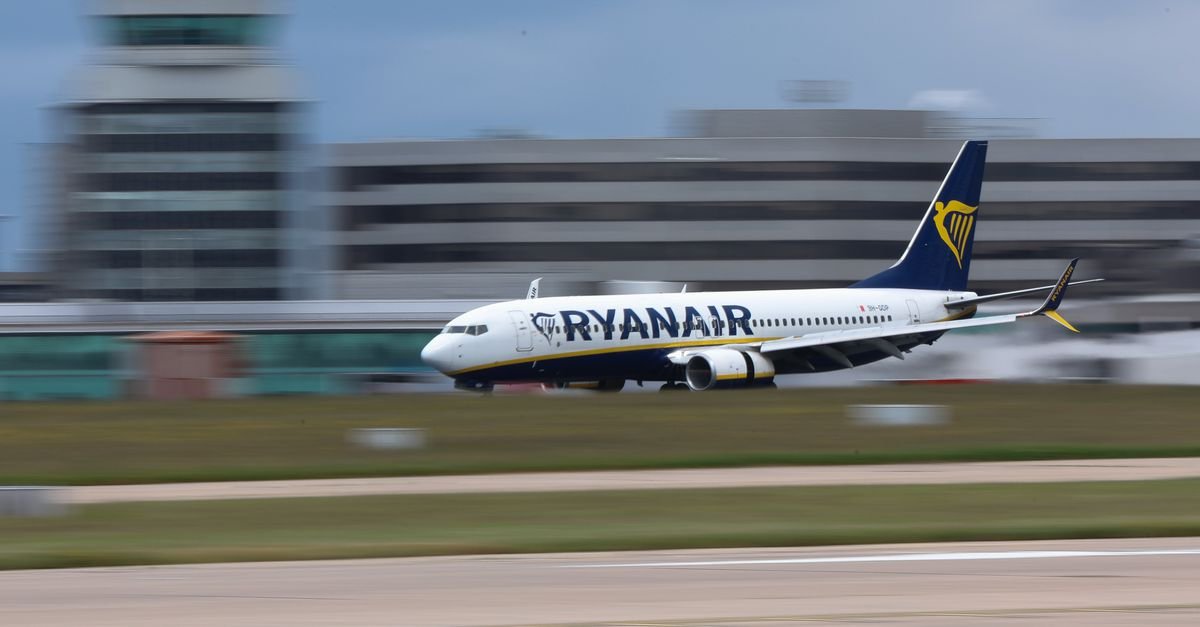
Budget airline Ryanair is angry and points out that European airlines will lose their competitiveness while European air transport is not becoming cheaper. In the words of CEO Michael O’Leary: “While more than 50 percent of our customers choose the lowest fares (excluding second carry-on bag), this new nonsensical regulation forces airlines to falsely advertise higher airfares.”
“There are no winners with this agreement,” said Montserrat Barriga, director of the European Regions Airline Association. According to the lobby group, negotiators “rushed” a compromise, adding new obligations that increase costs and complexity without providing any additional clarity.
When asked, KLM says it is “good that there is now clarity with an agreement that properly informs and protects passengers.” The company also welcomes the fact that there is transparency about booking classes and ticket conditions, which KLM says are “already clearly indicated in the booking process”.
5When will the new rules come into effect?
The rules should come into effect in the second half of 2027. There will be another vote in July during the European Parliament’s plenary session in Strasbourg, after which the deal will be ratified.