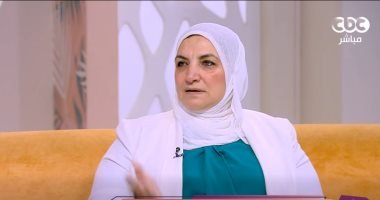
I confirmed Dr. Elham Shaheen, Professor of Theology and Philosophy at Al-Azhar University,Islamic law has clearly defined the provisions related to divorce before consummation of the wife, clarifying that the wife is entitled to half of the agreed-upon dowry if the divorce occurs before consummation of her, in accordance with the text of the Holy Qur’an.
During her hosting of the program “Women Do Not Know How to Lie” broadcast on CBC, Shaheen cited the Almighty’s saying: “And if you divorce them before you have touched them, and you have appointed for them an obligation, then half of what you have imposed “Unless they pardon, or the one in whose hand is the marriage contract pardons,” explaining that the Noble Verse affirms the wife’s right to obtain half of the dowry if it is determined in advance and the divorce occurs before consummation.
It is permissible to waive half of the dowry if the wife wishes
The professor of jurisprudence and interpretation explained that the noble verse opened the door to forgiveness and tolerance between the two parties, through the Almighty’s saying: “Unless they pardon,” noting that the wife has the right to give up half of the dowry due to her if she chooses to do so of her complete will, considering that this behavior falls within the values of tolerance and benevolence encouraged by Islam.
She added that giving up this right is not a legal obligation, but rather a choice left to the wife alone, according to what she deems appropriate in her particular circumstances.
Jurisprudential disagreement over what is meant by “the one in whose hand is the marriage contract”
Shaheen pointed out that commentators have dealt with the phrase “or pardons the one in whose hand is the marriage contract” with more than one interpretation, explaining that a group of scholars believe that what is meant by it is the guardian whom the woman has authorized in some matters of the marriage contract, while another group is of the opinion that what is meant is the husband himself.
She added that some jurisprudential interpretations suggested that the husband’s pardon in this case would be by waiving his right to half of the remaining dowry, and granting the wife the full dowry despite the fact that the divorce occurred before consummation of the marriage, as this is a form of credit and benevolence between the two parties.
The Qur’an calls for virtue and tolerance
The professor of jurisprudence and interpretation at Al-Azhar University confirmed that the noble verse is not limited to simply stating financial rights, but rather carries a clear call to be virtuous and forgiving when marital disputes occur, in a way that preserves dignity and enhances the human values established by Islam.
She concluded her speech by emphasizing that the legal rulings related to dowry and divorce aim to achieve justice between the two parties, while opening the way for tolerance and charity whenever there is a sincere desire for that.