RISKY BUSINESS:
The ‘incentives’ include initiatives that get suspended for no reason, creating uncertainty and resulting in considerable losses for Taiwanese, the MAC said
-
By Chung Li-hua / Staff reporter
China’s “incentives” failed to sway sentiment in Taiwan, as willingness to work in China hit a record low of 1.6 percent, a Ministry of Labor survey showed.
The Directorate-General of Budget, Accounting and Statistics (DGBAS) also reported that the number of Taiwanese workers in China has nearly halved from a peak of 430,000 in 2012 to an estimated 231,000 in 2024.
That marked a new low in the proportion of Taiwanese going abroad to work.
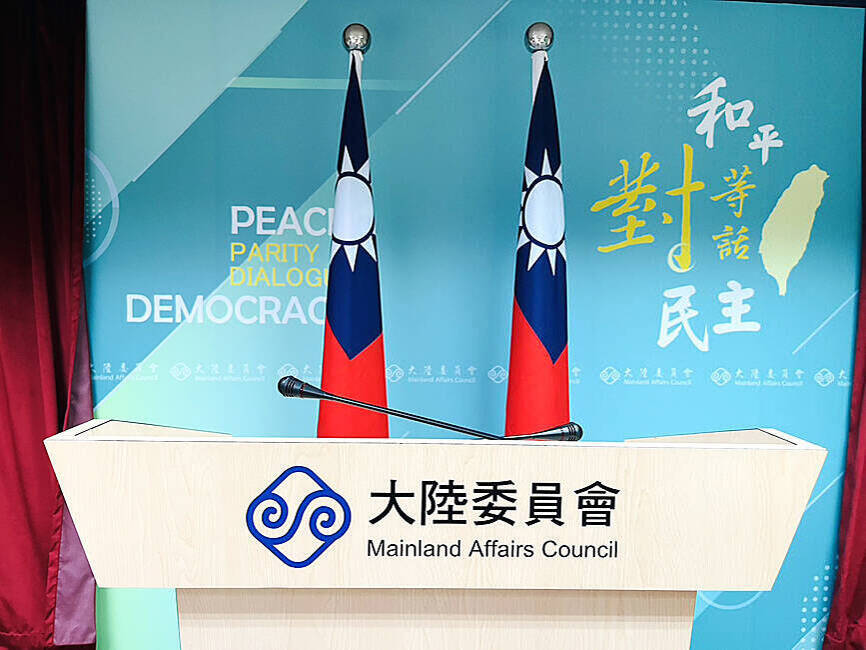
Photo: Chen Yu-fu, Taipei Times
The ministry’s annual survey on “Labor Life and Employment Status” includes questions respondents’ willingness to seek employment overseas.
Willingness to work in China has steadily declined from 7.9 percent in 2016, to 8.3 percent in 2017, and to 7.7 percent in 2018, ultimately dropping to just 1.6 percent last year, the lowest in the survey’s history.
DGBAS data also showed that the number of Taiwanese working in China peaked at 430,000 in 2012 and had accounted for more than 60 percent of the total number of Taiwanese workers abroad.
However, that number sharply declined due to the COVID-19 pandemic, falling to just 163,000 in 2021, or 51.1 percent of the overseas workforce, the data showed.
Although the figures began to recover as COVID-19 restrictions eased, only 231,000 Taiwanese workers were in China in 2024, accounting for 34.7 percent of those working abroad — also a new low.
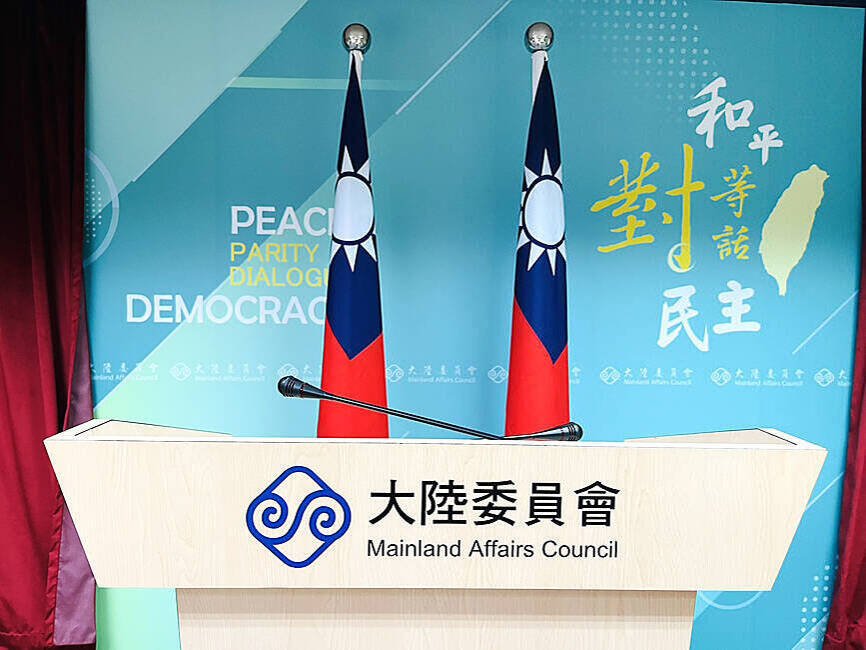
As for China’s latest 10 “incentive measures” for Taiwan — announced on April 12, the last day of Chinese Nationalist Party (KMT) Chairwoman Cheng Li-wun’s (鄭麗文) China visit — the Mainland Affairs Council (MAC) said it had received numerous complaints from industry groups and people expressing concerns about China pressuring them to support the policy.
The pressure has been disruptive and burdensome, the council said, urging associations to reject being used as tools to coerce the government.
It also called on China to immediately cease such political maneuvers.
The 10 “incentives” include facilitating the sales of Taiwanese agricultural and fishery products, and investments in China, and the full resumption of direct flights across the Taiwan Strait.
China’s Cross-Strait Air Transport Exchange Commission has sent a letter to the Taipei City Air Transport Commercial Association regarding the flights, but the Executive Yuan said that “actual demand for direct cross-strait flights is not as high as previously imagined.”
The MAC said that current flight routes and capacity are sufficient to meet demand, adding that there is “no urgent need to immediately open up additional services.”
Meanwhile, sources said General Chamber of Commerce Chairman Paul Hsu (許舒博) is to hold a news conference tomorrow titled “Industry Perspectives on China’s Recent Pro-Taiwan Policies,” where he would invite representatives from industry associations — those for travel, hotels, food, baked goods, fruits and bus tours — to express their views and pressure the government.
The “incentives” include initiatives that have fluctuated over the past two decades, “sometimes opening, sometimes suspended for unfounded reasons,” the MAC said.
“This has created significant uncertainty for Taiwanese industries, as well as farmers and fishers, resulting in considerable losses,” it said, adding that the government has a responsibility to shield the economy and industries from such arbitrary risks and prevent political interference in elections.
“If China genuinely intends to move forward with such measures, they should be negotiated through the existing mechanisms between the two governments, without political preconditions,” it added.