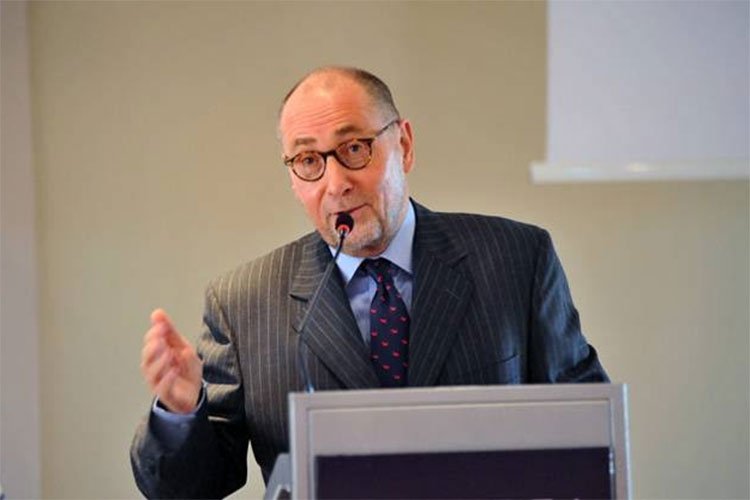
The return of the former ambassador to the forefront is an indication of the intensification of the conflict within the state’s affairs:

H. M
The French magazine “L’Express” broke the calm that characterized the political and media scenes in France regarding relations with Algeria during the past few weeks, through an interview with the former French ambassador to Algeria, Xavier Driancourt, and opened wide scope for him to attack Algeria again.
The exit of this retired diplomat, who worked in Algeria as an ambassador in two stages in French media platforms, is usually carefully calculated, and an indication of the presence of conflicts in the wheels of the French state in controlling relations with Algeria, which has not yet regained its relative calm, since its bombing by the French President, Emmanuel Macron, on July 30, 2024, when he decided to change his country’s position on the Sahrawi issue despite his awareness of the seriousness of what he did.
In an article titled: “We are only waiting for the next crisis,” the former French ambassador to Algeria from 2008 to 2012, and from 2017 to 2020, went on to make provocative statements towards Algeria, simply because it demands rights guaranteed by international legislation, laws, and customs, especially those related to colonialism and its crimes against the land, the people, and revolutions.
In the interview, which was published on the website of L’Express magazine on the Internet, on Sunday evening, June 14, Driancourt believes that relations between Algeria and France have entered into a recurring cycle of recurring diplomatic crises for years, pointing out “Paris’ failure to build a stable relationship with Algeria, while historical, political, immigration, and security issues continue to reproduce tension.”
In the view of Xavier Driancourt, who is known for his extreme right-wing and anti-Algerian positions, decision-makers in Paris often misunderstand the working method of the Algerian authorities and the mechanisms of decision-making, which explains the recurrence of bilateral crises from time to time, due to positions or decisions announced here or there. He also repeated phrases that have become familiar to him, such as that the Algerian side takes the issue of memory as a heavy issue in the conflict with Paris.
It is known that the retired French diplomat is affiliated with French political circles, which have not yet digested the Algerians’ ability to expel the French occupier with bullets, and his statements are often motivated by an element of revenge on the part of those who knew how to build a sovereign state that was not dependent in its decisions and positions on the former colonialist. This is an almost rare scene among the former French colonies, except in recent times, and in the Sahel region in particular.
Based on what was stated in the dialogue, the Algerian authorities are “extremely sensitive towards France,” which has caused bilateral relations to be damaged over the simplest matters, he claimed. This has also contributed to transforming bilateral relations into an internal political file in Algeria, a description contradicted by many French officials, who also admitted that Paris considers relations with Algeria to be an internal French matter, and attributed the reason to the Algerian community, which is present in the millions on French soil.
In the same context, he criticized successive French governments, including the governments appointed by the current French president, for what he considered “many concessions” by the Elysee Palace to Algeria, noting that everything that was done in this regard were merely attempts to “reset the relationship,” instead of going deeper and addressing the fundamental causes of the dispute, acknowledging at the same time the failure of all the pressures that Paris exerted on Algeria, in order to dissuade it from its extremist positions in building relations based on equality and respect for others.
Based on his conviction that relations with Algeria are not going in Paris’ favor, Xavier Driancourt calls for what he calls “a more realistic and less delusional relationship,” as he put it, preferring to deal with Algeria based on a balance of interests and not just historical or emotional considerations. These are positions expressed by politicians known for their right-wing and extreme right-wing tendencies, in both Le Pen’s party, the National Rally, and the Republicans, led by the controversial politician, Bruno. Rotayo.