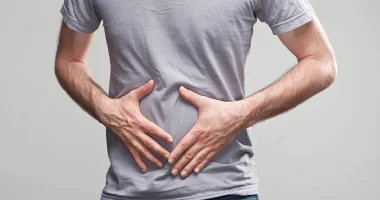
Bowel obstruction It is a medical condition that requires rapid diagnosis and treatment, especially in cases of complete blockage or with complications, as delayed medical intervention may lead to serious problems that threaten the patient’s life, according to what was published by the Mayo Clinic and Cleveland Clinic websites.
Intestinal obstruction occurs when food, liquids, or gases cannot pass through the intestine normally, either partially or completely, leading to the accumulation of digestive contents and the appearance of symptoms that may range from mild to severe, depending on the cause and duration of the obstruction.
What is intestinal obstruction?
Intestinal obstruction occurs as a result of an obstruction preventing the passage of intestinal contents or due to… Bowel movement stops Natural. The obstruction may affect the small intestine or large intestine, and in some cases it requires urgent medical intervention to prevent serious complications.
Dr. Mohamed Ibrahim, internal medicine consultant at Assiut University, confirms that early diagnosis increases the chances of recovery and reduces the possibility of resorting to complex surgeries.
Symptoms that should not be ignored
Symptoms vary from person to person, but there are common signs that require seeing a doctor immediately, including:
Severe pain or frequent abdominal cramps.
Obvious abdominal bloating.
Nausea and vomiting.
Severe constipation.
Stops passing gas.
Anorexia.
Feeling of fullness and discomfort.
In advanced cases, fever or signs of dehydration may appear as a result of repeated vomiting and loss of fluids.
The most common causes
There are several causes that may lead to intestinal obstruction, the most prominent of which are:
Adhesions resulting from surgeries
Adhesions that form after abdominal surgeries are one of the most common causes of intestinal obstruction.
– Hernia
may lead Part of the intestine comes out Through a weak area in the abdominal wall, it may lead to intestinal obstruction or suffocation.
Tumors
Colon or intestinal tumors may narrow the inner passage of the intestine and prevent the passage of waste.
– Intestinal torsion
It occurs when part of the intestine wraps around itself, obstructing the passage of food and affecting blood flow to it.
Inflammatory diseases
Such as Crohn’s disease and some chronic diseases that may lead to narrowing of parts of the intestine.
How is the condition diagnosed?
Doctors rely on several methods to diagnose intestinal obstruction, including:
Clinical examination.
Blood tests.
Abdominal X-ray.
CT scan.
These tests help determine the cause of the obstruction, its location, and its effect on the intestine.
When can treatment be done without surgery?
In some cases of partial blockage, doctors may resort to conservative treatment, which includes:
Temporarily stop eating and drinking.
Giving fluids intravenously.
Installing a tube to empty the stomach of fluids and gases.
Treating the main cause of the condition.
In many cases, the condition improves without the need for surgical intervention.
When does a patient need surgery?
Surgical intervention becomes necessary if the blockage is complete or if other therapeutic methods fail to solve the problem.
During surgery, the doctor may remove adhesions, repair a hernia, or remove the damaged part of the intestine and then reconnect it.
Why do some patients need two surgeries?
Although many patients are treated with a single procedure, some complex cases may require two surgical stages.
This happens when there is:
Severe inflammation inside the abdomen.
Intestinal perforation.
Damage or death of part of the intestine as a result of blood loss.
Severe infection inside the abdominal cavity.
The patient’s health condition is unstable.
In these cases, the surgeon may have to remove the affected part and make a temporary opening on the abdominal wall for waste to exit into an external bag.
What is a temporary slot?
A stoma is a surgical procedure aimed at giving the intestines a chance to heal and recover, by temporarily diverting waste from the body.
After the patient’s condition improves, the inflammation disappears, and the intestinal integrity is confirmed, a second operation can be performed to reconnect the intestine and close the opening.
Complications of delayed treatment
Doctors warn against ignoring the symptoms of intestinal obstruction, because delay in treatment may lead to:
Death of part of the intestine.
Intestinal perforation.
Peritonitis.
blood poisoning.
Complications that may be life-threatening.