Mr. Hohenwarter, why should what has just failed in the construction of fighter aircraft succeed in tank construction, namely bringing Germans and French together?
Because the starting point is different. KNDS is already a German-French company and we have an intrinsic interest in ensuring that the collaboration works. We make concrete offers for cooperation between the countries.
Take the further development of battle tanks, one of our core competencies. Before the MGCS main battle tank system, which is currently planned for 2040, is put into service, we have just presented a possible bridging solution for France with the Capint at the Eurosatory trade fair near Paris. This solution brings together technology from both countries: The lower part of this main battle tank concept is based on the Leopard 2 from KNDS Germany, the turret comes from KNDS France at the request of the French military. In this way, we create synergies across the Rhine, procurement becomes faster, and we increase the interoperability of the systems. The situation is similar with our new Loras long-range artillery system.
These are the very first German-French products, eleven years after the merger of Krauss-Maffei Wegmann and Nexter to form KNDS.
Yes, but there are also a number of examples where we have been working very closely together and learning from each other for a long time. When we ramped up production, we learned from our French colleagues how we could achieve higher quantities. Due to the order situation, you switched to flow production earlier. Our French colleagues are also further ahead when it comes to automation. If you go to a KNDS France factory today, you will see robots welding aluminum cells. In addition, as a pan-European group, we can offer our customers a broad portfolio and therefore tailor-made solutions: Lithuania and Croatia, for example, have opted for German Leopard 2 and French Caesar howitzers. In other words: we have something for everyone.
With annual sales of 4.4 billion euros, KNDS sits on record orders worth 33.1 billion euros. How does the production ramp-up succeed?
On the one hand, by growing organically. To make the dimension clear to you: In the medium term we will produce four times as many boxers and artillery, three times as many leopards and twice as many pumas. We are therefore looking at the areas in which we need new employees. Fortunately, interest in our industry is much greater today than it used to be. Four years ago we had 6,000 applications a year, last year there were 60,000. But organic growth, even with good numbers of applicants, will not be enough to cope with the ramp-up. That’s why partnerships with capable partners like the automotive supplier Dräxlmaier are so important. They support us with the new production line for the Boxer. But even with new employees and partners alone it is not enough.
Because you also have to think about how you can transform industries, i.e. how you can make existing ecosystems usable. One example is Görlitz, where we took over a railway factory from Alstom last year. We have taken on very capable employees there who fit our profile well. In Görlitz, production was similar in the old set-up in large halls with heavy loads – very regulated, with larger quantities and very tailored to the customer. We are now transforming the plant into a defense technology site. In the future, he will supply shells, i.e. welded structures, for Boxer and Leopard.
It is said that you are now planning the same thing with a Mercedes plant in Ludwigsfelde.
I don’t want to speculate. Just this much: We talk to companies and look at possible locations. But no final decisions have been made yet.
How many new locations do you still need?
According to current plans, we will build two additional production facilities in Germany. One location will be dedicated to the entire production chain from the bodyshell to the finished vehicle, in this case with a focus on wheeled vehicles, i.e. boxers. The second location will focus on a welding location, similar to Görlitz.
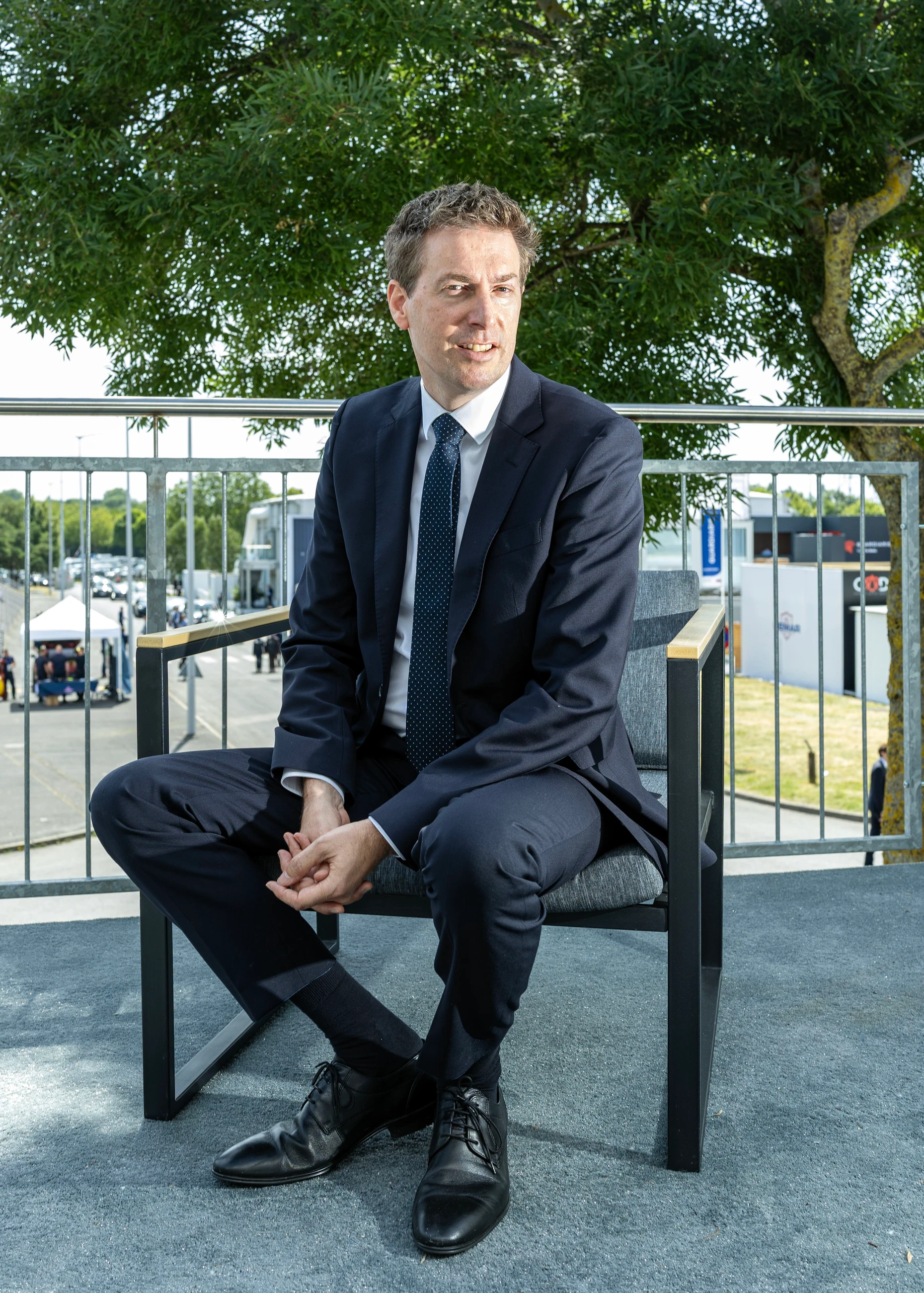
How many jobs do you want to create in Germany as a result?
We expect the workforce at KNDS Germany to double by the end of the decade, adding 4,000 to 5,000 employees. This development is major in the defense technology sector. Especially since we have calculated that around 500 new jobs will create three times as many at suppliers and in other industries. In Görlitz this has a huge impact on the entire region. Without the takeover, the plant would have been closed. But even if we can keep jobs in Germany through armaments, it will of course be on a different scale than we know from other industrial sectors such as the automotive industry.
KNDS produces tanks, but drones are particularly in demand in the Ukrainian war. Do we still need your products?
Yes, it is needed, and I object to the claim that this is old technology. We are constantly modernizing our systems. We use insights from the Ukraine war. It also shows that battle tanks, artillery and protected wheeled vehicles remain highly relevant on the battlefield. Military systems are most effective when they are networked and operate in a group. It’s always been that way. In the past there was first the infantry, then there were tanks, later armored vehicles, aircraft, anti-aircraft defense, then rockets and cruise missiles and now drones.
The battlefield continues to change rapidly. How does KNDS react to this?
We already have many options for drone defense, on the vehicle itself or on support vehicles. And the mix of manned battle tanks and various autonomous capabilities in the air and on the ground is also the idea at MGCS. Of course, the primary goal is to expose human lives to dangerous situations as little as possible. That’s why we want to reduce the crew of the next generation battle tank from four to three soldiers. However, I believe that human capabilities in military vehicles will continue to be essential in the long term.