In tourism, emotion is stronger than facts. The war ended more than 30 years ago, and yet at international fairs, we are still asked about security and war events. We should not run away from what we are, but learn how to present it to the world. Bosnia and Herzegovina, and therefore Republika Srpska, should not be a copy of any other destination.
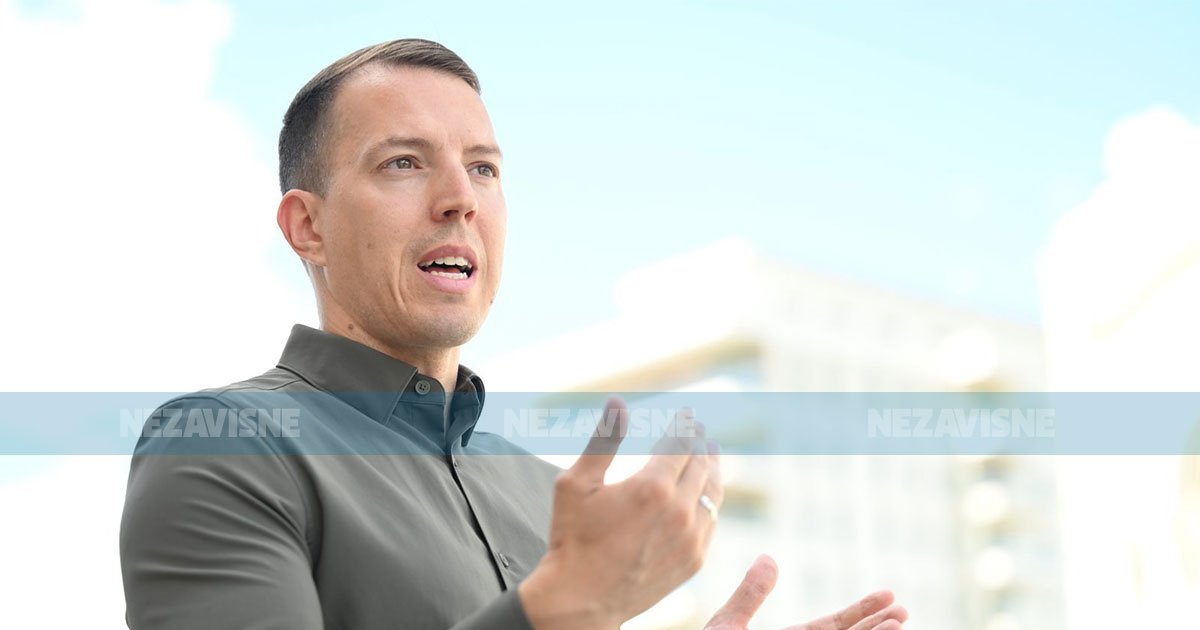
Marko Radić, head of the Department for Tourism Promotion in the Tourism Organization of the Republika Srpska, said this in an interview with “Nezavisne novine”, stating that it is a misconception that only tourist organizations build the image of a destination.
“The destination’s image is mostly built by waiters, taxi drivers, receptionists, merchants, politicians, local residents and all those with whom the guest meets”, he pointed out.
NN: Republika Srpska is recording a higher number of tourists this year compared to the same period last year, almost 150,000 arrivals in four months. Do we have reasons to be satisfied?
RADIĆ: It is encouraging, but in tourism it is always important to understand what is behind the numbers. When we analyze these results, we see that the biggest contribution to growth came from mountain destinations. Compared to the same period last year, it was the mountain towns that achieved almost 5,000 additional arrivals and around 20,000 additional overnight stays. This shows that this year’s winter season was significantly better than the previous one and that mountain tourism is one of the mainstays of tourist traffic in Republika Srpska.
Another important factor is the growth of accommodation capacity. By April of this year, according to information from the Statistical Office of the RS, about 250 more beds were registered than in the same period last year. This created space for an additional slightly more than 2,600 arrivals and less than 7,000 overnight stays. When these indicators are combined with a better season in the mountains, a fairly clear explanation of the statistical progress in the first third of the year is obtained. So we have reason to be satisfied, because the numbers show growth. But we have an even greater reason to be serious if we want to turn this growth into long-term competitiveness.
NN: There are months ahead of us when the arrivals will certainly be even more intense. You often emphasize emotion, identity and authenticity in tourism. Do we have it? Do we know how to tell our story to tourists or do we rely mostly on natural beauty as a magnet for visitors? Where are we making mistakes, and what are we doing well?
RADIC: In tourism, emotion is stronger than facts. The war ended more than 30 years ago, and yet at international fairs, we are still asked about security and war events. The facts show that Bosnia and Herzegovina is one of the safest European destinations. However, people do not travel based on statistics. They travel based on the feelings they have for a country. Perception often lasts much longer than the fact itself, and that is why I believe that one of the most important tasks of tourism is precisely changing perception. And there is no better tool for that than personal experience. When someone comes here, meets people, sits down in a local cafe, talks to the host, walks around the city or spends a day in nature, prejudices are broken that no marketing campaign can change on its own.
The reputation of the destination is created in the actual contact of the guest with the destination. It arises in the way we welcome it. In other words, reputation is what people say about us when we’re not in the room. It is a misconception that only tourism organizations build the image of a destination. The destination’s image is mostly built by waiters, taxi drivers, receptionists, traders, politicians, local residents and all those the guest meets.
NN: You once said that the real value of tourism is not in what we can pretend, but in what we really are. Are we running away from our reality and the previously mentioned authenticity? Are we running away from who we are?
RADIC: What seems ordinary, everyday and perhaps even unimportant to the local population, can be the most interesting part of the trip to the guest. Authenticity is the way of life of the people who live there. It is in the language, food, customs, humor, family values, hospitality, local stories, the way we spend our time, and even in our flaws. Tourists today are looking for reality. That’s why I think we shouldn’t run away from what we are, but learn how to present it to the world. Bosnia and Herzegovina, and therefore Republika Srpska, should not be a copy of any other destination. If something needs to be changed, then it is the infrastructure, quality of service, organization, accessibility and way of managing destinations.
NN: If you were to make a plan for a tourist coming to Republika Srpska for the first time, what would you put on his must-see list?
RADIC: If I had to give a few suggestions to a first-time visitor, I would recommend three routes to start with. Banjaluka and its surroundings, from the city atmosphere, Dayak and Vrbas, to excursions to Krupa on Vrbas, the Balkans, the Janjski otoka and Kozara National Park, it is possible to experience many different contents in a relatively small area.
Another recommendation would be Herzegovina with the base in Trebinje. There are few places in the Balkans that, in such a small space, offer a combination of Mediterranean atmosphere, rich history, top gastronomy, wineries, active vacations, mountain massifs, rivers and lakes.
The third proposal would be the eastern part of Republika Srpska, i.e. a kind of tourist ring connecting Višegrad, East Sarajevo and Foča. Some of the most impressive natural attractions are located here, from the Drina and Tara canyons, through the mountains and viewpoints, to the Sutjeska National Park and the Perućica rainforest. When this is combined with Jahorina, Ravna Planina, through the hidden waterfalls of Rogatica to the Mehmed Paša Sokolović Bridge in Višegrad, it is clear that this is an area with a great offer for those looking for authentic experiences and a stay in nature.
NN: We can’t help but look back at the tourist vouchers we’ve had for several years. Did they justify their existence and bring results? You often criticize the monetary amount of the voucher…
RADIC: Tourist vouchers had their role and I think it is necessary to openly admit that. In the period after the pandemic, they were an important instrument of support for the domestic tourism sector and helped a certain number of citizens to seriously consider vacationing within the Republika Srpska for the first time. In this sense, it cannot be said that they did not produce results. However, I also think that it is legitimate to question whether the model has remained the same for too long and whether it follows the reality of the market.
From the first issuance of tourist vouchers in 2020 until today, the hospitality and tourism sector has gone through significant changes. Cumulative inflation in that period amounts to approximately 40 percent, while the prices of accommodation, food, energy and other services have continuously increased. Only last year, inflation was close to eight percent. At the same time, the nominal value of the voucher remained the same. In my opinion, there is a certain illogicality here. If everything else has become more expensive, it is difficult to explain why only the value of vouchers has not followed these changes.
If the limit is the total budget provided for this measure, then I would rather think about increasing the individual value of vouchers with a smaller number of issued vouchers. Especially if we know that in previous years not even the full planned number was used. Last year, the utilization was below 50 percent of the available vouchers, which shows that there is room for a different model.
Another thing, enabling the use of vouchers for two nights instead of three for couples would significantly increase the interest of citizens. A large number of people today travel on weekends, and such a model would open up space for more short trips during the broadcasting period. When it comes to announced vouchers for foreign guests, I am much more reserved. Frankly, I’m not sure it’s the best policy to pay part of the cost of stay to tourists who come from other countries just to choose our destination. I personally believe that the focus should be on attracting guests with higher paying power, those who may stay for a shorter time, but spend more and leave a greater economic effect on the destination.
NN: You recently wrote that tourism should not be viewed on an annual basis, but that one should think 10 years in advance. If we go to the year 2036, how do you see tourism in RS and what memories would you like tourists to take away from here – of nature, gastronomy, adventure?
RADIĆ: If we go to the year 2036, I would like to see Republika Srpska as one of the most recognizable continental tourist regions of the Balkans. Not as an isolated destination fighting for itself, but as an important part of the unique tourist area of Southeast Europe through which millions of travelers pass. Tourists do not think within administrative boundaries. They travel through experiences, regions and stories. This is precisely why I believe that the future will belong to destinations that know how to cooperate and connect their offer.
When it comes to memories that I would like tourists to take away from here, let’s say that I would like them to remember the feeling of being welcomed.