-
AP, DUBAI, United Arab Emirates
While the US and Iran yesterday reached an initial agreement that would extend their shaky ceasefire and lead to the reopening of the Strait of Hormuz, significant challenges remain to ending the war, including whether Israel would continue its offensive in Lebanon.
Details of the deal were not immediately released, but it appeared that it would not be implemented until it is signed, which mediator Pakistan said would happen on Friday in Geneva, Switzerland.
Even if the strait — a crucial waterway for the world’s oil and natural gas — fully opens then, it would likely take months for the global energy crisis sparked by its closure to ease.
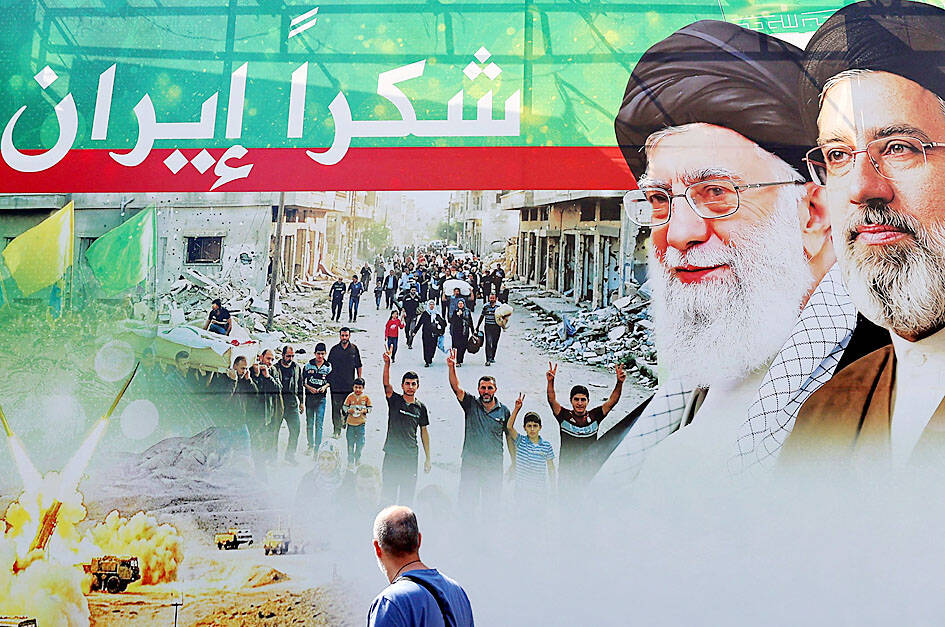
Photo: AFP
Israeli Minister of Defense Israel Katz said that the country would not withdraw from land seized in Lebanon, where it is fighting the Iranian-backed Hezbollah militant group. Israel joined the US in launching the war on Feb. 28, but it is not party to the deal.
A spokesman in Israeli Prime Minister Benjamin Netanyahu’s office said the nation would continue to defend itself against any threat to its security. That alone could scupper the deal, since Iran has insisted any agreement to end the war include an end to the fighting in Lebanon.
The agreement also faces other major challenges. It gives just 60 days to decide what to do about Iran’s stockpile of highly enriched uranium and its nuclear program — which the US and Israel say could be used to build an atomic weapon, despite Tehran’s insistence that it is peaceful.
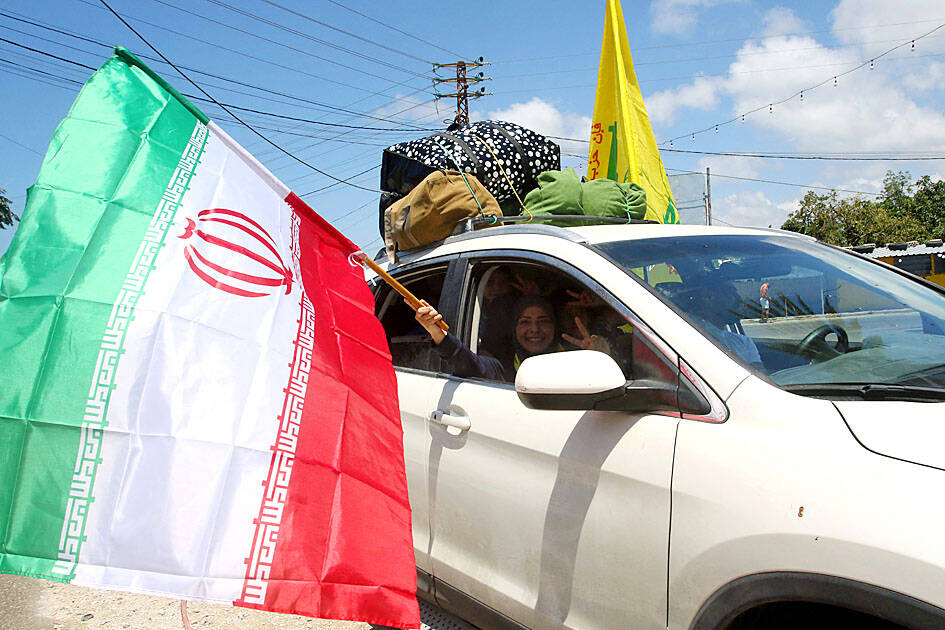
Photo: AFP
US President Donald Trump, who faces pressure to end the war ahead of congressional midterm elections in November, hailed the agreement on social media, saying he had authorized the Strait of Hormuz to open and the US blockade of Iranian ports to end. He later said the strait would not open until Friday.
Iranian Deputy Minister of Foreign Affairs Kazem Gharibabadi confirmed the agreement on state television, but said Tehran would not start implementing it until it was signed.
Despite the uncertainties, world leaders from Europe to China welcomed the agreement.
French President Emmanuel Macron, who is hosting Trump and other world leaders at a G7 summit this week, said France and other Western partners are “ready to take action very quickly” to help restore normal shipping traffic to the strait — once the US and Iran agree to such a mission.
French Minister for Europe and Foreign Affairs Jean-Noel Barrot said the European-led initiative, discussed with his Iranian counterpart Abbas Araqchi last week, has been in preparation for weeks among about a dozen militaries and would include minehunters, warships and air surveillance assets.
“It is already ready,” Barrot said on arrival at an EU foreign ministers’ meeting in Luxembourg.
“France, the United Kingdom and several dozen countries have put together a strictly defensive international mission, independent from the parties to the conflict, capable of deploying rapidly to ensure freedom of navigation,” he said.
However, Iran has signalled strong opposition to any foreign military presence in the waterway and could seek to impose transit fees on shipping — a deal-breaker for European powers — making its stance decisive for any deployment, diplomats said.
“Iran is hostile to any foreign military presence but open to dialogue,” a European official said, adding that Tehran was likely to advance its own proposals.
“Any presence of foreign countries, whether to safeguard shipping or clear mines, is unacceptable… This is a trick to bring naval forces to the strait, and it will not be accepted,” a senior Iranian official said.
A second Iranian security official said Tehran had “zero trust in foreign countries” and insisted control of the strait rests with Tehran and, to some extent, Oman.
Additional reporting by Reuters