BAKU, Azerbaijan, June 9. Relations between
Uzbekistan and Hong Kong have entered a new stage of development,
characterized by expanding cooperation in trade, investment,
innovation, and technology. The recent visit of Hong Kong Chief
Executive John Lee Ka-chiu to Uzbekistan, accompanied by
representatives of more than 70 companies and organizations,
underscored the growing importance both sides attach to
strengthening bilateral ties.
For Hong Kong, Uzbekistan has emerged as one of the most
attractive destinations in Central Asia. As the region’s most
populous country and one of its fastest-growing economies,
Uzbekistan offers a rapidly expanding market, an improving business
environment, and a strategic location linking East Asia, South
Asia, the Middle East, and Europe. These factors position the
country as a key gateway to the wider Central Asian region.
At the same time, Hong Kong provides Uzbekistan with access to
global capital markets, financial services, investment networks,
and innovation ecosystems. Beyond its role as a financial hub, Hong
Kong’s experience in digital transformation, startup development,
and technology commercialization can support Uzbekistan’s
modernization agenda and economic diversification.
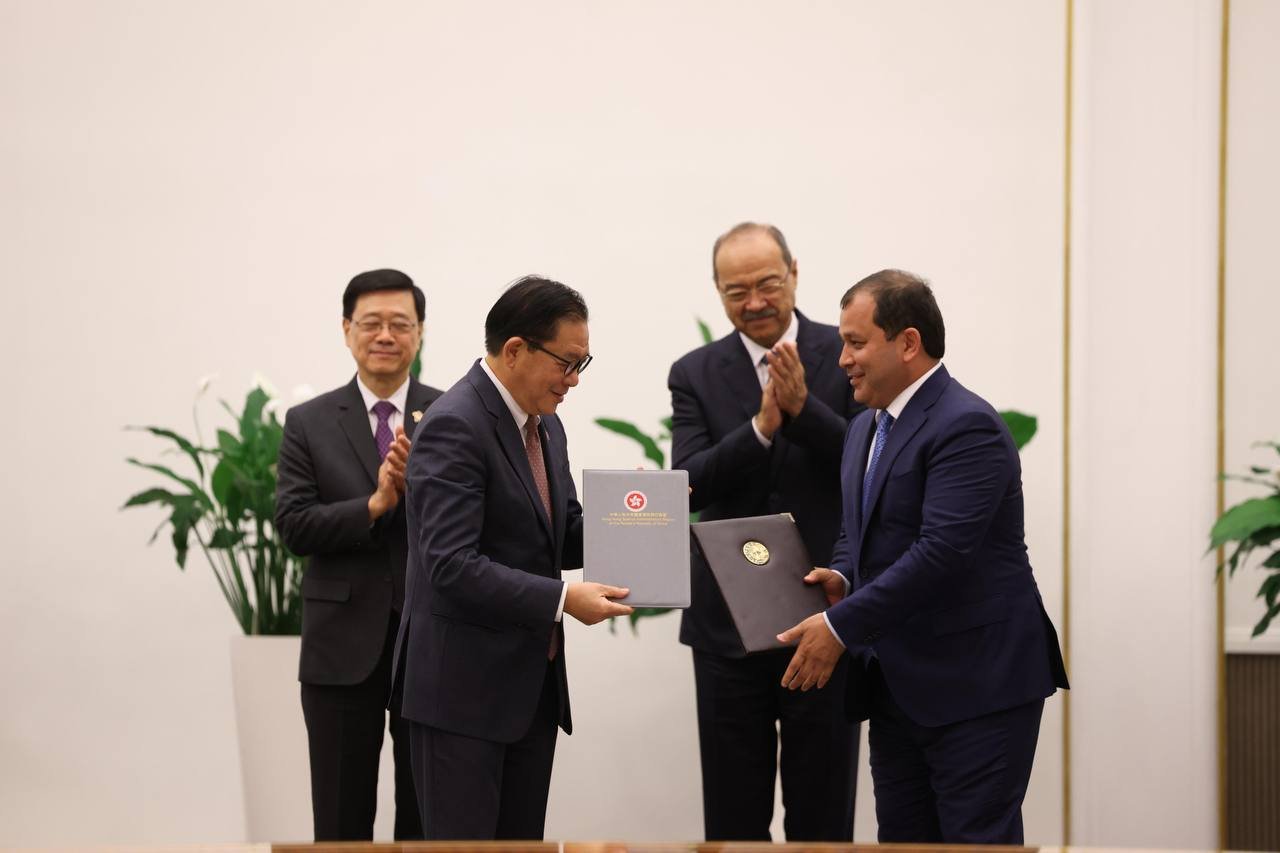
A key milestone in bilateral relations was the meeting between
President Shavkat Mirziyoyev and John Lee Ka-chiu in Tashkent. The
discussions focused on expanding cooperation in finance, industry,
education, tourism, innovation, artificial intelligence, fintech,
and the digital economy. Both sides also supported the
establishment of a cooperation roadmap, a bilateral Business
Council, and a reciprocal visa-free regime, reflecting their
commitment to building a long-term institutional framework for
cooperation.
Technology has emerged as one of the most promising areas of
engagement. During the Hong Kong delegation’s visit to IT Park
Uzbekistan, discussions focused on artificial intelligence, startup
development, venture capital, technology transfer, and cooperation
under the Digital Silk Road initiative. These priorities are
closely aligned with Uzbekistan’s efforts to expand IT exports,
attract investment, and implement its AI Development Strategy
through 2030.
Economic cooperation is also broadening into finance, logistics,
pharmaceuticals, green energy, and advanced manufacturing. Rather
than concentrating solely on trade, both sides are increasingly
prioritizing investment attraction and the development of long-term
business partnerships. Ongoing discussions on establishing an Uzbek
Consulate General in Hong Kong, avoiding double taxation,
protecting investments, and facilitating travel further reflect the
growing institutionalization of bilateral relations.
Despite this positive momentum, several challenges persist,
including relatively modest trade volumes, geographical distance,
and competition from other regional markets. The success of the
partnership will ultimately depend on the effective implementation
of agreements and the translation of political commitments into
concrete projects.
Nevertheless, the outlook remains highly promising. Hong Kong’s
strengths in finance, innovation, and international business
complement Uzbekistan’s economic potential, reform agenda, and
strategic location. For Hong Kong, Uzbekistan represents a gateway
to Central Asia, while for Uzbekistan, Hong Kong offers access to
global capital, technology, and international markets. If current
initiatives are effectively implemented, the partnership could
become an important driver of economic connectivity across
Eurasia.