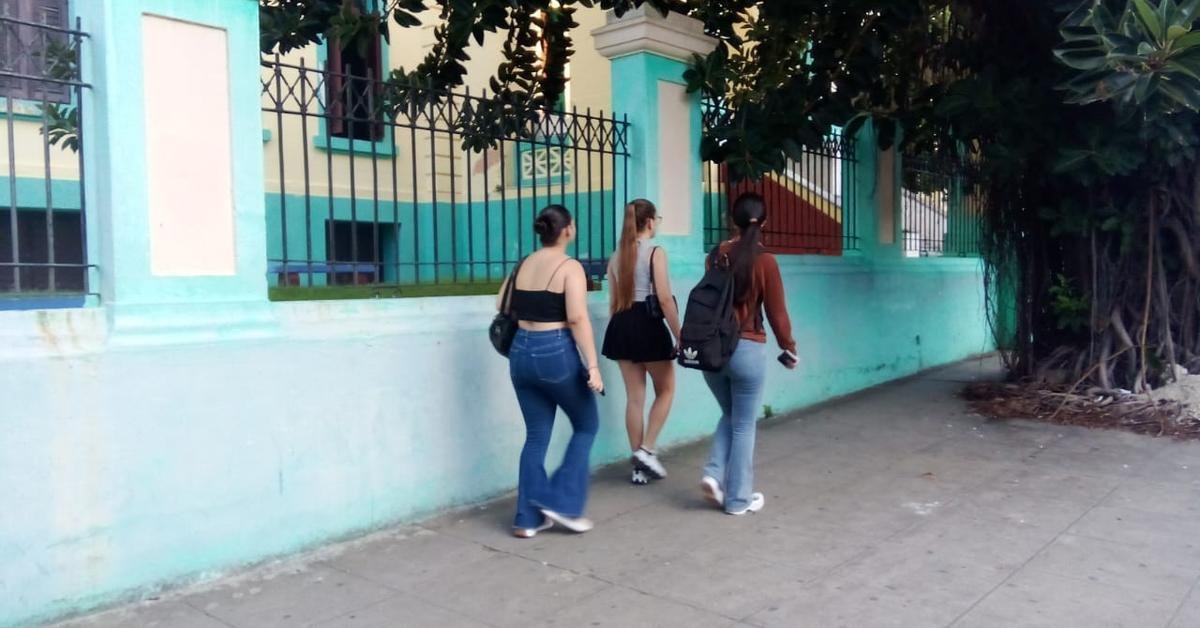
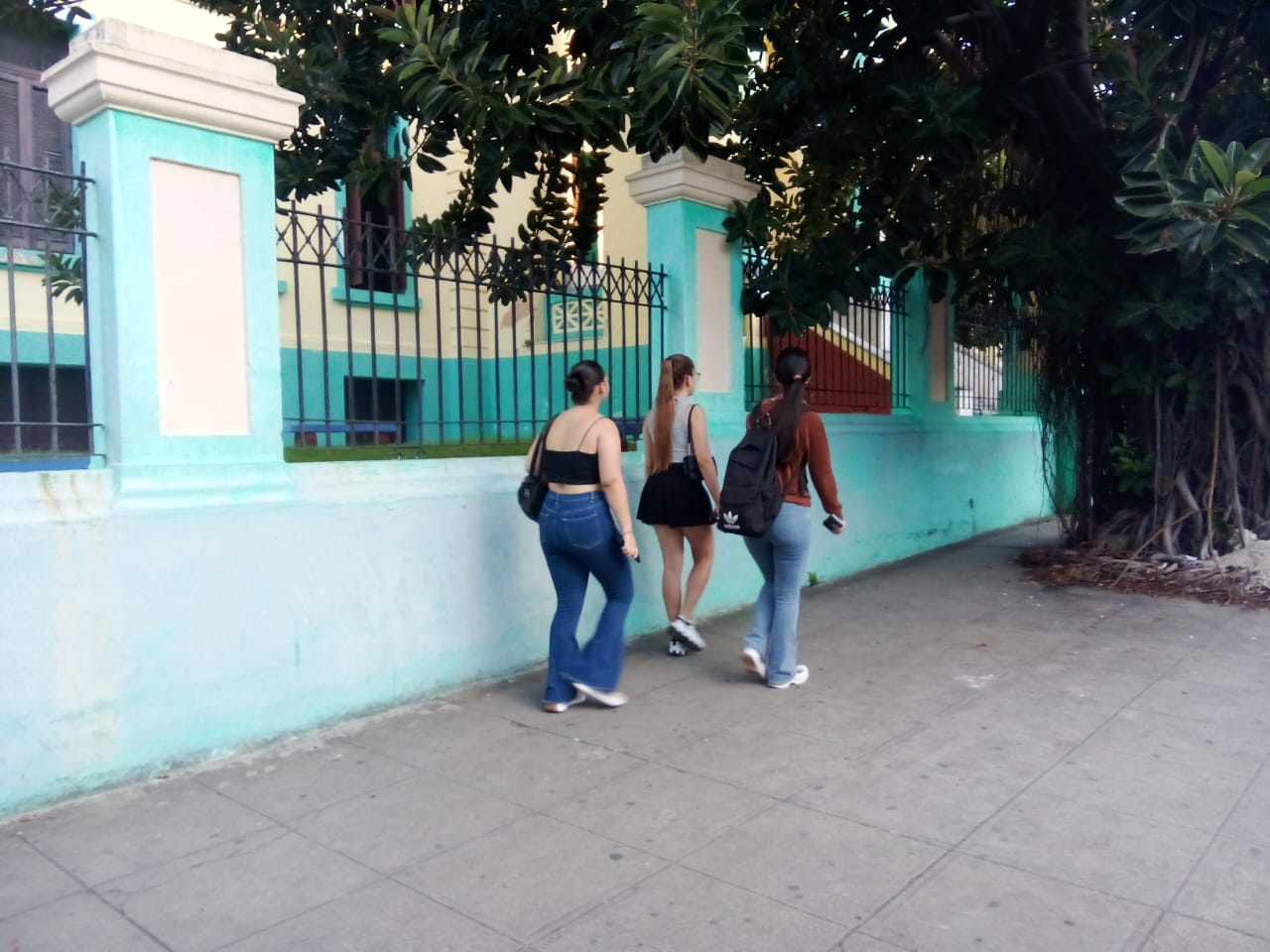
Matanzas/In the mornings, in front of the old Secondary Education Institute of Matanzas, on 2 de Mayo Street, small groups of students still form. On a marble wall, two teenagers are chatting without much enthusiasm and, a few meters away, several high school boys are advancing along the sidewalk with their backpacks on their shoulders. The scene seems like any end of school year, but this year there is something different: for the first time in a long time, those who finish the twelfth grade will not have to face the traditional university entrance exams.
The news surprised some and confirmed others who had predicted it. The Ministry of Higher Education announced that the Mathematics, Spanish and History of Cuba tests were suspended and that access to university education will be determined by the academic average accumulated by students throughout their pre-university studies.
For Betty, a twelfth grade student at the José Luis Dubrocq Pre-University School, the decision came too late and in the worst possible way.
“The way to earn a good career was to get high grades on exams. Now the rules change when we are already at the finish line”
“Since the ninth grade I have been preparing for the tests. My parents have spent money on review books, books and materials. Everyone knew that the way to earn a good career was to get high grades on the exams. Now the rules change when we are already at the finish line,” he laments.
His aspiration is to study Psychology. He has an average of 98.9 points, but fears that is not enough.
“They say that they are going to take comprehensiveness into account. I was never one to participate much in political events or extracurricular activities. Now I see classmates with worse grades who appear better placed on the rankings. That raises a lot of doubts.”
Doubts are precisely the topic that is most repeated in family conversations. For years, entrance exams functioned as a kind of final arbiter. One could argue about the quality of the tests, about the inequalities between those who had reviewers and those who did not, but in the end there was a common national evaluation for everyone.
Now, many parents believe that the process will be more difficult to understand and, above all, to supervise.
In the surroundings of the high school on 2 de Mayo Street, where generations of people from Matanzas prepared to enter the University, conflicting opinions abound.
“The best races always end up in the hands of whoever has the most influence. I’m not saying that, everyone is saying it”
“My aunt has important friends in Education and is already figuring out how all this works,” acknowledges Magdiel, another final year student. “It is convenient for me that they have removed the evidence. The important thing now is to move contacts and be well located when the time for granting arrives.”
The boy aspires to enter the Faculty of Medical Sciences and speaks with a sincerity that makes him uncomfortable. “The best races always end up in the hands of whoever has the most influence. I’m not saying that, everyone is saying it.”
Although exaggerated for some, that perception has spread among students and family members. The elimination of the tests has fueled the suspicion that subjective factors could have a greater weight in the allocation of places.
A Mathematics teacher, who prefers to remain anonymous, recognizes that the change has caused discomfort among many teachers.
“I have excellent students who had been training for those exams for years. Some saw this test as an opportunity to demonstrate what they know regardless of their history or their level of participation in school activities.”
The educator considers that the problem is not only the elimination of exams. “The worrying thing is the signal that is being sent. Tenth and eleventh grade students are seeing that the rules can change from one day to the next. That affects academic motivation.”
Many professors fear that the decision will end up deepening problems that already affect Cuban higher education.
Authorities defend the measure by arguing that systematic monitoring over several years can better reflect a student’s actual performance than an exam taken in a few hours. In addition, they ensure that all applicants will be guaranteed a university place, although not necessarily in the desired career.
However, in Matanzas the debate has gone beyond the access mechanism. Many teachers fear that the decision will end up deepening problems that already affect Cuban higher education: loss of demand, decrease in the culture of effort and difficulties in selecting the best prepared students.
Meanwhile, the school year is moving toward an early closure. Classes will end several weeks earlier than planned due to energy and transportation difficulties facing the country.
In front of the old building of the Secondary Education Institute, now converted into a pre-university school, students continue arriving and leaving at fragmented schedules. Some talk about university careers, others about blackouts, transportation or emigration. But the same feeling floats among everyone: that of going through a moment of transition in which no one knows exactly what the rules of the game will be.