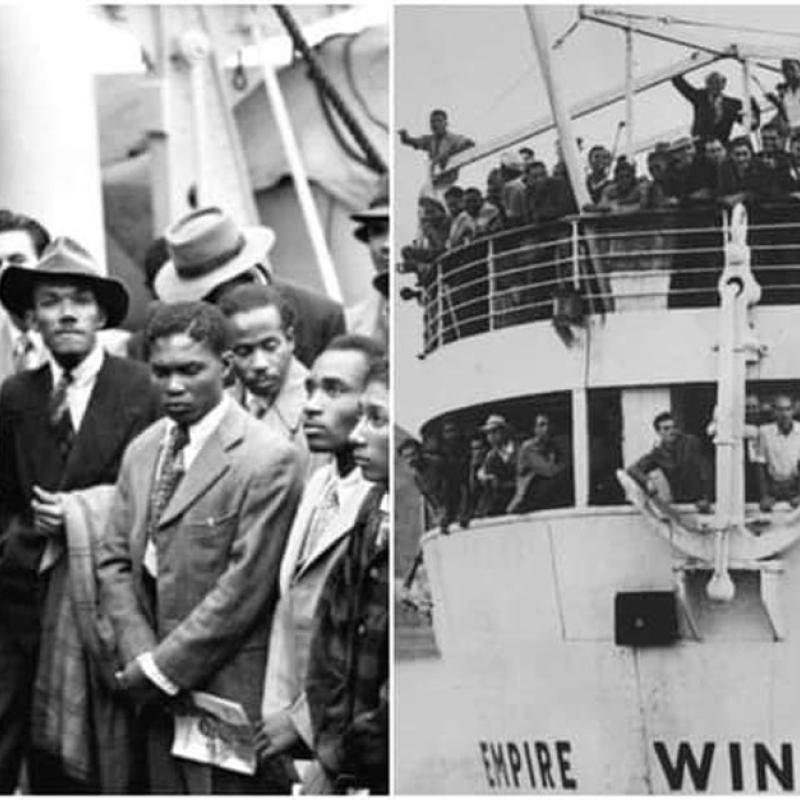
As Britain gets ready to celebrate another Windrush Day on June 22, I use the opportunity to reflect on what I wrote for the British Future report Why the Windrush Matters Today in 2023 and I’m struck by how much has changed and how much remains unfinished.
At the time, I argued that Windrush 75 should be both a celebration and a catalyst. It was an opportunity to recognise the contribution of the Windrush generation, engage a new generation with this history, and begin a national conversation about what Britain could look like by Windrush 100 in 2048. Windrush was not simply a story about the past; it was a story about our future and the kind of society we want to build.
The 75th anniversary marked a watershed moment in the recognition of the Windrush generation. Across Britain, communities, local authorities, schools, museums, libraries, faith organisations and cultural institutions came together to celebrate the contributions of the pioneers who helped rebuild post-war Britain. What had once been a largely community-led commemoration became a truly national moment.
Since 2023, the number of Windrush events has continued to grow significantly. Each year, more organisations have embraced Windrush Day and recognised the importance of telling the story of migration, belonging, citizenship and contribution. There is now greater public awareness of the Windrush generation than at any point in the last 70 years. Young people are engaging with the history, new oral history projects are being established, and more local authorities are creating permanent memorials, plaques, exhibitions and educational programmes.
This growing energy and passion around Windrush should be celebrated. It demonstrates that the campaign for recognition has succeeded in moving Windrush from the margins into the mainstream of British history. Windrush is now increasingly understood not simply as a Black British story but as a national story that belongs to all of us.
One of the key messages from the British Future report was that Windrush history belongs in the national story of Britain. It is Black history, but it is also British history. It tells us who we are as a nation and how our society came to look as it does today. That remains as important now as it was in 2023.
URGENT NATIONAL RESPONSIBILITY
As we look ahead towards Windrush 80 in 2028, we have an opportunity to build on this momentum. Windrush 80 should not simply be another anniversary. It should be a moment to cement the legacy of the pioneers through education, heritage, public memorials and intergenerational learning. It should also be a moment to honour those pioneers we have lost in recent years, including Sir Geoff Palmer, Baroness Rose Howells, Dr Aggrey Burke, Clarence Thompson, Clovis ‘Sam the Wheels’ Salmon, Alford Gardner, and many others whose contributions helped shape modern Britain.
These losses remind us that we are witnessing the end of an era. With each passing year, we lose not only remarkable individuals but also invaluable stories, memories, archives, networks and community knowledge. Many of the men and women who arrived from the Caribbean and also Africa during the post-war period helped build the NHS, public transport, education, local government, housing, business, faith institutions and community organisations. Their contributions transformed Britain, yet many of their stories remain undocumented and at risk of being lost forever.
This is why the preservation of Windrush history has become an urgent national responsibility. Through oral history projects, community archives, exhibitions and digital platforms, we have begun to capture some of these experiences. My own video archive, available through patrickvernon.org.uk/YouTube, contributes to this effort by recording interviews, reflections and discussions on Windrush, Black British history and social justice. However, much more needs to be done.
As a matter of urgency, government, national heritage bodies, trusts, philanthropic organisations and cultural institutions should work together to establish a National Windrush Legacy Strategy. This should provide long-term investment in oral history programmes, archive preservation, digitisation projects, educational resources, research, public memorials and community-led heritage initiatives. Strategic funding is essential if we are to safeguard the stories and achievements of the Windrush Generation for future generations.
As Notting Hill Carnival approaches its 60th anniversary, we should also recognise Carnival as one of the most important cultural legacies of the Windrush Generation. Alongside black churches, supplementary schools, community centres, sports clubs and grassroots organisations, it represents a living legacy of resilience, creativity and community-building. These institutions helped communities survive and thrive in the face of discrimination and exclusion and deserve long-term support and recognition.
We cannot be complacent. At a time when there is a growing backlash against race equality initiatives and increasing attempts to distort, diminish or erase aspects of Black British history, we must be vigilant in protecting the foundations laid by the Windrush generation. The gains made over the past 77 years should never be taken for granted.
Yet, alongside the celebrations, we must acknowledge an uncomfortable truth. The injustices of the Windrush Scandal have not gone away.
Many victims and families are still waiting for justice. Problems with the compensation scheme remain, including delays, inadequate awards, lack of legal support and the failure to fully recognise losses such as pension rights, housing opportunities, mental health impacts and family separation.
The scandal was never simply an administrative failure. It was the consequence of hostile environment policies that treated British citizens as strangers in their own country. The trauma caused by these policies continues to affect individuals, families and communities today.
The Black Equity Organisation has recently launched major research examining the impact of the Windrush Scandal on housing, including the loss of homes, evictions, repossessions and homelessness experienced by those caught up in the hostile environment. This work is helping to expose the wider social and economic consequences of the scandal and strengthen calls for compensation reform and policy change.
The findings reinforce a wider truth: the Windrush Scandal is not a closed chapter in British history. Its consequences continue to affect many individuals and families today through housing insecurity, financial hardship, mental health trauma and loss of opportunity.
This is why Windrush anniversaries must continue to be both celebrations and acts of remembrance. We celebrate the extraordinary contribution of the Windrush generation, but we must also recognise the sacrifices they made and the injustices many continue to endure.
The challenge before us is clear. If Windrush 75 was about recognition, then Windrush 80 must be about preservation, and Windrush 100 must be about legacy. The true measure of our success will not be the number of commemorative events we hold, but whether future generations can access, understand and be inspired by the stories of those who helped build modern Britain.
Recognition without justice is incomplete. The next chapter of the Windrush story must therefore be built on four pillars: remembrance, recognition, preservation and reparative justice.
Only then can we truly honour the generation that helped rebuild Britain and ensure that their legacy endures for future generations.
The time to act is now.
- Professor Patrick Vernon OBE is pro chancellor for health at University of Wolverhampton and a fierce campaigner for racial equality and social justice.