Concern increases when reviewing the budget execution of regional governments. According to information obtained by El Comercio through the Friendly Consultation platform of the Ministry of Economy and Finance (MEF), some regions have used less than 30% of their resources allocated for disaster management and, in certain cases, they do not even reach 10%.
In dialogue with this newspaper, Ávalos explained that the freak that most directly impacts Peru is the so-called Coastal Child. “We have already been under its conditions since March of this year and it will continue, at least, until the summer of next year. This Coastal Child “It is related to the increase in sea temperature off the northern coast of the country above the threshold of half a degree,” he said.

Senamhi warns that the Global Niño could progressively intensify and reach a large magnitude in the coming months. Photo: Andina.
The specialist explained that another area that is permanently monitored is the Central Pacific, whose temperature is closely linked to climate variations on a global scale. “The warming in the Central Pacific, called Child of global reach, it has already begun and there is a high probability that it will reach its maximum intensity between November and January,” he indicated.
Ávalos warned that “we must not let our guard down,” especially in Tumbes and Piura, regions that could face more frequent and intense rains due to the warming of the sea off the Peruvian coast. In this context, he stressed the need to take preventive measures. “Actions must be designed to respond to the occurrence of this event. Now we are not only facing a Coastal Childbut also adds the Global Child either Central Pacific Boy”, he warned.
Figures
This newspaper leaked data from the budgets of regional governments from the MEF’s Consulta Amigable portal. It was investigated how much budget was allocated and how much has been executed so far in 2026 in the three departments that are commonly the most affected by the El Niño phenomenon: Piura, Tumbes and Lambayeque.
In the case of Regional Government of Piura (headquarters)the data from the budget category “Vulnerability reduction and disaster emergency response” show a total of S/ 45,680,316 as the Opening Institutional Budget (PIA) and S/ 33,926,512 as the Modified Institutional Budget (PIM). Regarding the expense executed so far, recorded as accrued, this amounts to S/ 9,068,333. This means that, according to the portal, only 26.7% of the PIM has been advanced.

This could become one of the most intense events recorded in recent years. Photo: GEC.
/ ENRIQUE CUNEO
In it Regional Government of Tumbes In the same budget category, a PIA of S/ 1,406,783 and a PIM of S/ 43,607,242 are recorded. Within this last figure, only S/ 1,196,686 has been executed, which represents an advance of only 2.7% of the PIM and constitutes the lowest percentage of budget executed among the three regions consulted.
The highest percentage corresponds to Regional Government of Lambayequewhich reports a PIA of S/ 3,136,733 and a PIM of S/ 7,782,484. Of this last amount, S/ 3,022,287 have been executed, which is equivalent to an advance of 38.8%.
Analysis
To better understand the risks associated with this freak and the measures necessary to confront it, The Commerce spoke with Freddy Morán, president of the Disaster Risk Management Commission of the Departmental Council of Lima of the College of Engineers of Peru (CIP Lima). The specialist warned that the country must remain attentive to both the evolution of the Coastal Child as the Global Child.
“We have to monitor how ocean conditions evolve over the next few months. Both the Coastal Child as the Global Child require permanent monitoring. If current projections are maintained, the most affected regions would be Tumbes, Piura and Lambayeque,” he noted.

El Niño Costero is related to the increase in sea temperature off the northern coast of the country. Photo: Andina.
Morán maintained that regional governments must promote management based on technical evidence and prioritize preventive actions. “It is necessary to act as soon as possible in the maintenance of the basins and reinforce the management of marginal strips to avoid occupations in risk areas. In the medium term, the infrastructure must also be redesigned under climate resilience criteria. We cannot wait for the rains to arrive to mobilize machinery. This freak “It must test our ability to prevent and adapt to climate events that are becoming more and more frequent,” he stated.
For its part, the meteorological engineer Andrea Holguín, from the Rímac Monitoring Centerexplained the differences between the Global Child and the Coastal Child. He indicated that the so-called Child region 3.4 is associated with freak of global reach, which currently some specialists also call “Super Kid“due to its intensity. In contrast, he explained that the region Child 1+2 is linked to Coastal Child, freak which has a much more direct influence on the Peruvian territory because it includes the waters near the northern coast of the country.
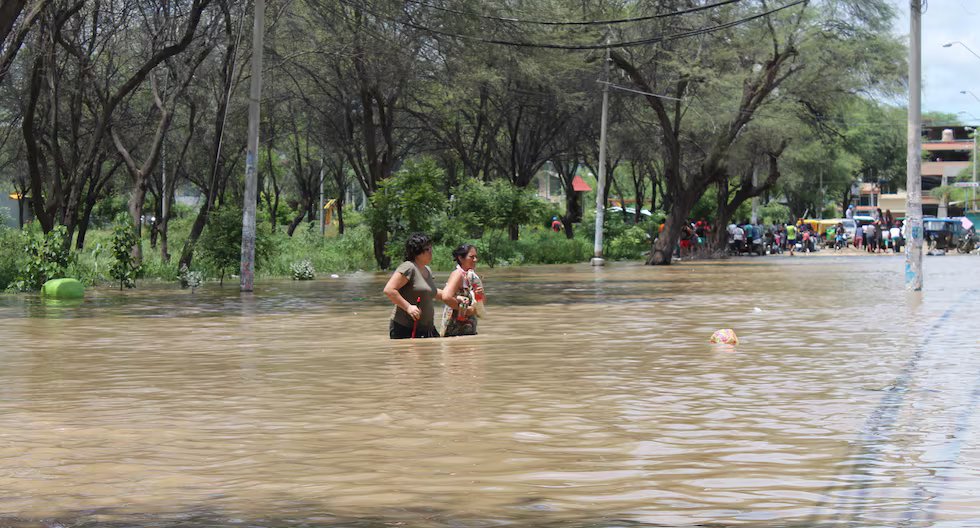
“This freak It is caused by the warming of the sea off the Peruvian coast. The increase in ocean temperature generates greater evaporation and atmospheric humidity, conditions that favor the occurrence of intense rains on the northern coast, mainly in Tumbes, Piura and Lambayeque. These precipitations can trigger activation of streams, landslides, floods and accumulation of water,” he explained.
Regarding prevention measures, Holguín considered it a priority to strengthen and maintain the riverside defenses in the north of the country, which are protection works designed to prevent rivers from overflowing during periods of intense rain. Likewise, he pointed out the need to implement containment barriers and improve storm drainage systems. “Unfortunately, in many northern cities there are still deficiencies in drainage infrastructure, which increases vulnerability to intense rains,” he warned.

Some regions have used less than 30% of their allocated resources for disaster management. Photo: Andina.
The specialist also recommended that families adopt preventive measures in their homes. “Sandbags can help divert or contain the entry of water in the event of landslides or the activation of ravines. Likewise, it is advisable to install eaves or water evacuation systems on the roofs to prevent rain from sliding down the walls and ending up affecting the structure of the homes,” he concluded.
Disclaimers
The Commerce requested relief from the regional governments of Piura, Lambayeque and Tumbes. The latter responded. In this regard, the Planning and Budget Manager of the Regional Government of Tumbes, Antonio Puell Seminariomaintained that the low execution of the budget is due to the fact that “only now are the administrative and regularization procedures being carried out to make the corresponding payments for situations that, since they are emergencies, must subsequently be regularized.”
“The administrative area has been carrying out documentary regularization with the different suppliers so that, starting in the next few days, a significant amount accrued will be recorded that will allow this execution to be increased. Although we are low, everything is on track so that it can be regularized. We are closing important gaps in this situation of the El Niño phenomenon that is coming (…). If any irregularity is detected, the Comptroller’s Office and the Prosecutor’s Office can intervene immediately in any adverse situation,” he added.