After years of preparation, one of the largest reforms to asylum legislation in the entire EU came into force on Friday, June 12, 2026. European Union: the Common European Asylum System (CEAS). Magnus Brunner, European Commissioner responsible for Migrationpromises greater control at the EU’s external borders.
The German Minister of the Interior, Alexander Dobrindtsees a change of direction. “The shift in migration is having an effect in Germany and also at European level. We are firmly determined to follow exactly this path also with our neighboring and partner countries,” Dobrindt declared at the meeting of EU interior ministers at the beginning of June.
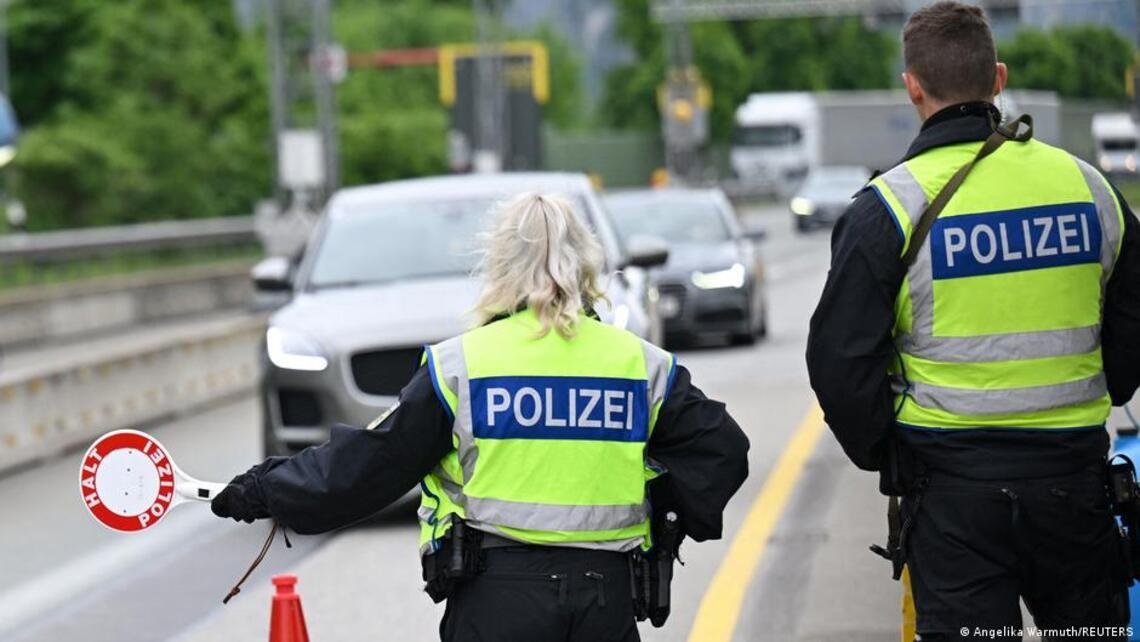
By “change of course on migration”, the German Interior Minister refers to border controls at the internal borders between EU Member States and the return of asylum seekers at German borders without procedure. This would have resulted in a decrease in the number of applicants.
Border procedures must act as a filter
The new “Common European Asylum System” (CEAS) introduces a preliminary examination of asylum seekers at the EU’s external borders and accelerated border procedures for people coming from countries with low recognition rates. This means that asylum seekers from, for example, Pakistan, Iran, Russia, Turkey, Venezuela, Nigeria or the Democratic Republic of the Congo will in future be subject to accelerated border procedures and will have to remain during this time in more or less closed camps.
In these and many other states, the recognition rate of asylum seekers is less than 20%, according to the EU statistics office, Eurostat. After a maximum of 12 weeks, people will be deported to their countries of origin if their asylum application is denied. The number of countries of origin considered safe is expected to increase, so that asylum applications can be rejected as manifestly unfounded.
Migration researcher skeptical
Migration expert Gerald Knaus, founder of the think tank “European Stability Initiative” (ESI), doubts that this will work. “These so-called border procedures could already be carried out for years. Now they are mandatory and, in the best case, perhaps in twelve weeks it will be known that that person from Bangladesh in Italy or that person from Pakistan in Greece does not need protection. Yes, and then there is no answer as to what will happen next,” says Gerald Knaus.
Deportations to countries of origin remain difficult; Rejected asylum seekers are likely to move to another EU country, although in reality the EU countries of first entry – that is, Italy, Greece and Spain – are the ones to handle. “In reality, the countries of arrival have always been obliged to process the procedures for those who arrived to them. Only that has not worked. Why would it work now? We will see in a few days,” predicts Knaus.
What is working?
The number of new asylum procedures, that is, initial applications, has been decreasing significantly in Europe and Germany for two years. According to Federal Interior Minister Alexander Dobrindt, this is due to systematic border controls carried out by Germany and nine other EU Member States.
Migration experts such as Gerald Knaus of the European Stability Initiative doubt that controls and direct returns of asylum seekers at the EU’s internal borders in Germany have much to do with the decline in the number of applicants.
“If now, after the fall of Assad, Syrians no longer arrive in the EU, nor in Germany, nor in Austria, nor in Greece, then the number of asylum applications in Germany and Austria is drastically reduced. That is what has happened. It had nothing to do with the Minister of the Interior, nor with the CEAS, nor with the border controls,” Gerald Knaus told DW. Since the change of power in Syria at the end of 2024, the number of people leaving the country has decreased significantly.
Return centers for asylum seekers?
In order to repatriate asylum seekers from Germany to the competent EU Member States, the German states must create so-called “return centers”. At the moment, there are only two: one in Hamburg, in the north of Germany, and another in Eisenhüttenstadt, in the east of the country.
According to an agreement between EU Member States and the European Parliament, the deportation of rejected asylum seekers from the European Union should at some point also be possible to third countries. Other “return centers” will be built there. At the moment, these only exist on paper.
German Interior Minister Dobrindt announced that partner countries willing to collaborate will be identified before the end of the year. When would these return centers be built? “That is still a thorny issue that must be addressed,” the minister responded.