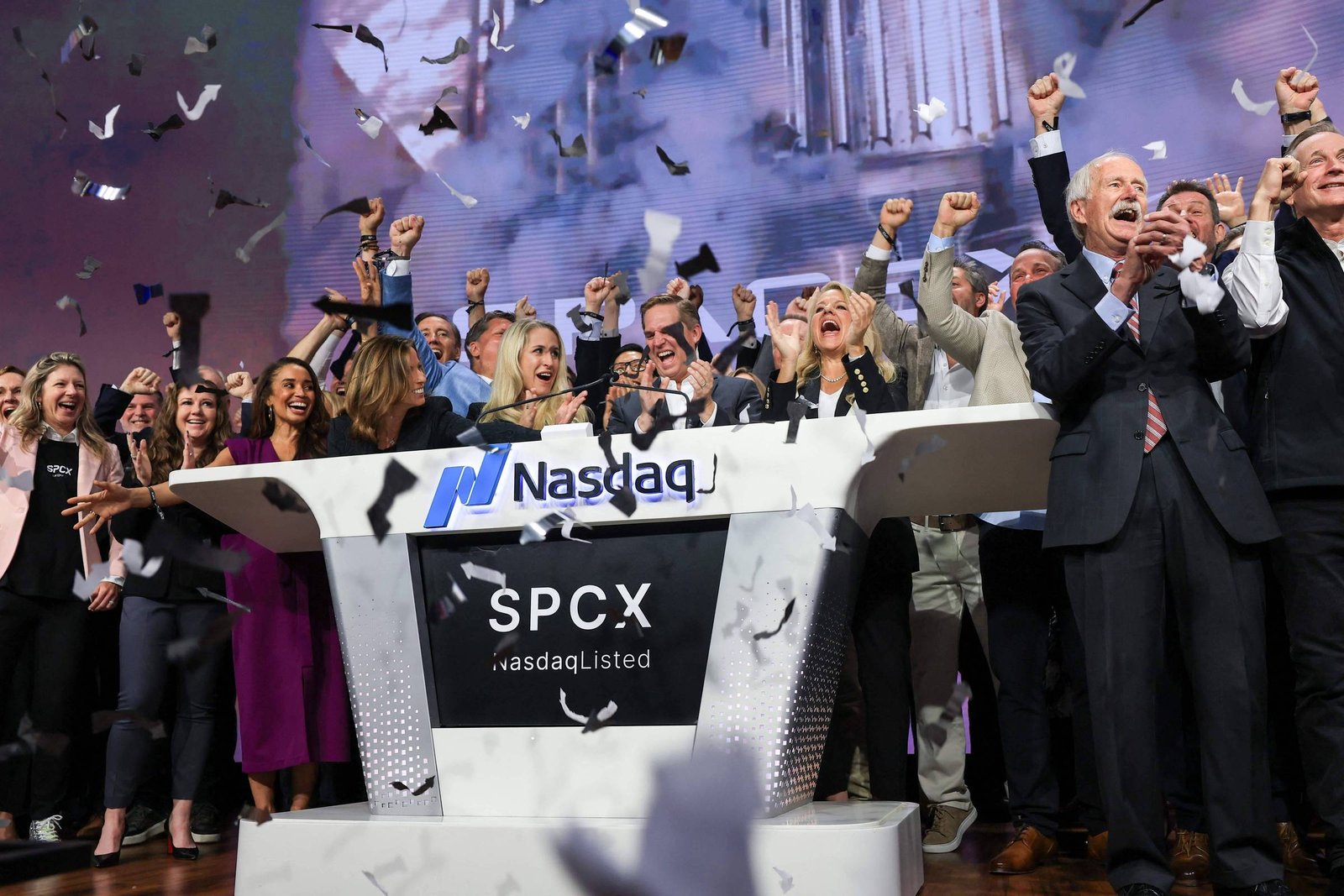
THE SpaceX (SPCX.O) rose 20% in its debut on the Nasdaq this Friday (12), taking the valuation to more than US$2 trillion (R$10.1 trillion), as investors flocked to the world’s biggest IPO and bought a stake in Elon Musk’s vast empire, which spans rockets, satellite communications and AI.
The share opened for trading at US$150 (R$762), compared to the IPO price of US$135 (R$686) per share. It then reached US$164 (R$833).
The days of excitement surrounding the debut are now giving way to what will be one of the biggest challenges to Wall Street’s trading infrastructure in years, as exchanges, market makers and underwriters brace for extraordinary order volumes after the company sold US$75 billion, immediately reaching a valuation of US$1.77 trillionwhich makes it one of the largest companies in the United States.
Stock exchanges and brokerages are keen to avoid the technical problems that marred Meta’s 2012 debut. With SpaceX widely seen as a dress rehearsal for a new generation of mega public offerings, market participants will also be watching for signs about investor appetite ahead of the upcoming IPOs of AI giants Anthropic and OpenAI.
The actions, whose price was set at US$135 eachwill likely not be traded until mid-session, as the Exchange is collecting buy and sell orders and underwriters are delaying trading until supply and demand balance.
“We expect SpaceX to see an immediate jump in trading due to the excitement around the deal, perhaps upwards of 20%,” said Samuel Kerr, global head of capital markets at Mergermarket. “Anything lower would actually make me worried.”
THE SpaceX President Gwynne Shotwelland Chief Financial Officer Bret Johnsen rang the Nasdaq opening bell at 10:30 a.m. EDT.
The historic listing cemented Musk’s status as the first trillionaire in history and propelled SpaceX into the rankings of the world’s most valuable companies — even though the company posted a loss of nearly $5 billion last year and generated just a fraction of the revenue earned by technology giants with similar valuations.
“I gave SpaceX a 10% chance of succeeding,” Musk said in Texas shortly before trading began.
The stock’s performance will also be a test of the so-called “Musk premium,” which has been the force behind Tesla’s $1 trillion-plus valuation despite coming under pressure during Musk’s active role in President Donald Trump’s administration.
BIGGEST IPO IN THE WORLD
The record IPO is the culmination of Musk’s long-held ambitions in the space and technology sector, and stood out for redefining the rules of the game of initial public offerings on Wall Street and attracting a legion of retail investors to the market.
At $75 billion, the proceeds raised from the transaction were more than double those raised in Saudi Aramco’s record-setting initial public offering in 2019. This is expected to make SpaceX the first US company to debut with a value of $1 trillion and the seventh-largest US company by market capitalization.
“Elon jokes that we do the impossible, just late,” SpaceX chief operating officer Gwynne Shotwell told CNBC in an interview.
The valuation could rise further if the underwriters exercise their right to sell additional shares, a decision typically made within 30 days of the offering.
While SpaceX may have to wait to join the S&P 500, its expected accelerated inclusion in the Nasdaq 100 will soon make it a top holding for passive funds and ETFs that track the index, creating a new source of demand for its shares.
It will take about a month for it to be added to that index under Nasdaq’s new fast-entry rules, in contrast to the typical wait of up to a year.
Some analysts expect SpaceX’s debut to trigger a reshuffling of investor portfolios, creating selling pressure on other technology heavyweights as funds redirect their resources into the company’s shares.
$28.5 TRILLION MARKET OPPORTUNITY
Despite all the excitement surrounding the IPO, determining SpaceX’s true value remains a difficult valuation exercise.
SpaceX stated that its market opportunity reaches US$28.5 trillion, a value that the company considered the largest in human history. With its leading position in the space sector — the company says its operations are responsible for more than four-fifths of the payload launched into orbit over the past three years — and Starlink’s revenues, some investors have said it has a solid foundation on which to build.
John Belton, portfolio manager at Gabelli Funds, said the best comparison for SpaceX is Musk’s electric vehicle company Tesla, as both have an established business and “an ambitious opportunity in the future.”
Shares of space companies rose in pre-market trading, with Intuitive Machines, Planet Labs and Satellogic recording gains of between 3.3% and 4.5%.