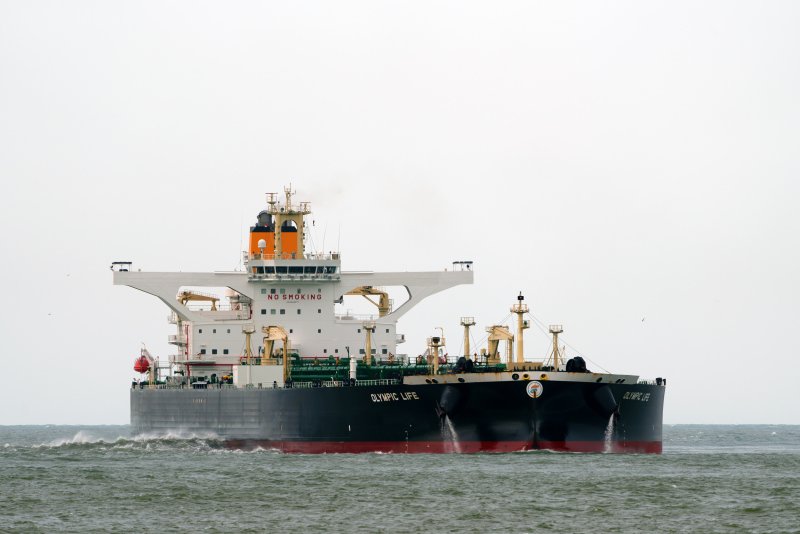
The Indian Navy has removed an unexploded missile warhead from a Greek-owned crude oil tanker after the vessel sailed for days with the projectile lodged inside one of its fuel tanks, in a case that has underlined the growing risks facing shipping around the Gulf of Oman.
The Marshall Islands-flagged MT Olympic Life, a Very Large Crude Carrier linked to Athens-based Olympic Shipping & Management, was sailing from Fujairah in the United Arab Emirates to Kochi when it reported an explosion in its hull off the coast of Oman end of May.
According to India’s Ministry of Defence, the tanker continued its passage towards Kochi after reporting the presence of unexploded ordnance on board. The vessel had no Indian nationals among its crew.
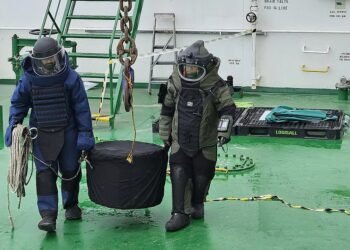
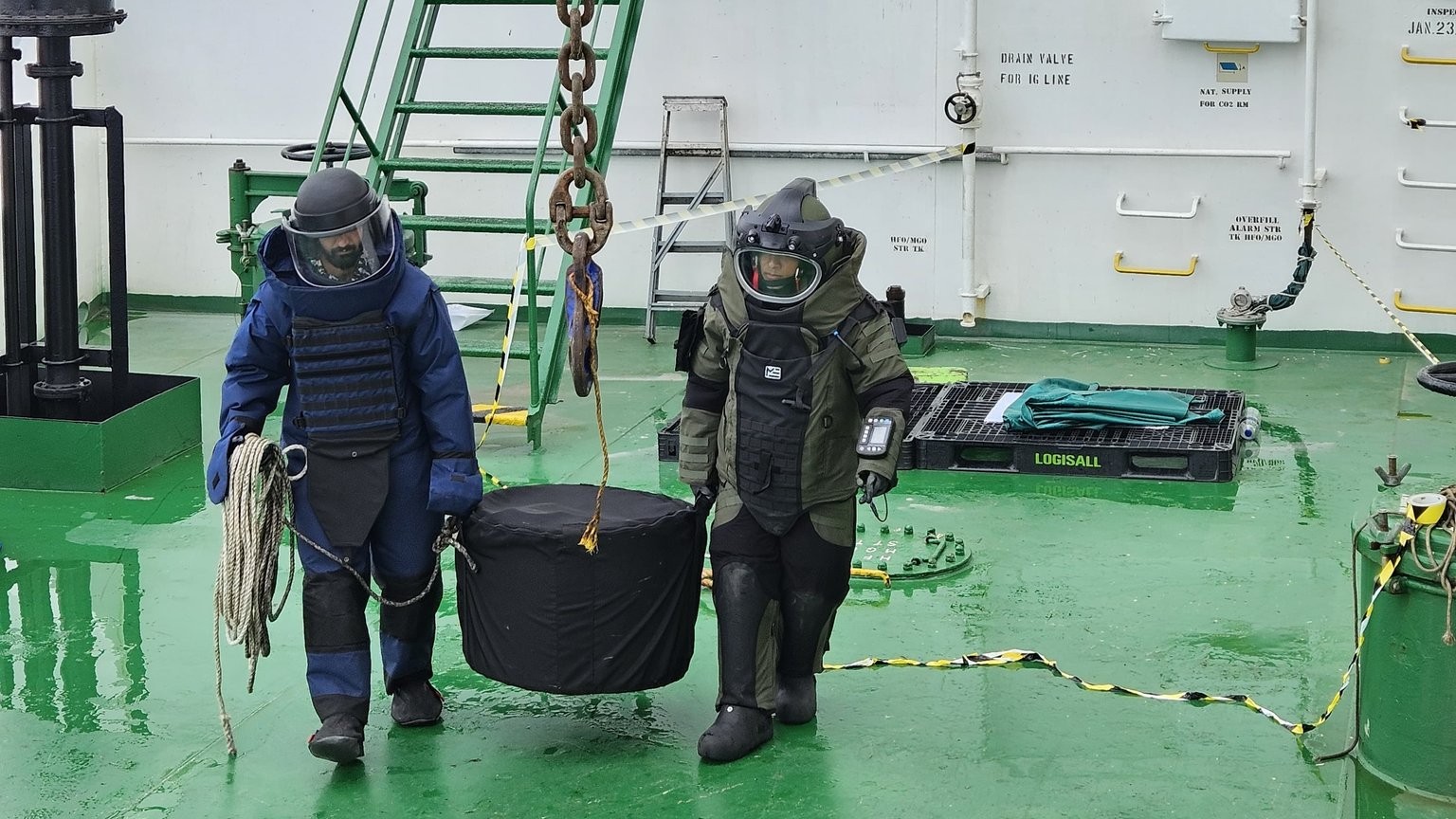
The Indian Navy said the information was received through the Information Fusion Centre – Indian Ocean Region, after which the Southern Naval Command in Kochi deployed a specialist Explosive Ordnance Disposal team to assess the threat.
The team confirmed that a projectile had penetrated the tanker’s hull, passed through several structural compartments and become lodged inside a fuel tank.
The discovery left the vessel facing an unusually dangerous situation, with an unexploded missile warhead sitting inside a fuel storage compartment on a crude oil tanker. The navy said its specialists therefore followed a “deliberate and phased approach” to protect the ship, its crew and nearby port infrastructure.
After completing safety procedures, the team used diagnostic methods to identify and isolate the detonation mechanism before safely extracting the warhead and associated debris.
The recovered ordnance was then taken to a secure facility for safe storage and further examination.
The incident was first reported on May 26 by the United Kingdom Maritime Trade Operations, which said the master of a tanker had reported an external explosion on the vessel’s port side, close to the waterline, around 60 nautical miles off Muscat.
UKMTO said at the time that the crew and vessel were safe, although some bunker fuel had been discharged into the sea. Reuters later reported that the tanker’s technical manager, Springfield Shipping, said the vessel had been struck by an unidentified object but remained stable and operational.
“An initial assessment indicated that there was damage to one of the vessel’s bunker tanks. A sheen was reported in the water after the incident,” Springfield Shipping said in a statement to Reuters, adding that the spill had been contained.
The vessel was not carrying cargo at the time, according to Reuters, and was heading out of the Gulf of Oman when the explosion was reported.
Shipping media have since identified the incident as a missile strike, with TradeWinds reporting that the vessel had sailed for four days with the projectile lodged in its fuel tank. The Indian authorities, however, did not publicly identify the origin of the missile in their statement.
The Maritime Executive reported that the Olympic Life was able to continue its voyage despite sustaining a substantial hole in its side, before Indian Navy specialists removed the missile components in Kochi.
The case comes at a time of heightened concern over the security of commercial shipping near the Strait of Hormuz, one of the world’s most important energy routes. Tanker operators, charterers and insurers have been closely watching developments in the Gulf of Oman and surrounding waters, where even limited incidents can quickly affect risk assessments, route planning and war-risk premiums.
For the Indian Navy, the operation was presented as a demonstration of its ability to respond to emergencies at sea regardless of the nationality of the crew or ownership of the vessel.
It said the response reflected its role as a maritime security partner in the region and its commitment to global maritime safety.