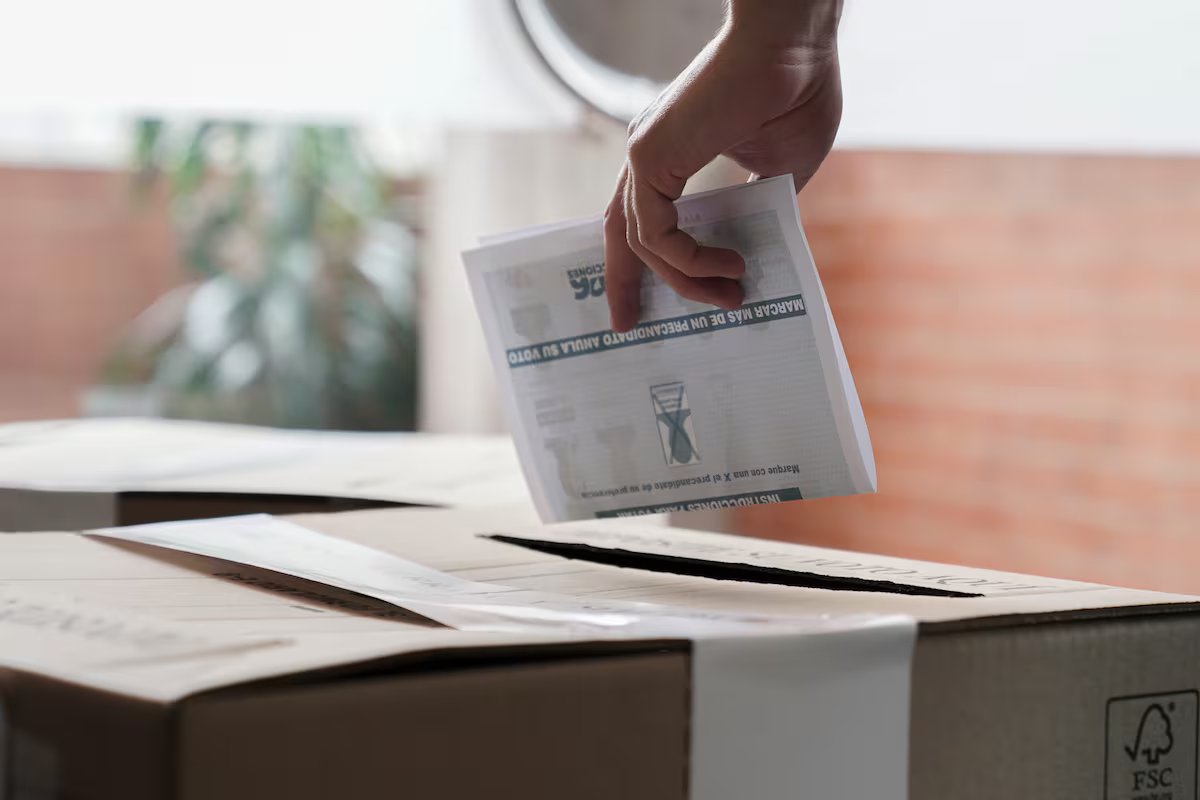
The debate on deepfakes usually reaches Latin America as an interested alarm: a fake video, a cloned voice, an image manufactured in seconds and spread on the eve of an election. The scene seems straight out of a technological novel: a candidate says something he never saidmillions believe it and a democracy changes course.
But the underlying question is not whether a deepfake can really “steal” an election like in a movie, but another: what happens when a society stops having a common ground to distinguish between what is true, what is false, what is probable and what is deliberately manipulated? A democracy is not shattered only when a ballot box is tampered with. It also weakens when the citizen begins to vote out of absolute suspicion.
In Latin America, this risk has its own texture. Here, disinformation does not always require flawless forgery. Sometimes it is enough with an audio forwarded by WhatsApp, an image taken out of context, a cropped video, an anonymous account, an influencer disguised as a spontaneous citizen or a chain that arrives with the emotional authority of the family, the church, the neighborhood or the work group.
The lie does not have to be perfect; It has to look close. That’s the point that’s often missed when we reduce the problem to technology. Ibero-America does not simply face a artificial intelligence (AI) threatbut also the combination of cheap technologies and old fractures: institutional distrust, political polarization, journalistic precariousness, violence against social leaders, digital inequality, clientelism, corruption, organized crime and an increasingly emotional public conversation.
AI does not invent these cracks. It makes them faster, cheaper and harder to track. During the great global election cycle of 2024 and 2025, the feared “deepfake election” did not occur in the apocalyptic terms that many anticipated. That precision is important. We are not facing an automatic invasion of perfect videos capable of hypnotizing entire societies. In many countries, the cheapfakes: simple manipulations, coordinated rumors, fraud narratives and artificial amplification networks.
But it would be a mistake to confuse the absence of catastrophe with the absence of danger. The fact that deepfake has not yet been the absolute protagonist does not mean that the problem is minor, but rather something more tangled: electoral manipulation does not need to wait for the most sophisticated technology to cause damage. In polarized societies, a mediocre fake can suffice if it confirms the right fear.
Latin America knows it well. The region has been living with stories of fraud for years before current generative AI tools existed. In some countries, the electoral authority is made suspect before the polls are opened or journalists are presented as enemies. In other cases, courts, watchdogs or international observers are discredited when their conclusions cause discomfort. Technology does not create that strategy; modernizes it.
Therefore, the most dangerous deepfake is not always the one that convinces everyone. It is the one that raises a useful doubt that allows us to say: “that audio is false”, even if it is true; “that video was made by the AI”, even if it is authentic; “that evidence is manipulated,” even though it documents real abuse. It is the so-called liar’s dividend: when the possibility of falsifying everything becomes an alibi to deny any evidence. In a region where corruption and abuse of power have left deep scars, that alibi can be devastating. If everything can be false, then there is no accountability. Democracy not only loses the truth; It also loses the consequences.
Ecuador issues a particularly harsh warning. There, the discussion about electoral AI cannot be separated from political violence, the weight of organized crime, threats to journalists and digital polarization. Information manipulation does not appear as an isolated phenomenon, but as part of a broader environment of intimidation, fear and dispute over legitimacy. In that context, content generated or altered by AI It can become ammunition in a hybrid war for public opinion.
Mexico shows another dimension of the problem. Falsehood campaigns about social programs, candidacies, electoral authorities or alleged fraud were not born with AI. This comes later, as a tool that allows you to produce more versions, faster and with better appearance. The risk is not only in falsification, but in saturation.
Brazil, for its part, has tried a more direct response from electoral justice, with rules on the use of AI in political propaganda and prohibitions against deepfakes intended to favor or harm candidacies. This path shows something relevant: Ibero-America does not have to wait passively for others to design the responses. You can also innovate. But this innovation must be tread carefully, since regulating lies cannot become a license to domesticate criticism.
That tension is central. Our region knows all too well the risks of power when it assumes the power to decide what can be said and what cannot. Under the pretext of combating disinformation, a government may end up censoring uncomfortable journalism, social protest or citizen complaints. And under the guise of defending freedom of expression, platforms can continue to monetize the chaos while others pay the democratic cost.
The way out is not then to create ministries of truth or to hand over the public conversation to companies that organize attention as a private business. The response must be democratic or it will be no response. This implies, first of all, assuming that platforms are not simple showcases, but rather infrastructures of power. Its algorithms decide what is seen, what is repeated, what is amplified and what remains buried. In Latin America, in addition, they often operate with less local moderation, less transparency, less investment in non-dominant languages and less accountability than in more regulated markets. Democratic conversation in Spanish, Portuguese and indigenous languages cannot continue to be treated as a secondary problem in Silicon Valley.
On the other hand, electoral authorities must prepare before the crisis, not after the scandal. A last-minute lie cannot be combated with a slow, technical statement written for specialists. It is combated through clear protocols, rapid verification channels and cooperation with the media, civil society, universities, platforms and electoral observers.
Furthermore, regulation must distinguish between harm and dissent. Not all false content justifies a state sanction. Not all satire is misinformation. Not every error is a coordinated operation. But there must be consequences when false identities, cloned audio, manipulated images or paid and opaque campaigns are used to deliberately deceive the voter about relevant electoral facts.
The region also needs to address gender misinformation more seriously. Women politicians, journalists, activists and social leaders face digital violence that does not only seek to “deceive” the public. It seeks to humiliate, sexualize, intimidate and expel. A sexual deepfake It is not a private problem: it is a tool of public silencing. If women abandon the democratic conversation for fear of digital degradation, democracy is impoverished, even if the polls remain open.
For its part, digital literacy must stop being a school slogan. It is not enough to tell citizens: “Verify before sharing.” We must teach how an emotional campaign is manufactured, how a network of coordinated accounts operates, how a video is manipulated, how a voice is cloned, how fear and anger are exploited, and why the first impulse to forward is usually the most dangerous.
It would also be a mistake to talk about AI only as a threat. Used well, it can help translate electoral information into indigenous languages, make debates accessible to people with disabilities, detect coordinated networks, facilitate content verification, improve the transparency of political spending and bring public information closer to communities that have historically been left out. The problem is not the technology itself, but who governs itwith what incentives and under what controls.
Ibero-America needs its own agenda: inter-American, democratic and human rights. An agenda that does not simply copy other models or improvise criminal norms in the heat of each crisis. An agenda that combines transparency in political advertising, researchers’ access to platform data, public ad libraries, traceability of synthetic content, reinforced protection for journalists and candidates, regional cooperation between electoral authorities and real sanctions for those who turn lying into an industry.
Democracy cannot be protected solely by counting votes. It must also protect the invisible process through which citizens come to decide. And that process occurs less and less in the traditional public square and more and more in personalized flows of information, designed to capture attention, provoke emotion and sustain dependency.
The danger is not that machines vote. The danger is that they learn to talk to us before voting. Let them know what outrages us, what scares us, what divides us and what makes us obey without realizing it. When lies take on our accent, the defense of democracy can no longer be limited to denouncing fake news. You must rebuild trust, demand transparency, protect those who verify, hold those who amplify accountable, and educate those who decide.
In Latin America, democracy will not necessarily be lost because of a perfect fake video. It can be lost sooner, in something more everyday and silent: at the moment when millions of citizens conclude that it is no longer worth believing in anything.