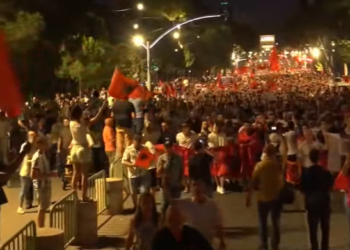
A year after Prime Minister Edi Rama won a fourth consecutive term, Albania is in a reality profoundly different from the triumphalist narrative he had projected. The government that claimed unparalleled authority now faces the most sustained civil uprising in decades. What started as a modest protest against foreign investment projects in Zvërnec and Sazan has turned into a nationwide confrontation with a system that many Albanians see as irresponsible, extortionate and fundamentally exhausted.
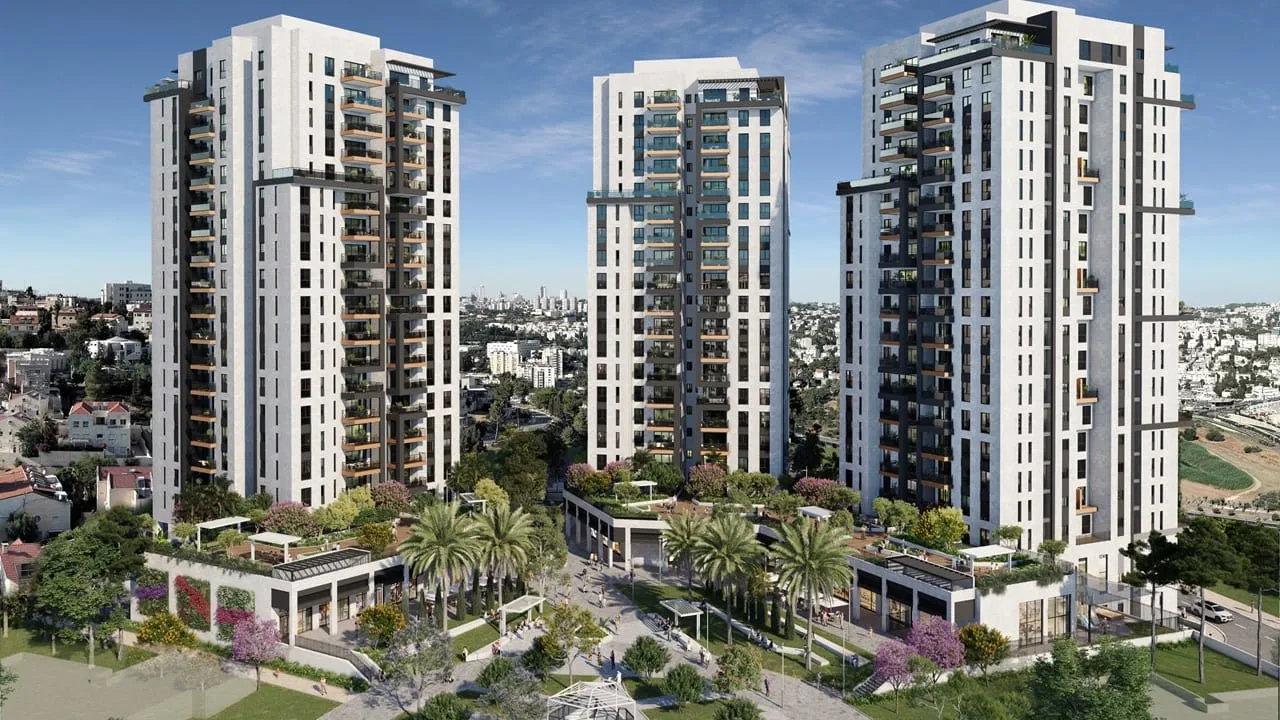
The protests were fueled by concerns over the non-transparent terms of high-profile investments linked to Ivanka Trump and Jared Kushner. But the demonstrations are not a referendum on the Trump family, nor a rejection of foreign capital. Albanians have long welcomed investments that respect the laws of the country, the environment and the public interest. What they reject is the way these projects were pushed forward: without transparency, without consultation and without respect for environmental or property rights. The protests are not anti-Trump or anti-American; they are against kleptocracy.
For years, Rama governed as if political competition were a nuisance rather than a democratic necessity. Power became more and more centralized. Parliament functioned as a formality. Cabinet reshuffles were announced theatrically, with ministers learning of their appointments during public speeches. The inner life of the ruling party narrowed into loyalty and conformity. The opposition, fragmented and demonized, was treated as a nuisance, not a counterweight.
This concentration of authority created the illusion of stability. But it also produced a fragile system—one that could function efficiently only as long as citizens remained passive. The protests have broken this assumption. They have highlighted the limits of a governance model built on control and corruption, rather than consent and accountability.
The controversy over the projects in Zvrnec and Sazan brought to the surface deeper grievances. Albanians have watched for years as public tenders, infrastructure contracts and strategic assets have been given away to politically connected networks. High-profile corruption cases, such as the Balluku case and the enrichment of ministers, senior officials and their families, have reinforced the perception of a ruling elite shielded from accountability. Meanwhile, ordinary citizens are faced with stagnant wages, rising costs and declining public services. Nearly a million Albanians have emigrated in the last two decades, a staggering exodus that reflects both economic hardship and a loss of faith in the country’s leadership. The protests are, in part, a response to this long-standing erosion of trust.
Instead of engaging with the protesters’ concerns, Rama has chosen a strategy of contempt and mockery. He has portrayed the demonstrations as anti-investment or manipulated by foreign agents. He has poked fun at the protesters through spectacle – pelican jokes, staged taunts and insinuations that they are misinformed or unpatriotic. He has revived the spectacle of mass gatherings celebrating his party’s anniversary, evoking the performative mobilizations of the late communist era. This reaction reveals more than political protection. It reflects a governing style accustomed to impunity and which finds it difficult to see dissent as anything other than sabotage. It is a response that deepens, rather than resolves, the crisis of legitimacy.
What makes this civil uprising extraordinary is its composition. It is not orchestrated by a political party. It is not driven by a single ideology. It is a coalition of students, environmental activists, owners, workers, retirees and young professionals. Many of them had long disengaged from politics, convinced that participation carried little weight. Now they are on the road, united by the common conviction that Albania cannot continue on its current path. Their demands are clear and coherent: Rama’s resignation; a technical government to restore confidence; repealing laws passed to suit investors without public consultation; accountability for corruption, including high-level cases; and a governance model based on transparency and the rule of law.
These are not radical demands. They are the basic expectations of a democratic society.
For years, the political life of Albania has been characterized by surrender. Citizens have seen institutions weaken, corruption deepen and public debate narrow. Many concluded that nothing could change. The protests have reversed this psychological trajectory. They have restored a sense of action to a society that has been told for a long time that power is immobile. Even without a single leader or formal structure, the movement has already achieved something profound: it has broken the spell of invincibility that surrounded Rama’s rule.
Rama’s landslide victory in 2025 was meant to cement his dominance. Instead, it accelerated the overstepping of the limits of power, which has now provoked widespread resistance. His tenure, once presented as historic, increasingly resembles a Pyrrhic victory – one that brought short-term control at the cost of long-term legitimacy. Even if he survives the immediate crisis, the political landscape has changed irreversibly. The government can no longer rely on public apathy. The opposition, although still fragmented, is no longer the only channel of dissent. Civil society, marginalized for a long time, has returned to the national scene. And the younger generation, so often scorned as disengaged, has shown it is ready to act.
At this moment, the international community also faces a choice: to remain a distant observer, or to maintain a principled position in support of democratic norms, institutional integrity and true accountability.
The protests have opened a door, but they have not yet defined the way forward. Albania needs more than catharsis. It needs a comprehensive strategy for democratic renewal: rebuilding institutions capable of withstanding political pressure; restoring checks and balances; guaranteeing the independence of the judiciary; protection of media freedom; creating space for new political actors; and investment in education and opportunities, so that young Albanians can see the future in their country.
These are long-term tasks, but they are now part of the national conversation in a way they haven’t been in years.
Whether or not the protests will bring immediate political change is not the only measure of their importance. Albania has already crossed a threshold. A society that had become cynical has found its voice again. A government that believed itself invincible has faced its limits. A nation that felt humiliated by corruption has regained its dignity.
This is a civic awakening, not a passing episode.
Albania has gone through difficult chapters and emerged stronger. Might do it again. The courage shown in the streets of Tirana is not simply a rejection of the present; is a future statement. The protesters have reminded the country and the world that Albania’s democratic aspirations remain alive, stable and deeply rooted.
A nation that regains its dignity no longer returns to silence. Albania has entered a new chapter, and its citizens are writing it with clarity, courage and hope.