Events at home and around the world have repeatedly shown that we have a complicated relationship with whistleblowers. As long as they expose irregularities in the opposing camp, we elevate them to heroes and erect monuments to them.
When they draw attention to irregularities in our circle, they quickly become accusers, traitors, penitents or political operatives. Therefore, the public rarely perceives whistleblowers unambiguously, and it is precisely this ambiguity that often causes their disclosure not to lead to actual changes, but to be lost in political disputes about the motives and identity of the whistleblower.

Jerica Jančar, lawyer, co-founder of the Center for the Protection of Whistleblowers.
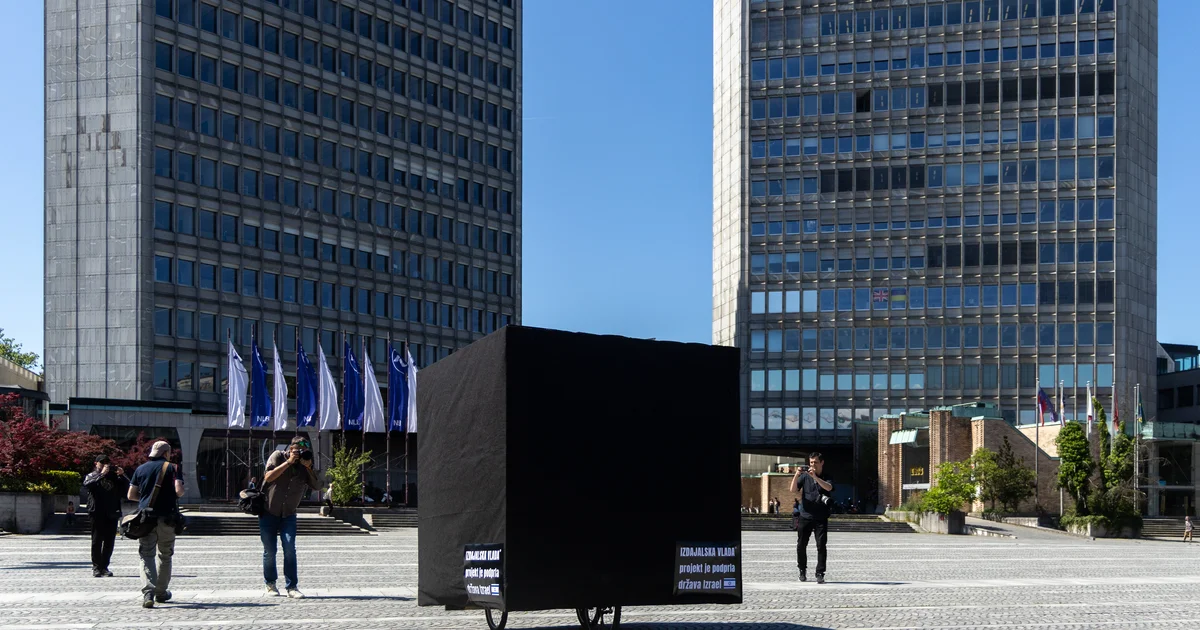
Towards a better understanding of whistleblowing whistleblowing) can also help the Slovenian Black Cube affair. Namely, if the recordings are supposed to represent the disclosure to the public of important information about the systemic corruption of the ruling administration, then it is clear that the Black Cube company obtained this information from someone.
For the purpose of this paper, we will ignore the possibility that all information about the individuals who were the targets of the recordings was given to them by the intelligence services. This leaves only the possibility that they got them from their “private” client: either from a political actor in the pre-election struggle for power or from someone completely third. And so we meet our whistleblower.

PHOTO: Voranc Vogel
In this case, it is not at all unusual that he himself may not even realize that he is a whistleblower (let’s assume that it is one individual, but there can be several). Many authors, based on conducted interviews with whistleblowers, repeatedly note that these are individuals who do not like this term and do not see themselves as whistleblowers at all, but as someone who is simply doing their job and pointing out irregularities either internally or externally.
He does so simply because it is the right thing to do. It seems logical, but unfortunately the reality is not so simple. Often, the individual is not even aware of what he is getting into and that his life can change completely. Without adequate reflection and thorough preparation for the whistle-blowing, due to the inevitable ambivalence, such an individual will, as a rule, be completely excluded from his professional environment, and in the best case, he will become a hero for one camp, and quite the opposite for the other: in our affair, for example, we could even hear the word high treason.
When judging whether someone is a whistle-blower, his motivation is generally not decisive. Even in European and comparative legal practice, it is emphasized that what was disclosed is important, not why the disclosure occurred. Whistleblowers are usually driven by various motives: from personal injury, revenge, fear of getting themselves into trouble, political interest or internal conflicts to purely altruistic reasons. Therefore, even a possible political actor in the struggle for power is not automatically excluded from the whistleblower category simply because his action is politically motivated; the key is what the content of the disclosure is and whether it contributes to the public interest.

Protesters in March after the revelation of the Black Cube affair. PHOTO: Borut Živulović
The work environment from which the information originates is also not limited to the classic employment contract, but also includes other professional relationships in which the person obtains information about violations. For example, a member of the National Assembly may be entitled to protection as a whistleblower if he obtained information about an alleged violation while performing his parliamentary duties (for example, in parliamentary work, committees, control of the executive branch). In this sense, the working environment of a member of parliament can also be his control over the government or even over the Prime Minister.
There were a lot of responses to the effect that nothing about irregularities can be heard on the recordings, that we did not learn anything new and that it is just bragging over spaghetti, which should not be taken too seriously. However, the content is not so innocent. Take for example the former Minister of Justice in her new role lobbyists.
In the video, she declares that her client would have an open path to the Prime Minister if the ruling administration wins the elections again, as his wife is her good friend, and she also knows his close colleague. This is not legal lobbying, but a classic example of access trading, or offering a personal channel. If official channels are actually bypassed later, others who would just as well want access are excluded, and especially if decisions are actually made because of personal proximity, then it is clear that this is corruption, not lobbying.
The difference between them is precisely where the lobbyist’s influence comes from: whether it is based on his demonstrable knowledge, experience, arguments and professional work in defending interests, or mainly only on his personal acquaintance with the decision-maker. Even the Commission for the Prevention of Corruption often points out that corruption is not just an envelope with money, but is primarily about the use of position or influence for private gain.
But what if the disclosure is important to the public, but the method of obtaining the information is legally objectionable? Here we come to the heart of the problem of our affair. The Slovenian legal system generally protects the whistleblower if he obtains the information in a legal way (for example, while performing his job). However, it is completely different if the whistleblower obtains evidence of irregularities in an illegal way, in our case by illegal recording. In such cases, the protection falls away, and the focus naturally shifts, so that we are no longer talking about the content of the disclosure, but exclusively about the method. And that is often where the debate stops: at the disqualification of the whistleblower.

PHOTO: Voranc Vogel
Politically speaking, the problem is even bigger. In the Slovenian space, there is a long history of expectations that “this time they will really” be established real democracy, rule of law and fewer closed and corrupt centers of power emerged. Every new affair is therefore also judged through historical experience, or through the feeling that at the time of independence there was a lot of trust and perhaps even naivety that a democratic and legal state would work on its own, but it turned out that we should also have the skills and even more readiness for a hard political fight for its actual implementation.
If someone pointed out an irregularity, risked political or personal consequences and raised questions that the public deserves to hear, then it is legitimate to ask whether we as a society are ready to hear unpleasant content and take action, or will we always first look for a reason why the whistleblower should be disqualified. shoot the messenger). The answer to this question goes beyond one affair and one political name. It affects the very quality of Slovenian democracy.
It would be democratic if the system could tolerate a disclosure that is politically unfavorable to it without retaliatory measures, and was able to protect the rule of law and the public interest at the same time. This certainly did not happen in the Black Cube affair, so it did not contribute to a more mature democracy. It did not initiate a broad political consensus on the standards of responsibility of power holders, nor did it eliminate the eternal human reflex to first “shoot” or discredit the messenger when an unpleasant disclosure is made and only then, if at all, check the content.
At the same time, it is also true that it is the latest in a series of numerous scandals, which have repeatedly shown us in the past that whistleblowers play an important role in exposing conduct that the public rightfully needs to know. It is an opportunity to reiterate that a democratic society must not regard whistleblowers as useful only when they expose “adversaries”, but must establish a culture in which disclosures are judged by their content and public interest.
This means clear legal and economic protection against retaliatory measures, independent verification of allegations, and above all, a political and social willingness to hear the uncomfortable truth and also demand and accept responsibility.
***
Jerica Jančar, lawyer, co-founder of the Center for the Protection of Whistleblowers. The contribution is the opinion of the author and does not necessarily reflect the opinion of the editors.