Authorities and businesses at a meeting with President Vladimir Putin on June 10 discussed additional incentives for investment – from easing monetary policy to expanding the federal investment tax deduction to 5-6% and targeted support for large projects. Productive investment is seen as a way out of current stagnation and ensuring long-term economic growth. So far, analysts’ expectations regarding GDP dynamics in 2026 are worsening. The consensus forecasts of the Central Bank and the Higher School of Economics agree in estimating GDP growth at about 0.7%.
After the instructions given at SPIEF to launch a new investment cycle based on productive investments, the president held a meeting to stimulate investment.
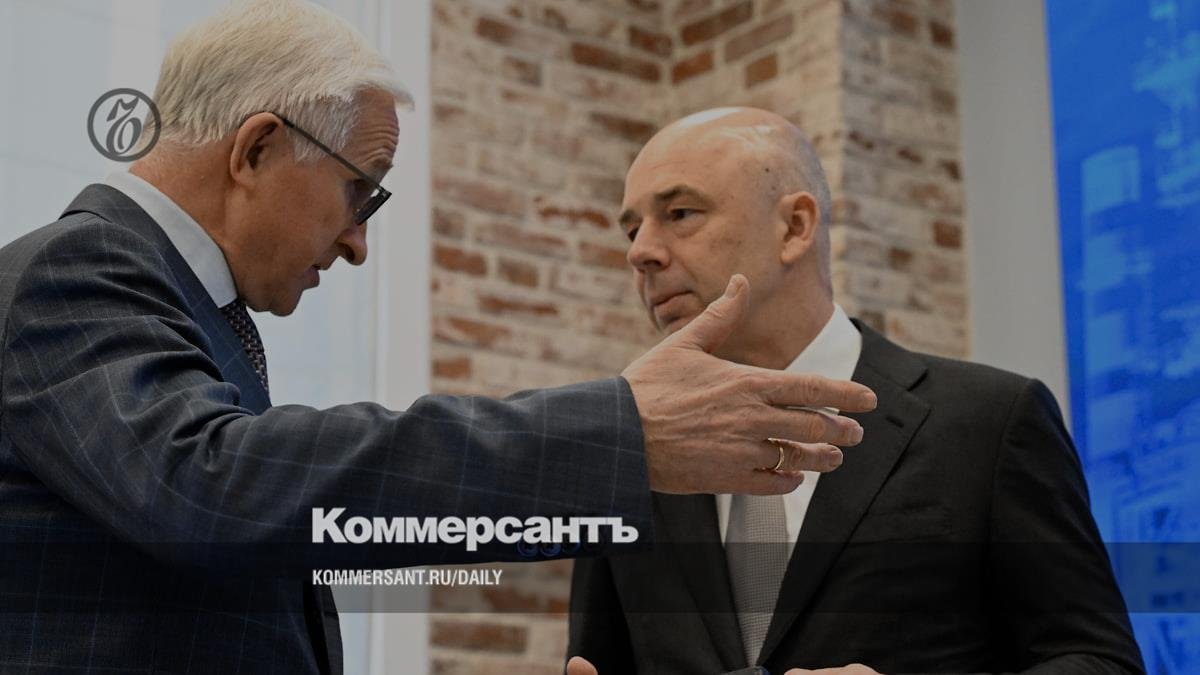
For now, the authorities and businesses are counting on easing monetary policy (MCP). For example, the head of the Russian Union of Industrialists and Entrepreneurs, Alexander Shokhin, hopes that by the end of the year the key rate will drop below 10% (the forecast of Central Bank analysts is 14.1%), but he sees the risk that the investment pause “could turn into a long freeze.” We note that despite the likely recovery in the second quarter, the economy is still in decline.
According to Rosstat, GDP in the first quarter decreased by 0.2% in annual terms (and by 0.7% compared to the previous quarter, according to TsMAKP calculations, taking into account seasonality and calendar).
One of the reasons is the decline in capital investment by 14.3% year-on-year, which is mainly explained by a fall in investment in machinery and equipment.
Estimates of the dynamics of capital investments may be revised, which could change the dynamics of GDP for the first quarter in any direction. However, analysts have no doubt that the decline in capital investment is long-lasting (for a year now) and stable.
So far, analysts’ expectations regarding economic dynamics are worsening. According to consensus forecast data published by the Central Bank on June 10, since April the median estimate of GDP growth in 2026 has decreased from 1% to 0.7%, although forecasts for net exports and dynamics of nominal wages have improved with a decrease in inflation estimates from 5.5% to 5.3%.
There is also an increase of $5 per barrel in expectations regarding the average price of Russian oil this year compared to April – up to $70 per barrel. The forecast average annual exchange rate of the ruble has become better – $78.1/rub., which corresponds to approximately $79/rub. on average for the rest of the year, according to analysts of the Telegram channel “Hard Figures”.
Near-term forecasts are increasingly volatile, and the current decline in consolidated GDP growth estimates was expected. The May consensus forecast of the Development Center of the Higher School of Economics also assumes GDP growth at 0.7%; the Institute of National Economic Forecasting (INP) of the Russian Academy of Sciences, which several months ago assumed a comparable decline in GDP, increased its estimate to the same level in June. Note that this is higher than the forecast of the Ministry of Economy (0.4%) and close to the lower limit of the Central Bank’s expectations (0.5–1.5%).
Analysts from the Central Bank’s Department of Research and Forecasting report in a recent bulletin on economic trends that “in April-May, economic dynamics improved compared to the first quarter,” citing data from surveys of Central Bank companies and “a number of other survey indicators.” But the composite PMI and surveys by the Institute of Economic Forecasting RAS (see. “Kommersant” from June 8) record the stabilization of business activity and private consumption at a low level in April-May.
It should be noted that Central Bank studies, surveys of enterprises and analyst opinions show that the task of increasing productive investment looks much more difficult than increasing the volume of investments. The previous investment cycle helped the economy adapt. The new one must solve a more difficult problem – to ensure sustainable productivity growth in conditions of high capacity utilization, labor shortages, gradual reduction of oil and gas rents and more limited opportunities for extensive growth.
To launch a new investment cycle, the authorities are proposing “non-monetary measures” – reducing administrative barriers, increasing the flexibility of the labor market.
Businesses are waiting first of all for an increase in the size of the federal investment tax deduction (FINV) from 3% to 8%. Deputy Prime Minister Alexander Novak considered that the rate could be increased, for example, to 5–6%. The head of the Ministry of Finance, Anton Siluanov, proposed making the expansion of the FINV more local – for projects in the Far East, but with a more significant increase in the size of the deduction (over 12%). In addition to systemic measures, Alexander Novak believes, it is worth conducting a “manual” audit of investment projects that could be implemented or suspended, and forming a register of 50–100 projects with targeted support. Apparently, we are talking about projects that involve productive investments.