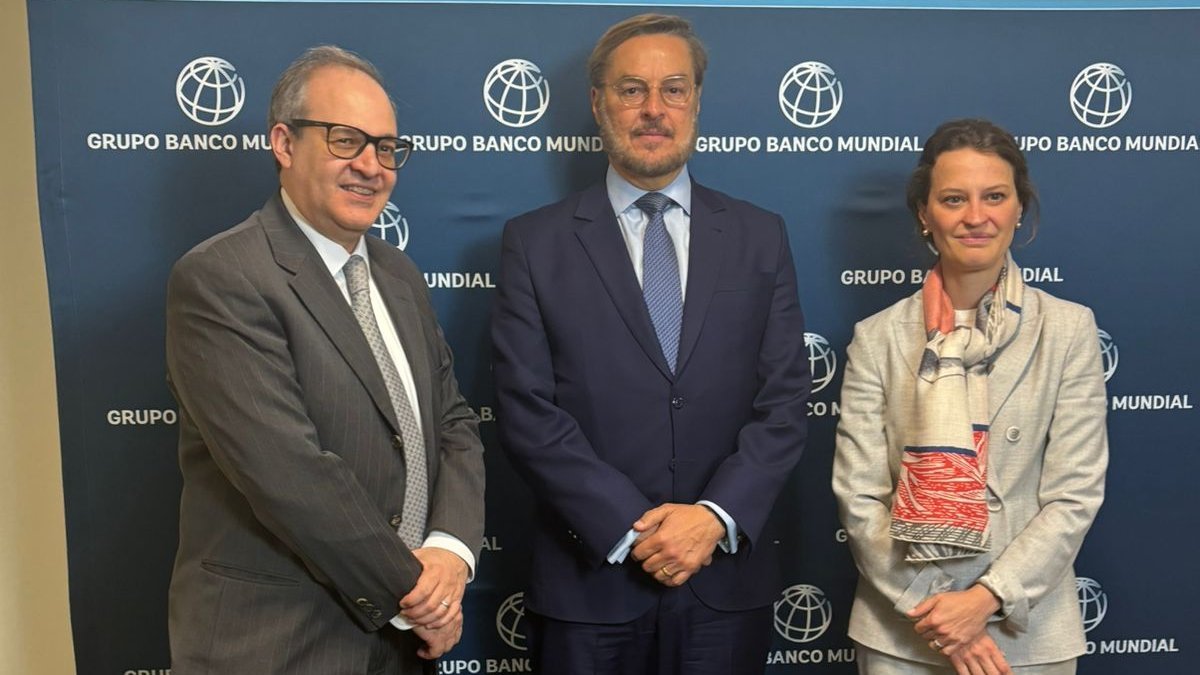
The World Bank held a meeting this Monday in Washington with the diplomatic representative of Venezuela in the United States, Félix Plasencia, in which both parties addressed possible avenues of cooperation in terms of investment and job creation.
The World Bank described the meeting held with Plasencia as “productive”, within the framework of the reactivation of the dialogue between Caracas and the multilateral organization.
In this context, the vice president of the organization for Latin America and the Caribbean, Susana Cordeiro Guerra, stated in her X account that the reopening of the link with Venezuela opens “a real opportunity to generate jobs, attract investments and support growth.”
“We are willing to collaborate with Venezuela on the path ahead,” added the senior World Bank official, referring to the rapprochement process after the resumption of relations announced by the organization.
World Bank resumes relations with Venezuela
On April 16, the World Bank announced the resumption of its relations with Venezuela under the interim government of the interim president, Delcy Rodríguez, following the results of the voting process of the International Monetary Fund (IMF), in a decision that ends a pause that has lasted since 2019.
The announcement occurred within the framework of the Spring Meetings of the IMF and the World Bank, which concluded last Saturday in Washington.
Last week, the IMF also announced in Washington the resumption of its relations with Venezuela, a decision adopted in line with “the opinions of the members of the International Monetary Fund who represent the majority of the total voting power of the IMF,” according to the official statement released by the organization.
The World Bank recalled, in its own statement, that Venezuela has been a member of the institution since 1946 and received its first loan in 1961.
In the 1970s, the oil boom allowed Caracas to pay off its debts with the Bank and even lend part of its profits to support other member countries.
However, the collapse of crude oil prices in the 1980s and the deterioration of economic policies led the country to resume lending in 1989. The last one dates back to 2005.
Relations were suspended in March 2019, in the midst of a political crisis, when Maduro assumed a new mandate that the opposition considered illegitimate, which led to the self-proclamation of Juan Guaidó as president, recognized by dozens of countries.