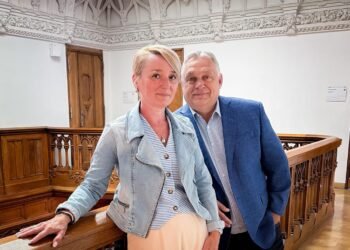

József Kulcsár-Terza, a member of the Romanian Parliament, has appealed to the European Commission’s Directorate-General for Justice and Consumers regarding the Premonstratensian monastery in Oradea (Nagyvárad, Romania).
The MP—who is also the president of the small party Hungarian Civic Force—wrote on his Facebook page Tuesday that in a letter sent to Brussels, he drew attention to the enforced eviction of Abbot Rudolf Anzelm Fejes, the Premonstratensian provost-prelate, from the monastery.
He informed EU bodies that
the Romanian state authorities seriously violated articles of the Charter of Fundamental Rights of the European Union and the European Convention on Human Rights”
when they evicted the abbot, he wrote in his post.
Fact
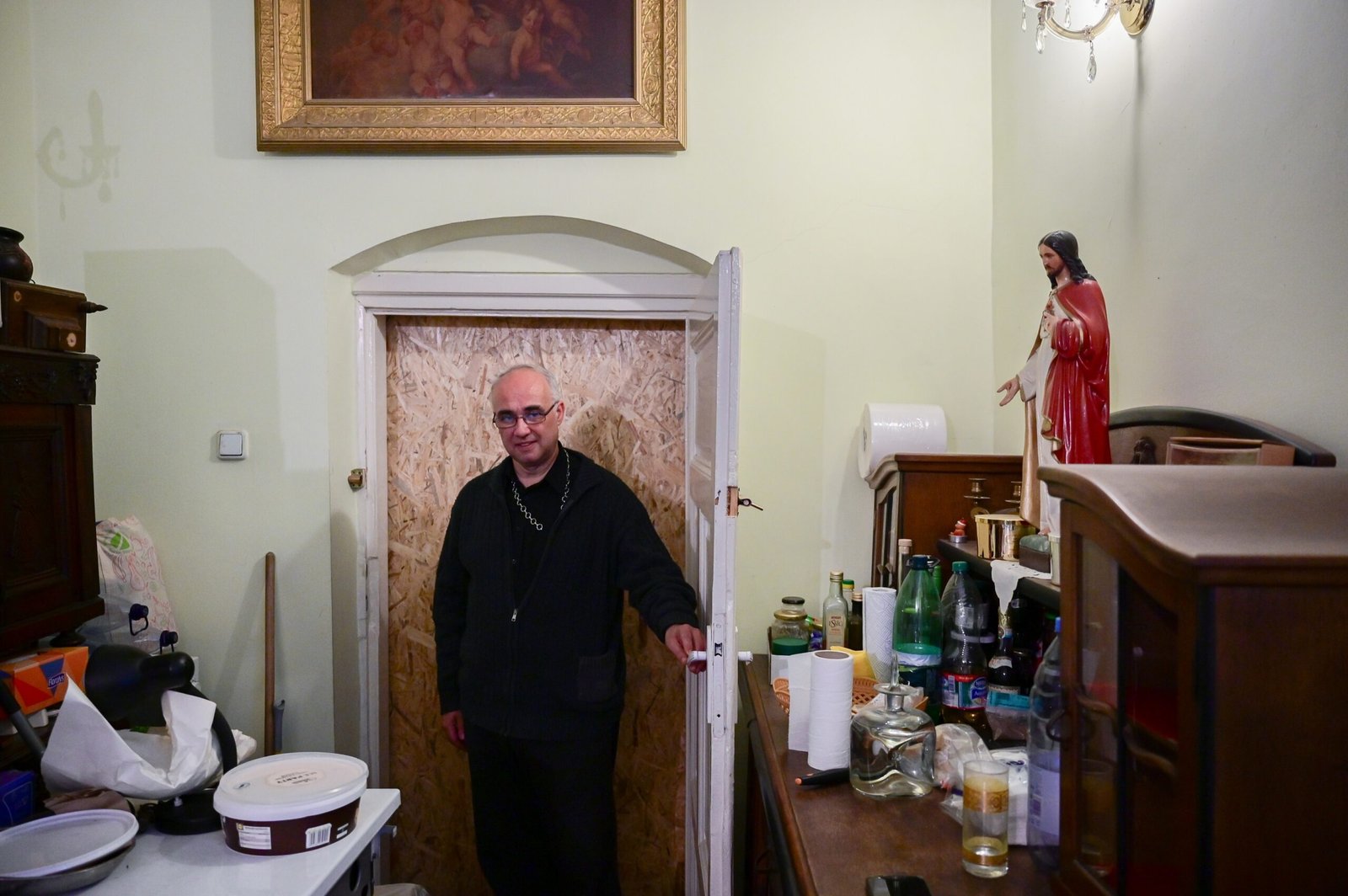
In the early hours of May 27, representatives of the Oradea municipal government evicted Abbot Rudolf Anzelm Fejes from the premises of the Premonstratensian monastery that had been awarded to the municipality, after breaking through the wall between the former Premonstratensian high school and the monastery.
On January 29, the court in Oradea ruled in favor of evicting the abbot at the request of the local government. Last May, the municipality sent the abbot an eviction order, demanding that he vacate the Premonstratensian monastery, as it is considered city property—along with the building of the former Premonstratensian high school, Mihai Eminescu High School—pursuant to a previous court order, and the city intends to renovate it. Since the abbot did not comply with the order, city officials turned to the courts, and the Oradea court ruled in favor of his eviction. The controversial eviction was to be carried out despite the fact that the judgment is not yet final.
The Transylvanian politician had previously announced that he had appealed to Romania’s head of state, Nicușor Dan, regarding the eviction in Oradea, and had also contacted the Romanian government’s state secretary for religious affairs. He sent letters to both officials requesting that they immediately order an investigation into the matter within the scope of their authority.
At a press conference in Sfântu Gheorghe (Sepisszeentgyörgy) last week, the politician emphasized that he considers the actions of the Oradea mayor’s office and Romanian state authorities regarding the Premonstratensian monastery to be unacceptable. Based on a report in the local newspaper Háromszék, he announced that he would fight “against injustice” using every political tool at his disposal.
The politician, who won a parliamentary seat on the list of the Democratic Alliance of Hungarians in Romania (RMDSZ), the main political party representing the Hungarian minority in Romania, pointed out:
Not even during the communist dictatorship in Romania did such a procedure take place.”
“Now that this has happened in Oradea, what guarantee is there that something similar will not happen elsewhere next time?” he asked.
According to József Kulcsár-Terza, the case in Oradea also proves that only Hungarians can represent Hungarians, and that unity is needed in matters of national interest. He stated that he sees this kind of broad-based unity emerging in the case of the Premonstratensian monastery as well.
He announced that, for his part, he would use political means to stand up against injustice and would also approach the Council of Europe regarding the matter. Furthermore, he asked Hungarian Members of the European Parliament to draw attention to Transylvanian Hungarian issues in Strasbourg and Brussels as well.
On Saturday, the Hungarian National Council of Transylvania (EMNT) also announced that it would attempt to “put a stop to anti-church and anti-Hungarian events” by informing and involving international forums and legal aid services.
Fact
In recent decades, the Premonstratensian Order has filed dozens of lawsuits against the Romanian State and its institutions in an effort to recover its real estate holdings, which consisted of several prominent buildings in Oradea and Băile Felix (Félixfürdő), as well as approximately 1,100 hectares of land. The Commission for the Restitution of Church Property had previously refused to return the order’s former school. It argued that, according to the land registry, the building had belonged to the Romanian State since 1936, and thus they lacked jurisdiction to decide, as their mandate covers only properties confiscated during the communist era.

Via MTI, Háromszék; Featured photo: MTI/Czeglédi Zsolt