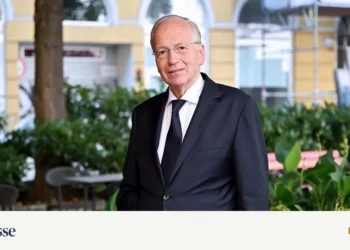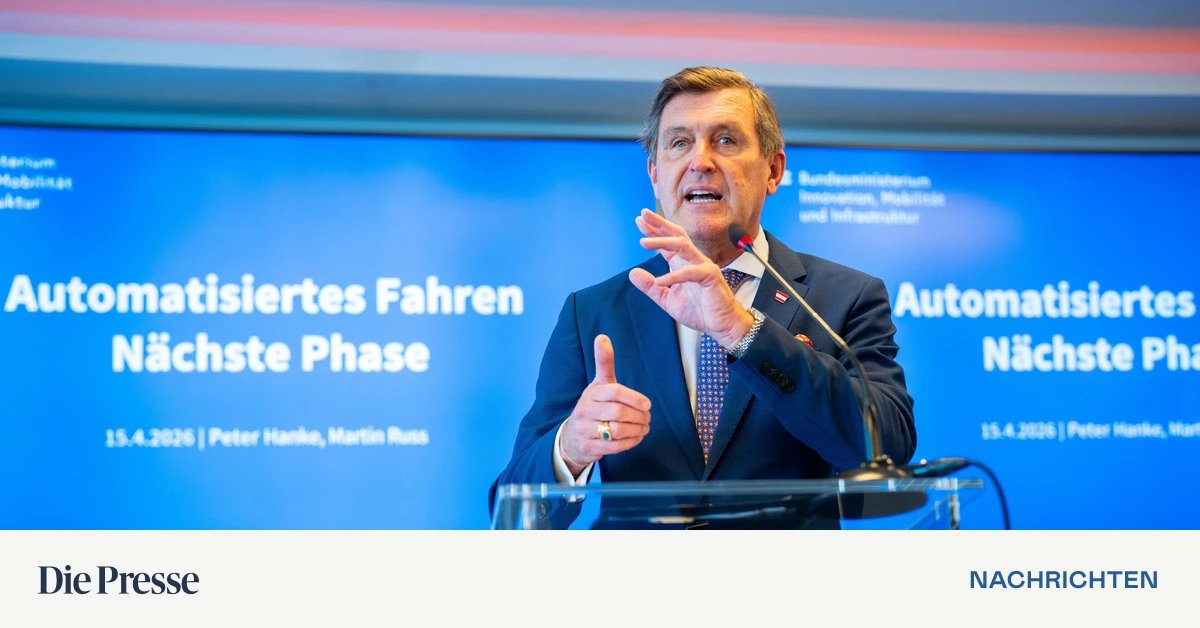
He is one of the ministers with less media presence in the first year of the government, although his portfolio would actually promise otherwise: Innovation, Transport and Infrastructure Minister Peter Hanke (SPÖ) gave a keynote speech on Monday after 13 months in office. The framework was provided by the department’s mobility conference, which was taking place for the third time and to which all stakeholders from the areas of innovation, transport and infrastructure were invited.
His opening speech to the two-day conference in the Vienna Ministry, which started on Monday with Hanke’s opening words on the topic of “multimodal travel”, could also be seen on YouTube via live stream. The central question of the conference: How can mobility be organized in such a way that switching or switching from one means of transport to another is easier or lower-threshold?
“You don’t give keynote speeches often in your life,” said Hanke at the beginning, who himself referred to a comparatively reserved demeanor in the government team: “Today I can do what I don’t normally do, namely talk a little longer.” He rhetorically asked, “Who is standing here, what do I want?”, only to immediately give the answer: “I need all of you to be successful for Austria.” This meant the stakeholders present from the areas of transport and infrastructure.
The speech left Hanke’s vision for the mobility of the future, for which Hanke called for optimism and confidence. He began and ended with a Karl Kraus quote, which he turned into its opposite: “The situation is serious, but it is anything but hopeless,” said Hanke, contradicting the author. He doesn’t want ideological blinders and debates (“driving a car is not an ideological decision”), but rather interprets transport and mobility as a “basic need”, a “social question” and as “participation in life”. They have to “reach out to the people”, as the “social backbone of our society”. In Austria, “no one should be embarrassed about having to rely on a car.”
Hanke referred to the increase (tripling) of the commuter euro and the commuter allowance and the fuel price cap that has been in effect since April. At the same time, however, he emphasized that the time of the oil crisis was also the best time for anyone who wanted to try out switching to public transport.
Specifically, he presented a new trial subscription for an “annual ticket” and was referring to the climate ticket. The offer is valid from May 1st to June 30th. Hanke also announced a further expansion of the e-charging stations at ÖBB “Park & Ride” facilities, where the electricity price would be reduced by 25 percent to 30 cents per kWh. This will initially apply for six months from May 1st. In addition, a further 100 charging points would be built by 2027 and there should be 400 by 2030.
Structurally, Hanke made it known that he wanted more cooperation between the transport modes of road, rail, water and air. “I want mobility to become easier for people. For this we need an overall system. It is not the individual mode of transport that decides, but the quality of everyone’s cooperation.” Because: “Austria must not become Germany.” He was alluding to the major infrastructure problems of Deutsche Bahn and traffic jam-clogged highways in the neighboring country.
There have already been discussions with Asfinag, ÖBB, the airport and shipping for more cooperation. As an example, Hanke stated that if the Western Railway line is being renovated, there should not be construction sites on the Western Motorway at the same time. The AI transition should also be managed together and not everyone solve it individually. Hanke also wants cooperation when it comes to payment options (tolls, vignettes, train tickets, etc.).
Hanke also announced big plans for the transport of goods and goods. Austria should become a logistics hub. He wants to present his own strategy before the summer.