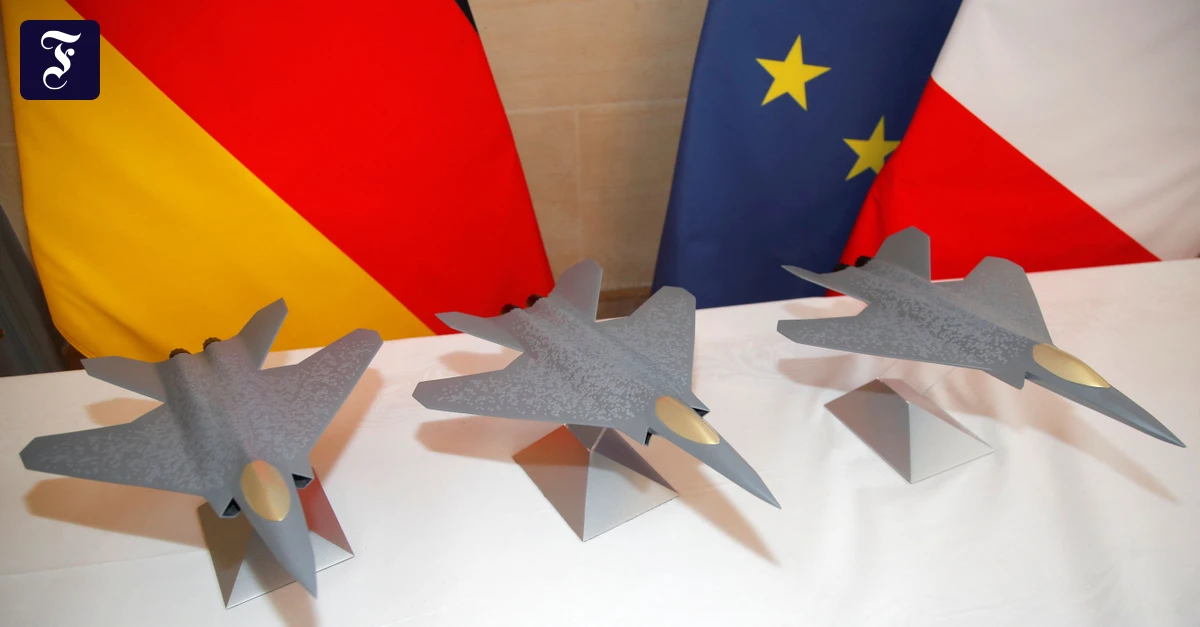
The project of a German-French fighter aircraft is dead. This puts it in an inglorious gallery of failed arms projects. It had started well. In 2019, the Future Combat Air System (FCAS) made its first appearance – at least as a life-size model. At the air show just outside Paris, the participating companies Dassault and Airbus presented what the sixth generation fighter aircraft should one day look like. Dynamically stretched forward, the gray study stood on the asphalt and suggested: It won’t be long before it will fly. After years of development and probably around three billion euros invested, the model will now remain the same.
On the one hand, the project failed due to the inability of the companies involved to agree on a precise division of tasks. On the other hand, there were also different requirements that were placed on the aircraft in Berlin and Paris. Germany was able to do without the ability to carry nuclear weapons and also be used on aircraft carriers, as demanded by France.
This is exactly why a fighter jet project failed 45 years ago. In 1979, Germany and Great Britain came together to develop a European fighter aircraft. The companies British Aerospace and Messerschmitt-Bölkow-Blohm were involved. Shortly thereafter, France came along in the form of Dassault and they set to work designing the European Combat Aircraft.
No approval for flights over populated areas
But differences of opinion quickly arose, which seem familiar when it comes to FCAS. Dassault insisted on using French technology, which the other countries did not want to agree to. The ECA was history after just two years.
In 1983 they tried again. Great Britain, Germany, Italy, Spain and France wanted to develop a fighter aircraft of the future. The first distortions arose the following year when France again insisted that the aircraft must also be able to be used on aircraft carriers. It would have had to be smaller and lighter than the other partner countries wanted. The project ended in 1985 with France’s official withdrawal. Paris then concentrated on building the Rafale fighter jets. The remaining states further developed the project into the later Eurofighter. It thus became an example, like the Tornado before it, that European arms cooperation can certainly be successful.
While the projects mentioned so far were only built as models, the failed Eurohawk reconnaissance drone is even available as a flyable example. In October 2001, the United States and the Federal Republic signed an agreement to procure a reconnaissance drone for the Bundeswehr. This was to be based on the RQ-4B drone from the American manufacturer Northrop Grumman and equipped with German reconnaissance technology. The project was advanced over the next ten years, and the transfer flight of the prototype to Germany took place in July 2011.
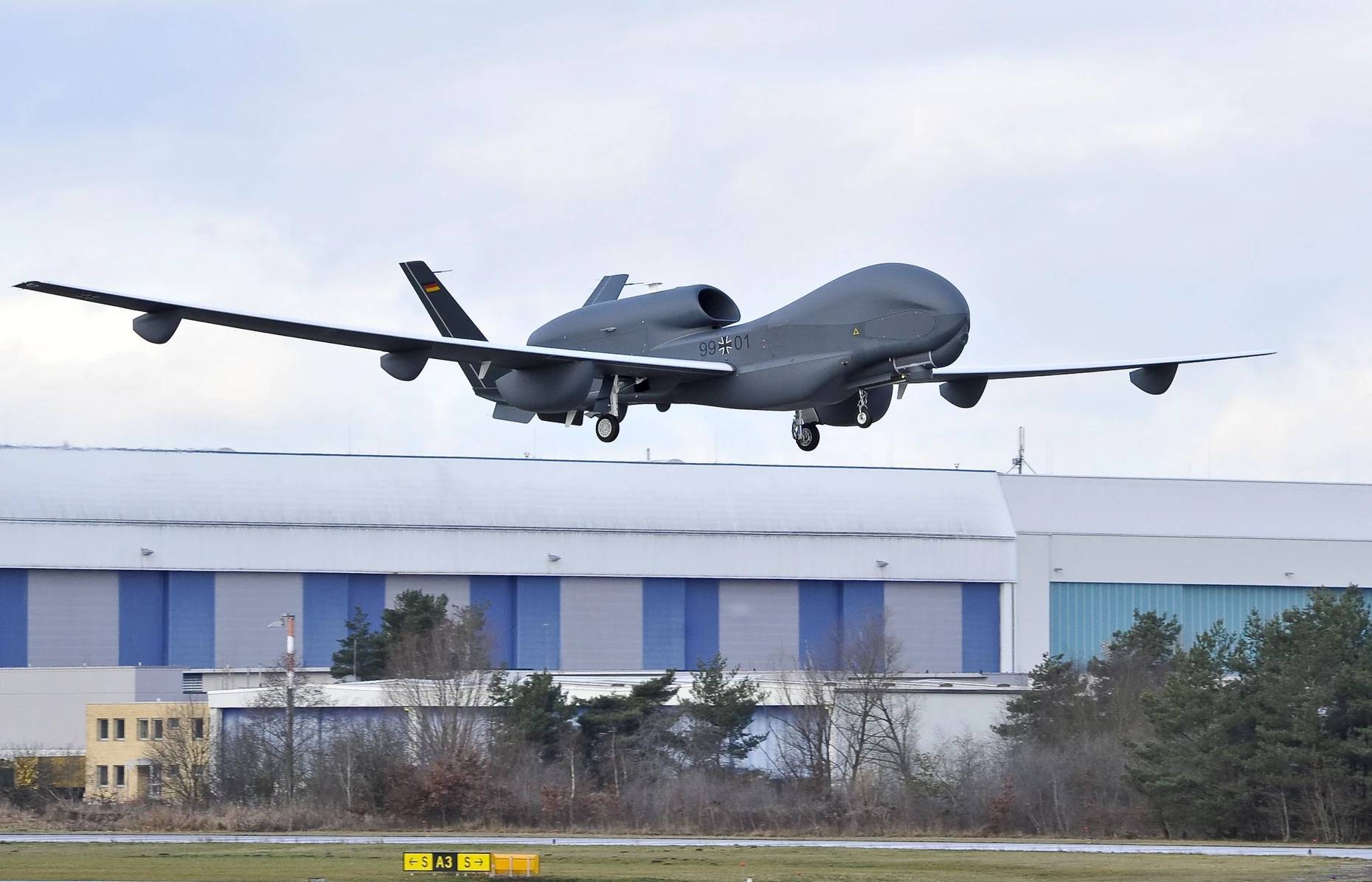
What the public didn’t know at the time: The United States had banned the drone from flying over the area. She had to fly west across the Pacific from Edwards Air Force Base in California and from there to Canada, where she was allowed to fly east over uninhabited territory. The EU aviation safety authority took a similar view to the Americans. Due to the lack of an automatic collision system certified for civil aviation, the drone was denied permission to fly over inhabited areas.
Since the retrofitting would have cost another 500 to 600 million euros after the up to 600 million euros already invested, the Ministry of Defense ended the project in 2013. The drone with a 40-meter wingspan now lives in the Military History Museum in Berlin-Gatow – in the depot, which is not freely accessible.
Firepower versus armor
Failed armaments projects not only occur in the air, but also at sea. At the end of the 1970s, seven NATO countries – including Germany – came together in a project group to build a new frigate. It took ten years until the design for a ship was presented to the states. This should form a basis and be equipped differently by individual states depending on their requirements. However, these requirements were very different: some wanted a submarine hunter, others wanted a focus on anti-aircraft defense. There was also a disagreement as to whether European or American anti-aircraft missiles should be installed. Britain, France and Italy then left the project in October 1989, followed by Germany and Spain in December. America, the Netherlands and Canada also shelved it a month later.
There were also failed attempts at arms cooperation in rural areas. As early as the 1950s, France and Germany wanted to build a joint tank with Italy. From the beginning, however, there were differences in the specifications. France wanted a powerful tank and to make compromises on the armor, Germany saw it exactly the other way around. It was agreed to develop prototypes, then decide on a model and then build it together. But when these were finished in the early 1960s, no one could agree on a model. So they split up and built their own tanks, France the AMX30 and Germany the Leopard 1.
Germany and France currently want to develop a joint tank again. It remains to be seen whether he will be included in this list.