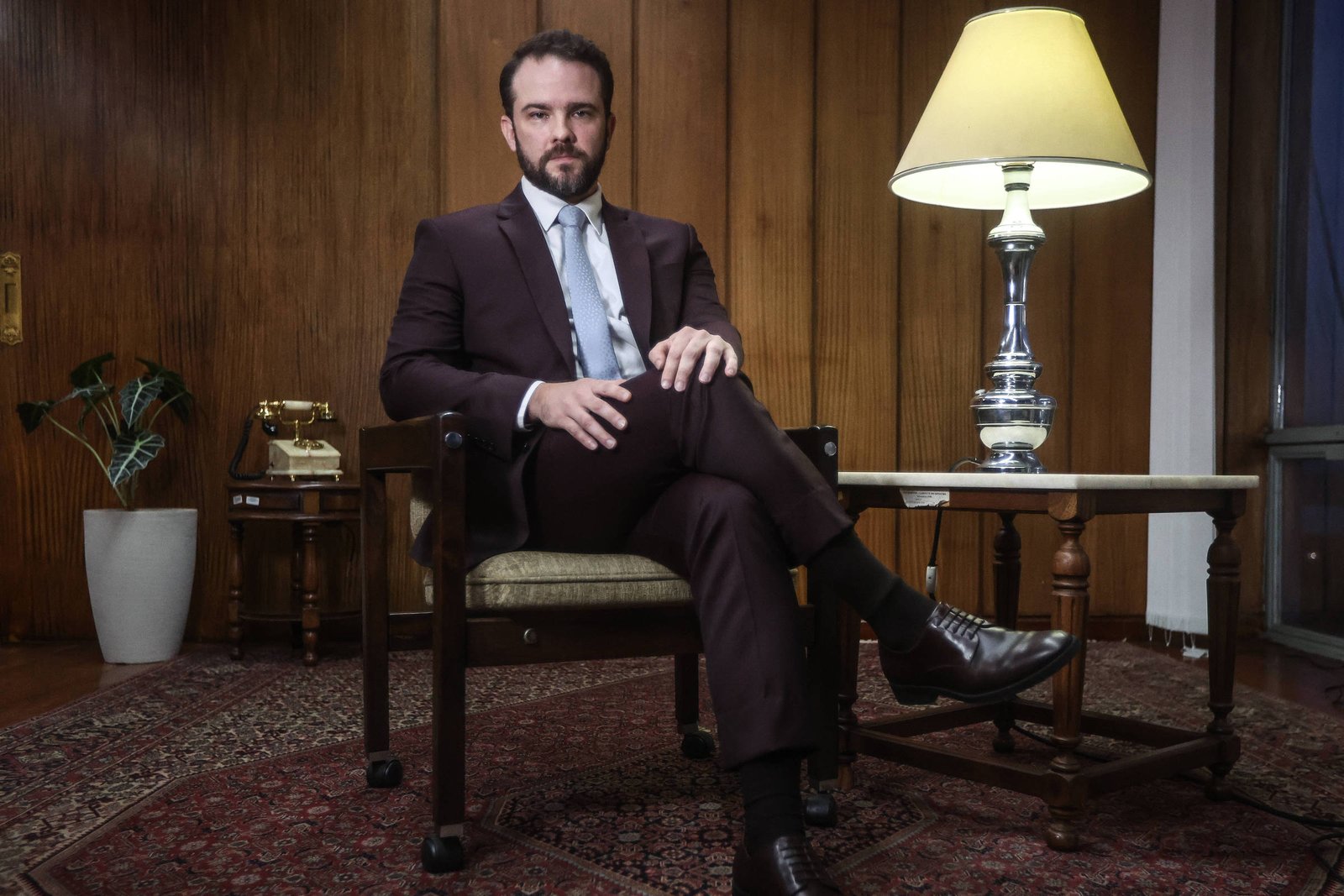
The Minister of Finance, Dario Duriganstated this Friday (17), in Washington, that the eventual end of 6×1 scale it must be discussed in the National Congress and cannot generate costs for the Treasury. According to him, it will also be necessary to provide transition rules for the most affected sectors.
Durigan said that the issue is still under analysis and that the government seeks to listen to different segments of the economy.
“I am very much in favor of debating and understanding with the sectors how to adapt, eventually foreseeing a transition to give time for adjustment”, he stated, during an interview with journalists on the sidelines of the spring meetings of the IMF (International Monetary Fund).
The minister acknowledged that there are concerns about increased costs, but stated that recent studies indicate a smaller impact than initially feared. “Many (sectors) already operate with different journey dynamics,” he said.
“As was done in the past, with labor laws, recognition of the rights of domestic workers, there cannot be a bill left for the Treasury. This has to be a recognition of a civilizational gain, a generational gain for workers”, he said.
“It is not possible to want to finance an entire advancement like this with public resources from society.”
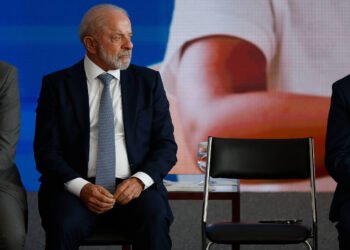
The proposal to reduce working hours from 44 to 40 hours per week is one of the government’s efforts to improve the popularity of President Luiz Inácio Lula da Silva (PT) in an election year.
Representatives of the productive sector even approached the Brazilian government for some type of exemption for the areas most affected by the reduction in working hours. According to the Minister of Labor and Employment, Luiz Marinho, there will be no compensation of the type. The minister of political articulation, José Guimarãesstated this Thursday (16) that the government would be willing to negotiate a transition process.
DEBT RENEGOTIATION
Regarding the debt renegotiation program, Durigan states that the project is already ready and that the government should launch it after Lula’s trip to Europe. The president returns to Brazil on April 22, but there is still no date for announcing the program.
According to him, the initiative aims to allow the migration of more expensive debts, such as credit cards and direct consumer credit, to lines with lower interest rates, such as payroll loans. The model provides for guarantees from the Treasury, without direct public spending, in addition to discounts and interest reductions.
The program will be implemented in stages, covering families, informal workers and small businesses.
WAR IN IRAN AND IMPACT
The minister also stated that the main diagnosis of the IMF meetings is uncertainty about the developments of the war in the Middle East, with a negative impact on global growth and inflation.
Despite specific advances, such as the process of reopening the Strait of Hormuz, the minister says that there are still doubts about the credibility and stability of a lasting agreement, which keeps the global market unstable.
“The president’s directive is that the effect of a war very far from Brazil is unfair, impacting the lives of people in Brazil and, in particular, the lives of the poorest people. My role is to translate the president’s guidance into the various policies that we have been adopting and what I heard here is exactly that”, he says.
Durigan stated that the government’s guideline is to protect mainly the poorest from the effects of an external war. The measures adopted include: exemption from taxes on diesel, actions for the airline sector, LPG and freight, in addition to strengthening price monitoring.
Durigan said there are no new measures planned at this time, but the government could act again if necessary.
The minister also commented on the return of Venezuela to the IMF after six years of suspension. Kristalina Georgieva, managing director of the IMF, said the fund returned to dealing with the country under the administration of interim president Delcy Rodríguez, who took office after Maduro’s capture by the US.
For Durigan, “it is important that Venezuela turns the page, that Venezuela develops, that Venezuela has a seat back and begins to deal, whether with the Bretton Woods banks or with others such as CAF (Brazilian Development Bank), Latin America and Caribbean) and IDB (International Development Bank).
“(There is a) great expectation that Venezuela can return to a path of development”, says the minister.