See what Filip Flisar had to say about how »arise” world champion:
The public absolutely adores him. This time he spoke without embellishment about fame, people who start sticking to you when you succeed, and also about why you can’t “make” an athlete according to plan.
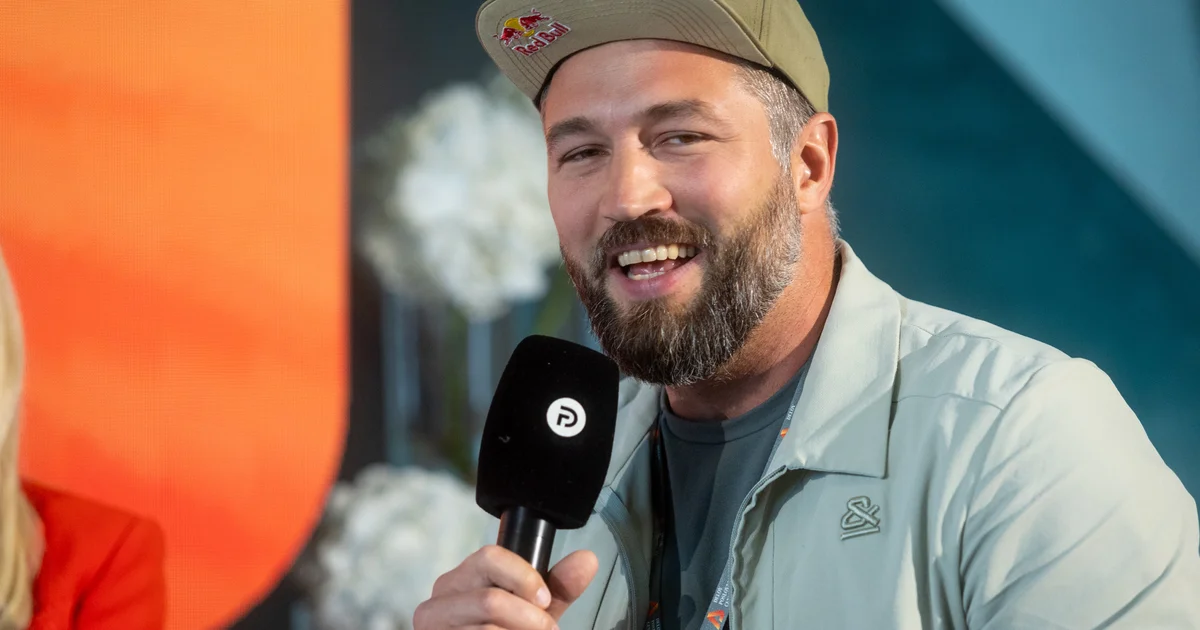
“Education of an athlete is not a project where you say to yourself: now I’m going to make a world champion,” said Filip Flisar at a business conference Departmental Business Center (DPC) with a title Sport is a business: how to create the winners of the future. On the round table with the title How talent becomes a championwhich he led Igor E. Bergantthey also participated Darja Garnbret, Rebekah Zdešar, John Bijol and Katja Fašinkmanager Emma Kozin.
“Sport is a psychophysically turbulent thing”

The former world champion in ski cross believes that a top athlete cannot be created according to a pre-prepared plan. PHOTO: Voranc Vogel
Filip Flisar is one of the few Slovenian athletes who knows how to say things quite directly that others prefer to talk about a little more cautiously. Without embellishment, he says that an athlete can be quickly deceived by success. The results, the media attention and the people who want to be around, all of that comes very quickly, especially when you start winning.
“Sports is a psychophysically turbulent thing,” he said. Sometimes there are results, sometimes there are setbacks, in between things can go wrong even in private life. Then comes fame and then, says Flisar, the athlete very quickly loses the sense of who he is and who he can really trust. Therefore, according to him, every athlete needs someone who can stop and ground him. “You need a pillar of support that holds you in place and says, ‘Look, this is you. This is your path,'” thought the former ski cross world champion.
He singled out parents, not because of finances, but because of the sense of security and trust they provide. When more and more people start circling around the athlete, it is difficult for him to distinguish who wants him well and who just wants to be part of the story. “A lot of people want to take advantage of you,” he openly admitted, and that’s why he thinks the relationship between an athlete and his family is one of the most important things in top sport. Someone needs to stay by your side even when there are no results, when there are no cameras and when everything doesn’t seem as glamorous as it looks from afar.
“Sport is a psychophysically turbulent thing.”
Just before graduation, he took care of finances and the team

Flisar points out that with results and recognition, individuals who want to be part of the success story quickly appear. PHOTO: Voranc Vogel
Not everything was rosy on Flisar’s sports journey. His parents were divorced, he lived with his mother and at some point he had to make a decision whether he would finish his studies or bet everything on sports.
“I was just about to graduate, I had to take care of the finances, the team, everything,” he said, adding that he couldn’t train all day, take care of regeneration and matches. Along with sports, he also had to manage the less glamorous side of his career, from money to organizing the people around him. That is why he does not look with romantic eyes at the stories of how a top athlete is created. In the background, there are also bills, doubts, logistics and the pressure of whether it will all work out. Maybe that’s why he was able to understand so well later that an athlete needs people to stand by him, not only when he’s winning.
“Slovenes are good because we were not spoiled”
Flisar’s view of Slovenian sports is something special, because in his opinion, what separates Slovenians from many other sporting nations is that many of our athletes did not grow up in ideal conditions. “For the most part, we grew up in a relatively difficult environment, or we didn’t have everything laid out for us,” he said. It seems to him that Slovenian athletes often know how to go further than others in difficult moments. Under pressure, injuries, bad results or when it looks like things are falling apart, it quickly becomes clear who is used to the less comfortable path. “If you are spoiled from a young age, you will quickly kneel in difficult situations,” he was direct and admitted that sport today is completely different from years ago. There is more money, the conditions are better, there is more support and the environment is more professional, which is good, but at the same time the question arises of how to preserve the passion that makes Slovenian athletes so special.
“Slovenian athletes mostly grew up in difficult conditions. Not all of us had a good time.”
Flisar does not idealize suffering or bad conditions. He rather points out that an athlete needs character, not just infrastructure. That’s why he thinks it’s important that young people still hear the stories of people who didn’t have an easy path, but still got to the top.
An athlete today is no longer just an athlete

In addition to results, today’s athletes also build their public image, take care of sponsors and social networks. PHOTO: Voranc Vogel
Since top sport is no longer just a competition and the pursuit of results, athletes have also become public figures, brands and faces of many partners. “When I started, there were practically no social networks. Today, in addition to training, an athlete has to think about publications, sponsors, his image and everything that comes with it,” Flisar revealed, adding that an athlete cannot be an expert in everything and that his main task should remain sport. Managers and people in the background also play an important role, taking care of sponsors, communication, social networks and everything else that allows the athlete to focus on training.
“Sport is a psychophysically turbulent thing.”
He himself always chose partners with whom he could identify. He was not only interested in who offered the most money, but above all whether they could together create a story that made sense. That is why he is one of the first Slovenian athletes who understood that people don’t just follow the results. They also follow the person behind them.
Flisar never believed in the stories of invincible champions, even the best have bad days, moments of uncertainty and periods when they wonder if all the effort is worthwhile. The difference is mainly that the best persist even when there is no applause and when no one sees them, and perhaps that is why Filip Flisar is such an interesting interlocutor, because he knows very well how quickly a sports fairy tale can get complicated.