It was a ‘perfect storm’ that caused, with its combined effect, that the Consumer Price Index (CPI) shot up 2.38% in March, the highest monthly result in the last 32 years, according to the INEI.
See also:

“As a consequence of this, inflation has already left the target range of 1% to 3% annually.“, refers Cesar Fuentes, director of the master’s degree in public management at Esan.
And, as the economist points out, any jump in fuel prices triggers a chain effect that not only affects the sectors transportation and foodbut to the entire productive chain, which “determines that the shock is large”.
Fortunately, the repair of Camisea duct has diluted the negative component of the lack of gas, which leaves us solely left to the coming and going of the international oil pricespoints out Fuentes.
This does not mean, however, that energy-related complications will subside.

The high volatility of oil prices generates inflation around the world.
On the contrary, the hydrocarbon specialists consulted for this report warn that we would be ad-portas to bear the deepest impact of the war in the middle east if peace negotiations fail and the conflict drags on.
“Our reading is that vulnerability persists” he notes Luciano Macías, general manager of Terpel in Peru.
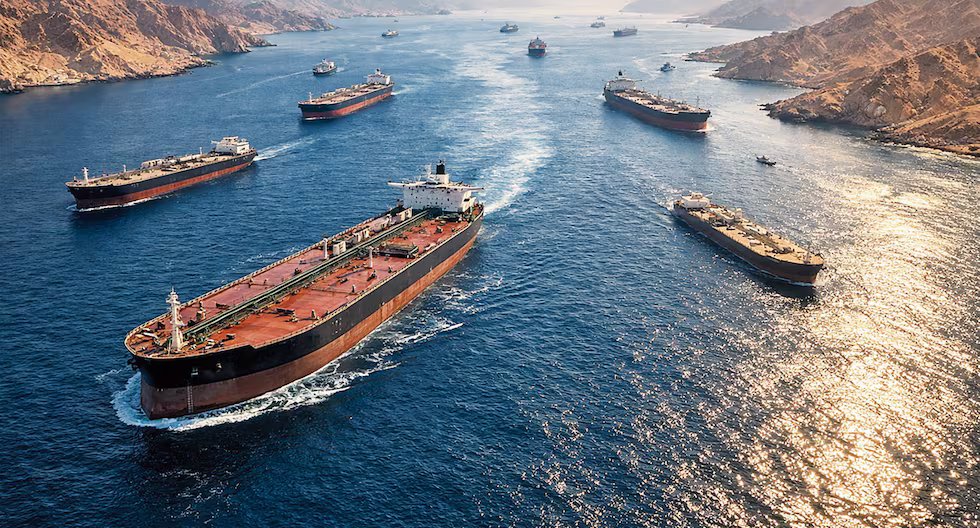
The fuel and lubricant wholesaler warns that markets will continue to be exposed to new pressures as long as uncertainty regarding strategic routes such as the Strait of Hormuzthrough which 20% of the global supply of oil and natural gas transits.
And as long as the reallocation of production towards the diesel, energetic that ““It acts as a price floor for a large part of the chain, to the detriment of other crude oil derivatives,” says Macías.. What risks does this hold for Peru?
Local impact
What differentiates the war in the Persian Gulf from other recent conflicts, such as Ukraineis how difficult it is to make forecasts because “None of the three governments involved (USA, Israel and Iran) enjoy credibility“, states Diego Díaz, partner at Macroconsult.
The concrete fact points out Francisco Belaunde, vice president of the Peruvian Association of International Affairsthe thing is ““We are far from the oil prices that existed before the outbreak of the war.” (US$65-70/barrel), a problem that not only raises fuel prices (US$95-100 today), but “also begins to generate shortages”.
This happens in countries close to the conflict, such as Egyptor, where a curfew has been established for restaurants and nightclubs “in order to save energy“, says the internationalist.

Urea and fuel prices skyrocket.
But the impact of war goes much further. And its persistence makes it difficult to manufacture key products for the global economy, such as fertilizers and the chips (semiconductors) used in Artificial intelligence. This, due to restrictions in the supply of natural gas and helium (gas byproduct) from the Persian Gulf.
The effect, Belaunde emphasizes, is brutal and we are going to suffer it in Peru as well.”if things continue as they are”.
Along these lines, Díaz warns that we are yet to see the impact of the urea shortagea crisis “that has not yet manifested itself in the country, but that would constitute a ‘second round’ effect.
What we are observing, for now, are higher fuel prices, such as diesel and regular gasoline, which have risen 62% and 38%, respectively, since February 27 (eve of the war), notes Macroconsult.
In fact, the consulting firm has identified that the last shipment of diesel imported by Peru arrived “with a price 74% higher compared to February”.
Walter Espinoza, energy expertemphasizes that we already have a problem with diesel, as can be seen in the stoppages that have been occurring in various parts of the country, such as Puno and Pucallpa. It is, he points out, a problem that could worsen, depending on the vicissitudes of the war in the Middle East.

The gas facilities of Qatar, the largest producer of natural gas in the world, have been seriously damaged and rendered useless for the remainder of the year.
If the conflict persists, Díaz warns, we could repeat the events of 2022 (war in Ukraine) with road blockades and protests by transporters, which “could be a breeding ground for a left-wing presidential candidate“What scenarios are visualized for fuel prices?
Inflation risk
The experts consulted for this report are unanimous in pointing out that the prices of crude oil and its derivatives will not be the same again after this war.
This happens, explains Belaunde, because there is a lot infrastructure which has been seriously damaged in the countries of the Persian Gulf. This is the case of the gas installations of Qatarthe world’s leading producer of natural gas.
Indeed, the Qatari government has announced that it will take more than a year to put its facilities back into operation, semi-destroyed by the Iranian attacks.
All this suggests, Díaz points out, that we will continue to see gas and oil prices higher than those before the conflict.not for days or months but even for more than a year”.
It is for this reason that the International Monetary Fund (IMF) is communicating to the central banks that “se prepare to raise their interest rates in order to counter inflation”notes Belaunde.

The outbreak of war in Ukraine (2022) caused an escalation in fuel prices and inflation. The same could happen in 2026. (Photos: Julio Reaño/@Photo.gec)
/ JULIO REAÑO
Macroconsult believes that Peru should begin to seriously worry If the conflict extends until the month of May, then that would mean that “we will have a second quarter very affected by the rise in prices”.
Given that case, Fuentes estimates that the country would experience inflation above 3% until July or August, after which “this would start to decliner.” The economist warns, however, that an escalation in the war would cause inflation to be higher.
“The risk for the country is that this temporary shock become a almost permanent shockbecause in that case there will be a constant transfer of transportation costs to the consumer“, he notes. What tools does Peru have to counter this threat?
The FEPC
The looming crisis may be of such magnitude that we should be in a position to activate the Fuel Price Stabilization Fund (FEPC), Espinoza says.
According to Fuentes, there are only two options that the Government can resort to in circumstances like this (of strong shocks in supply): a subsidy scheme or the activation of the FEPC, “which has worked quite well at the time”, he details.
However, there is a serious problem with this mechanism, which is that it has been virtually deactivated since last year due to the voluntary withdrawal (disaffiliation) of its most representative members: Petro-Peru and Repsol.

The regions of Peru experienced blockades and stoppages due to the rise in diesel and gasoline prices in 2022, a story that could be repeated this year. Photo/Broadcast.
This, due to structural problems perceived by both companies and their distrust regarding the compensations that they should receive from the State.
This carries, in effect, a heavy debt with the two refiners since the last activation of the fund in 2022. We are talking about S/145 million in the case of the Peruvian state-owned company and more than S/190 million in the case of the Spanish one.
If the Government wants to reactivate the FEPC, says Espinoza, what it must do is build trust between market players, sitting down to negotiate with them and paying the old debt.
“If there is no money, no oil company will dare to continue subsidizing the fund because they are private companies and are not up to those things.”, he remarks.
On the contrary, Díaz considers that the FEPC is non-viable in the current conditions due to the problems it experiences since “we are in a world with more volatility“The solution, he says, is to work in a alternative scheme.
This is, however, an issue that the Government is not yet discussing, but that “I would have to start arguing as the weeks and months go by. carriers begin to feel, more and more, the rise of the price shock”, he points out.
Time is of the essence, as higher inflation will impact all citizens: housewives, transporters and industriesbecause fuels are, after all, the blood that runs through the economic system.