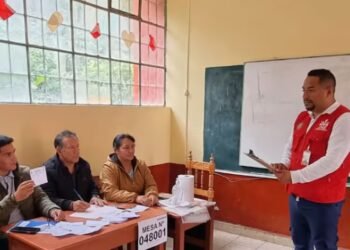
Tradition attributes to Napoleon the phrase: “I’m in a hurry, dress me slowly,” supposedly addressed to one of his ushers who, nervous about the imminence of some battle, made mistakes when adjusting his epaulettes. There is no evidence that the episode occurred, but the phrase has endured because of the wisdom it contains: haste is usually a bad advisor. Haste often leads to disorder and wrong decisions; Letting yourself be carried away by it is, many times, the prelude to disaster. The reflection is relevant in the midst of the current political situation, when the special electoral juries (JEE) and then the National Election Jury (JNE) are preparing to review and rate more than 5,800 minutes observed, according to the latest report from the ONPE. It will depend on this process to define whether Rafael López Aliaga or Roberto Sánchez accompanies Keiko Fujimori in the second round, which reflects the enormous importance of each decision. In this context, it is positive that the hearings are public, as this contributes to reinforcing the transparency of the process.
Tradition attributes to Napoleon the phrase: “I’m in a hurry, dress me slowly,” supposedly addressed to one of his ushers who, nervous about the imminence of some battle, made mistakes when adjusting his epaulettes. There is no evidence that the episode occurred, but the phrase has endured because of the wisdom it contains: haste is usually a bad advisor. Haste often leads to disorder and wrong decisions; Letting yourself be carried away by it is, many times, the prelude to disaster. The reflection is relevant in the midst of the current political situation, when the special electoral juries (JEE) and then the National Election Jury (JNE) are preparing to review and rate more than 5,800 minutes observed, according to the latest report from the ONPE. It will depend on this process to define whether Rafael López Aliaga or Roberto Sánchez accompanies Keiko Fujimori in the second round, which reflects the enormous importance of each decision. In this context, it is positive that the hearings are public, as this contributes to reinforcing the transparency of the process.
The president of the JNE, Roberto Burneo, has warned about the possibility of adopting “drastic decisions” in the face of the irregularities detected, especially in Lima. However, any determination must strictly adhere to institutional channels. The legitimacy of the process cannot be sustained by shortcuts or pressure. Along these same lines, it is essential that candidates like Rafael López Aliaga stop gratuitous and unacceptable insults.
While prudence is essential, so is opportunity. Mr. Burneo must speak clearly about the request for complementary elections. A request that spokespersons for Fuerza Popular, Renovación Popular and the Good Government Party, the groups most affected by the delay in the installation of tables in Lima, do not rule out as an option. Postponing a definition on this matter until May 15 only fuels uncertainty and weakens confidence in the process. Burneo must say soon whether a complementary election is viable. A decision must also be made about Piero Corvetto, whose management has been disastrous. From here we have said that it is unsustainable for him to remain in office. He cannot continue leading the ONPE during the second round. Its exit, following the path provided by law, is essential.
At times like this, the country needs serenity, rigor and adherence to the law. Institutionalism is put to the test precisely when tensions increase. Resolving with transparency and within reasonable deadlines is the only way to preserve the legitimacy of the results.
Source link