THE Government will seek parliamentary approval to extend the current state of emergency (SoE) for a further three months following a review of security assessments presented to the National Security Council (NSC).
The announcement came yesterday after a meeting of the NSC on Friday evening, during which the Prime Minister and members of the council received and reviewed reports on the SoEs implemented between December 2024 and May 2026.

‘freedoms restricted’:
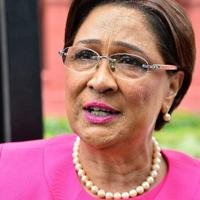
Opposition Leader Pennelope Beckles.
According to a statement issued by the Office of the Attorney General, the reports contained analyses of datasets relating to significant local and international threats to state security.
The reports found that all three SoEs examined were associated with what the statement described as “meaningful disruptions in all categories of datasets reviewed and analysed”.
The Office of the Attorney General said the findings were presented to the Prime Minister and members of the NSC as part of their assessment of the effectiveness of the emergency measures.
Following consideration of the reports and advice from members of the council, the Prime Minister decided the Government would return to Parliament to request an extension of the current SoE. The proposed extension is for an additional three months.
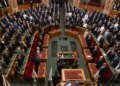
The Government’s request will be brought before Parliament on Wednesday, June 10, when a resolution to extend the SoE is scheduled to be debated. The Office of the Attorney General said the debate will take place in accordance with Section 10(1) of the Constitution.
No further details regarding the contents of the reports or the specific threats assessed were disclosed in the statement.
Opposition Leader Pennelope Beckles, in a brief statement last night, said the Opposition would not support the extension.
“The Opposition rejects this extension of oppression. A State of Emergency was never meant to become permanent governance,” she said.
She continued, “The PNM predicted that the incompetent UNC would extend the current SoE. So said, so done. The PNM will not support this extension. The UNC has no crime plan and cannot continue to restrict our citizens’ freedom, and arrest those who dare to voice discontent with their actions. T&T is a democracy, and citizens have the right to live without fear.”
Also last evening, Opposition MP and former national security minister Marvin Gonzales, in a social media post, slammed the proposed extension.
“It is now clear that after the UNC won the 2025 General Elections and being unable to meet the expectations of the population and their lies and incompetence now having been exposed at all levels, is intent on hiding from the population.
“The plan is now to keep in place a permanent state of emergency, not to address any specific threat to national security, but as an executive sword to keep the citizens in line by suppressing dissent and our rights to assemble to make our collective voices heard. But our ancestors always believe that ‘the longest rope has an end’. A Government is now hiding from the very citizens who elected them,” he said.
Last Wednesday, Gonzales announced that the Opposition is preparing to challenge any further extension of the SoE in the courts.
Speaking at a People’s National Movement (PNM) public meeting at the Croisée, he said the Opposition intended to file a constitutional motion if the Government proceeded with plans to seek another extension of emergency measures.
“Tonight, we wish to serve notice to the Government that we have already assembled our team of attorneys who will be prepared to go to the court and file a constitutional motion to bring an end to this unlawful and unconstitutional state of emergency in Trinidad and Tobago,” Gonzales told supporters.
He argued that emergency powers were being used in a manner that infringed on citizens’ constitutional rights and freedoms and said the Opposition would seek a ruling from the courts on the matter.
Gonzales said the PNM would pursue the matter “standing in defence of democracy” and “standing in defence of the people of Trinidad and Tobago”.
The Opposition MP also questioned the basis on which previous emergency declarations had been implemented.
He claimed the Government had repeatedly justified the measures by citing threats against senior law enforcement officials, members of Parliament and members of the Judiciary, but alleged that no charges had been laid in connection with those threats.
“They lied to you, the people of Trinidad and Tobago, by saying that there were threats against senior law enforcement officers and members of Parliament,” Gonzales said.
“And today, not one person was arrested for the so-called threat against senior law enforcement officials. Not one person was arrested and charged for any threat against members of the Judiciary or members of the Government.”
Two SoEs under this administration
Since taking office in May 2025, the Kamla Persad-Bissessar administration has implemented two SoEs as part of its response to escalating crime and national security threats.
The first was declared on July 18, 2025, following intelligence from the Trinidad and Tobago Police Service (TTPS) of coordinated criminal activity linked to gangs and prison networks.
The second was imposed on March 3 after advice from national security officials regarding a resurgence of gang violence and serious criminal activity.
Last month, regulations restricting public protests within 500 metres of 15 key State institutions was added to the current SoE.
Commissioner of Police Allister Guevarro has noted that the decision to extend the SoE rests with the NSC.
Speaking with the Sunday Express, Minister of Defence Wayne Sturge said he backed the extension of the SoE, but he too noted that the decision was within the remit of the NSC.
“I think we can govern without an SoE, but not at this time,” Sturge said, adding that he personally believes the SoE should be extended for a further three months.
He noted that while official statistics show a decline in crime, public fear remains high because criminal incidents are widely circulated on social media.
“There was a time when you did not see crime publicised as much as you do now. With the advent of social media, every single thing that happens is posted online. So there might be a perception that crime is high, but the reality is that even if it is not where we want it to be, the statistics will show it has more or less halved—it has decreased significantly,” he said.
Asked whether T&T could be governed without an SoE, Sturge replied, “I think we can govern without an SoE, but not at this time. We can’t tell you everything about the SoE and what our targets are, but once we get those targets met, we will be in a better place and you will see the level of violence decrease. It will be more or less stable at a certain level.”
The minister said no society can realistically reduce violent crime to zero, particularly one with T&T’s social complexities.
“You will always have murders, and what you do is you categorise them. So there will always be situations of domestic issues where a man may want to kill a woman over infidelity; there are murders stemming from land disputes,” he said.
“So what we are able to reduce mostly are gang-related murders. There are those who run the command centres of gangland operations who are now unable to communicate at this point. The challenge is getting evidence that is admissible in a court of law so we can secure convictions,” he said.
He said the acquisition of new assets would improve detection capabilities and increase conviction rates.