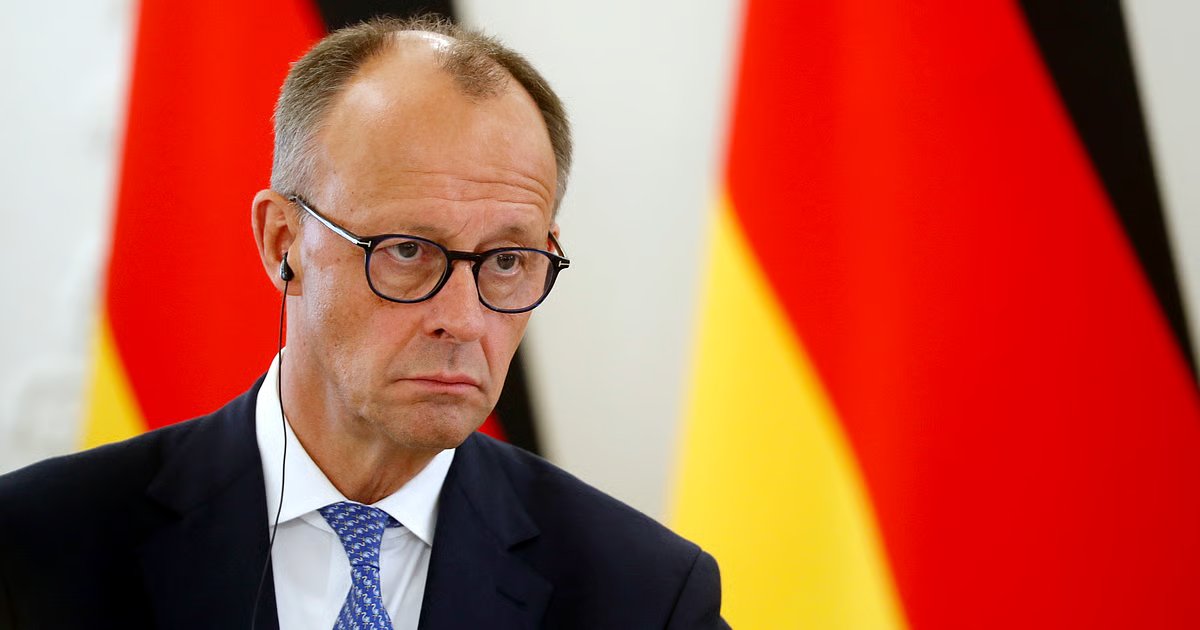
German Chancellor Friedrich Merz issued a stern warning this Saturday, June 6: a victory for the Alternative for Germany (AfD) in September’s regional elections would represent a political “big bang”, capable of destabilizing the democratic foundations of the continent’s largest economy.
During the regional congress of the Christian Democratic Union (CDU) in Linstow, in the state of Mecklenburg-Western Pomerania, Merz highlighted the seriousness of the political moment in the Eastern regions, stating: If we are not good enough, then there will be precisely this ‘big bang’.”which will take place in September, “in a different way than some would have imagined”. And he added, categorically, that “there is more at stake than just the future of a Government”.
This weekend’s muscular stance follows a clarification made by the Chancellor days before. On Tuesday, June 2, during a round table at the East German Economic Forum, in Bad Saarow (state of Brandenburg), Merz had already firmly closed the door to any understanding with the party led by Alice Weidel, responding to calls from some more right-wing wings that suggested a union to guarantee a parliamentary majority.
“My answer is no. I won’t do that”assured the German Chancellor, in Brandenburg. On the same occasion, the German leader justified his intransigence by defending the post-war democratic legacy: “It was under Adenauer that we in Germany finally left the era of nationalism behind us. And I will not lead the Federal Republic of Germany — nor my own party — back to before the era of Adenauer.”
Polls confirm wear and tear in Berlin
Despite the cordon sanitaire drawn up by the head of the executive, the electorate seems determined to punish the fragility of the current government coalition between the conservatives (CDU/CSU) and the social democrats (SPD), which has a narrow margin of just 12 seats in the Bundestag.
The most recent data from the INSA Institute reveal a historic reversal of forces in the German political chessboard, with the AfD isolated at the top, with 29% of voting intentionsdriven by strong discontent with immigration and energy policies. THE CDU/CSU appears at lows, having fallen to 21%paying the price of political wear and tear after a year of governance marked by constant internal impasses. The rate of discontent among German citizens with the performance of the current federal executive reached a record high of 77%.
With September elections in Saxony-Anhalt and Mecklenburg-Western Pomerania just around the corner, Linstow’s statements show an executive against the clock. If the electorate confirms the poll projections, Merz’s “big bang” could go from being a mere rhetorical warning to becoming the practical reality of the new German political landscape.