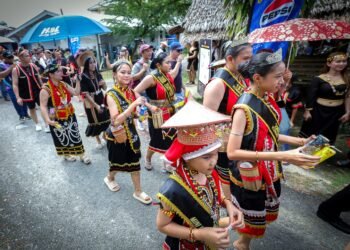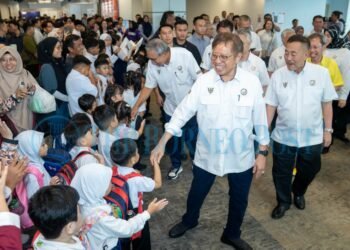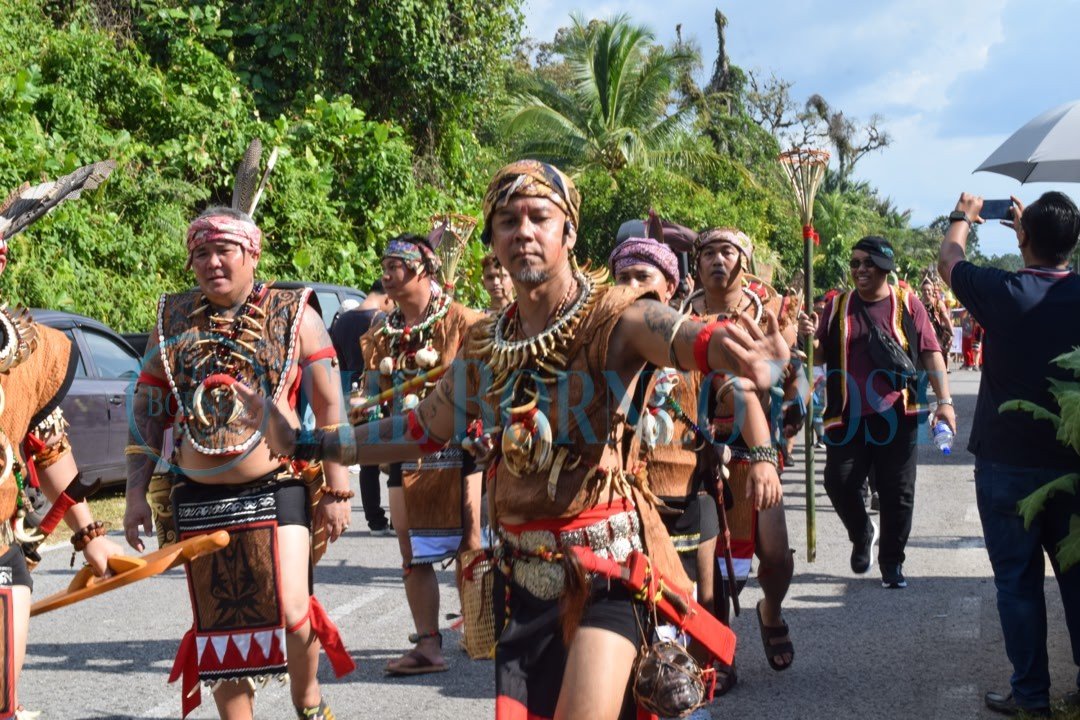

Some of the participants in the parade. – Photo by Roystein Emmor
BAU (June 6): The Singai Cultural Carnival 2026 and Ponu Papou Parade served as a reminder of the rich cultural heritage, history and traditions of the Singai community, said Tasik Biru assemblyman Datuk Henry Harry Jinep.
Speaking to reporters at Kampung Barieng, Singai, he said the programme aimed to showcase the authenticity of Singai traditional customs while strengthening community unity in conjunction with Gawai.
“This is to portray the originality of adat asal Singai. Second, is the community coming together when it’s time for Gawai.
“Our nenek moyang (ancestors) kept tuak tebu (sugarcane wine), tuak topui (tampoi fruit wine) and kasam ikan (fermented fish), these are the local delicacies in the olden days.
“Gawai is to celebrate harvesting. In the olden days, nothing was about cash, it was all about harvest. Today also reminds us of the struggle of our community.
“It is also to remind young people that our traditions, origin and heritage are important to keep,” he told reporters after officiating at the event.
The State Deputy Transport Minister said Mount Singai remains a significant symbol of identity for the Singai people.
He noted that the community’s history is closely tied to the traditional baruk, which once served as centres of authority for meetings, rituals and community discussions.
“There are only three that still exist, Baruk Barieng, Baruk Sagong and Baruk Giang.
“That is how the movement of the people of Singai from the mountain settlement and now we have 15 kampung from seven kampung, operating over 15,000 to 18,000 people,” he said.

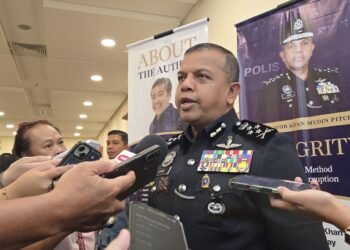
Henry speaks to reporters. – Photo by Roystein Emmor
Henry said the Baruk Singai is still used for community activities, although traditional rituals are no longer widely practised there.
He added that only two baruk continue to conduct rituals and safeguard ancestral skulls, which remain under community care.
“They don’t surrender them to the museum because they take care of them themselves. Things like this cannot simply be transferred to others,” he said.
On cultural identity, he said the Singai language is unique and distinct from other Bidayuh dialects found elsewhere.
“Another unique thing is that we cannot find our language in other areas. Especially like Jagoi, we have Jagoi Babang, we have Bijagoi in Malaysia, we also have Jagoi in Indonesia.
“You go to Salako, we also have Salako in Lundu. But you cannot find Bisingai,” he said.
On historical development, Henry said Catholic missionaries first arrived at Mount Singai in 1885, marking the beginning of Christian settlements in the area.
He added that while Bau is now 206 years old, the Singai villages themselves may date back two to three centuries.
The carnival featured the Ponu Papou Parade, with around 120 participants from various villages and organisations including Kampung Batu Spit, Oyak Ba’ai, Biro Wanita Segong, Kampung Peros, Kampung Sagah, the Kampung Senibong Singai Bau Residents Association, Nasip Dungea and Kampung Puak Krokong.