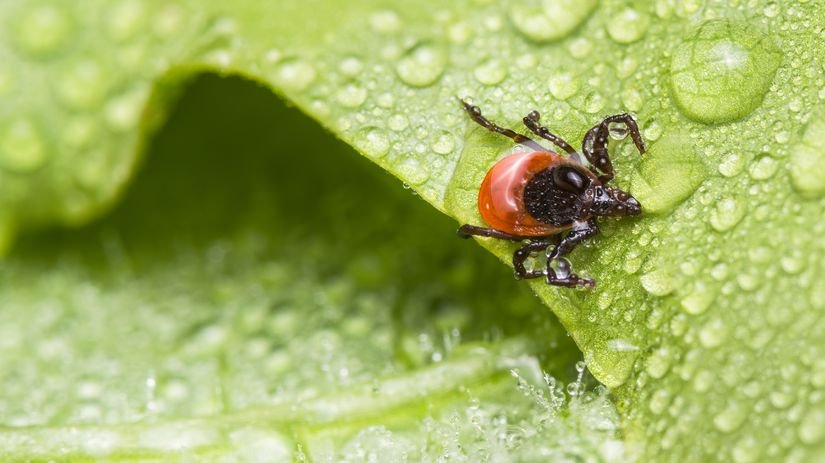
Are you afraid of ticks? Try an unexpected trick that reduces their occurrence by up to 99%.
The secret to keeping ticks at bay this summer? According to scientists, they are wood chips. New research has shown that wood chips are a secret weapon for protecting recreational forest trails against ticks, including almost complete elimination of Lyme disease vectors when using an insecticide.
The two-year experimental field study was led by Katarina Ost, a PhD student at the University of Ottawa’s School of Epidemiology and Public Health under the supervision of Manisha A. Kulkarni, in collaboration with researchers from the Bruyere Health Research Institute, Université de Montréal and Dalhousie University.

The study provided evidence that wood chips – both treated and untreated – can effectively reduce tick populations in recreational areas. This is a simple and affordable way for communities to combat these parasites.
“This study shows that various environmental management strategies can be effective in reducing the number of ticks waiting for a host along sidewalk edges where people are likely to encounter them,” said Dr. Kulkarni, a professor in the School of Epidemiology and Public Health at the School of Medicine.
Working with the National Commission Capital’s biological team, Kulkarni and her team evaluated the effectiveness of natural untreated wood chips and chips combined with an acaricide—a chemical known as deltamethrin that is commonly used to protect agricultural crops from ticks and mites.
The two types of chips were deployed along a pair of known tick-prone recreational trails in Ottawa’s Greenbelt, home to a high density of infected ticks in Canada’s capital.
This study showsthat treating sidewalk edges with strips of wood chips—both deltamethrin-treated and untreated—significantly reduces the density of ticks lurking on the host and represents a tool for integrated tick control in recreational areas.
 Read more Are we close to making a universal vaccine? It could stop multiple deadly viruses at once
Both methods significantly reduced the density of both adult and nymphal (smaller) ticks of the species Ixodes scapularis, which are the main vectors of Lyme disease in eastern North America, at all developmental stages. Wood chips treated with deltamethrin provided a 99% reduction in incidence over the two intervention seasons, while untreated chips achieved a 48% reduction.
The use of wood chips from ash trees in paving is a natural, biodegradable material and a low-impact alternative to classic chemical control methods. Their effectiveness did not decrease over time, which means that this affordable intervention had a lasting effect throughout the entire tick season.
“When it comes to tick control on popular forest trails, it could be a practical tool for busy routes where environmental conditions allow targeted treatment,” added Ostová. “It may also create opportunities to utilize locally sourced wood chips from existing tree removal or maintenance programs.”

The authors also pointed out that environmental factors, such as distance from water bodies, may limit the use of this type of insecticide. Further research is needed to examine the impact of the insecticide on surrounding organic material and non-target organisms. Efficacy beyond the two-year study period should also be assessed.
There are different types of ticks in both North America and Europe, although many belong to the same genus and carry similar diseases. Compared to America, Europe has a higher risk of tick-borne encephalitis and more neurological forms of Lyme disease. In North America, classical Lyme disease with the typical red circle is more common, but also other diseases such as babesiosis or Powassan virus. The mentioned study focused on ticks of the species Ixodes scapularis, in Europe Ixodes ricinus ticks – common ticks prevail.
Both species have a similar life cycle and method of hunting the host, but they differ in the types of bacteria they carry and the diseases typical for individual regions.





![Caught a Legendary Fish from a Warsaw Lake. Police Detain Suspect [VIDEO]](https://agentially.org/wp-content/uploads/2026/06/n-456b608c5e23a631c60991e83d73faf89ead51dd56982d4765c7c4a3e1e2469c-c-75x75.webp)