The global race to artificial intelligence could it, one day, be deliberately slowed down by its own actors? This is the idea put forward Thursday by Anthropic, one of the leading American laboratories in the sector, which advocates for the creation of a global coordination system around the development of cutting-edge AI.
In a text published by its think tank, the Anthropic Institute, the company says that it would be useful for the world to have a way to “slow down or temporarily suspend the development of cutting-edge AI”, to allow time for societies, institutions and research to align keep pace with technological progress.
The proposal contrasts with the current dynamics of the sector. For several months, the major artificial intelligence laboratories, including OpenAI, Google, Anthropic or even Chinese DeepSeek, are engaged in an intense race for performance. This competition is accompanied by massive investments and strong commercial pressure, but also growing concerns around the ethical, social, environmental and security risks linked to the most powerful models.
For Anthropic, the main problem is the absence of a coordination mechanism capable of preventing an actor from taking advantage of a break decided by his competitors to get ahead. Without a common framework, the company warns, tech companies and governments alike risk having to make difficult choices about security, under the pressure of competition and geopolitical rivalries.
The specter of an AI capable of escaping human control
The laboratory particularly mentions the risk ofloss of control over AI systems increasingly autonomous. It highlights the possibility, still uncertain but considered plausible if current trends continue, of a “recursive self-improvement”. This scenario designates the moment when artificial intelligence systems would become capable of contributing themselves to the training of their successors, with an increasingly limited human role.
Anthropic recognizes that there is no certainty that such a shift is imminent. The company emphasizes, however, that this perspective justifies, according to it, serious reflection on the safeguards to be put in place before the models reach new levels. In his eyes, the potential benefits of AI for medicine, science, technology and the economy remain considerable, but they must be framed by a real capacity to slow down if the risks become too high.
To defend its approach, Anthropic cites treaty precedent on intermediate-range nuclear forces. The company points out that this type of international framework took decades to emerge, while the development of AI advances much faster and remains more difficult to monitor. Unlike visible military infrastructure, the computing capabilities needed to develop advanced models can be more easily hidden.
Jack Clark, co-founder of Anthropic also defended this idea to the BBC. He compared the current situation to oil boom of the early 20th century, when the rise of a strategic industry ultimately necessitated rules capable of strengthening public confidence. According to him, the AI sector today has an accelerator pedal, but not yet a real brake pedal.
This position comes in a context of financial frenzy around artificial intelligence. SpaceX, Elon Musk’s group, which notably includes the xAI laboratory, is preparing an IPO announced as potentially historic. Anthropic, whose valuation has almost tripled in three months, also initiated a first step in early June with a view to a possible IPO.
A difficult global pause to impose on tech giants
The laboratory’s proposal should, however, encounter strong resistance, in particular from UNITED STATES. Some politicians and tech executives reject any idea of a slowdown, believing that a break could offer a strategic advantage to China. The question of AI security nevertheless remains present at the highest level. Donald Trump indicated that he had discussed possible cooperation with Beijing on this subject during a recent visit to China.
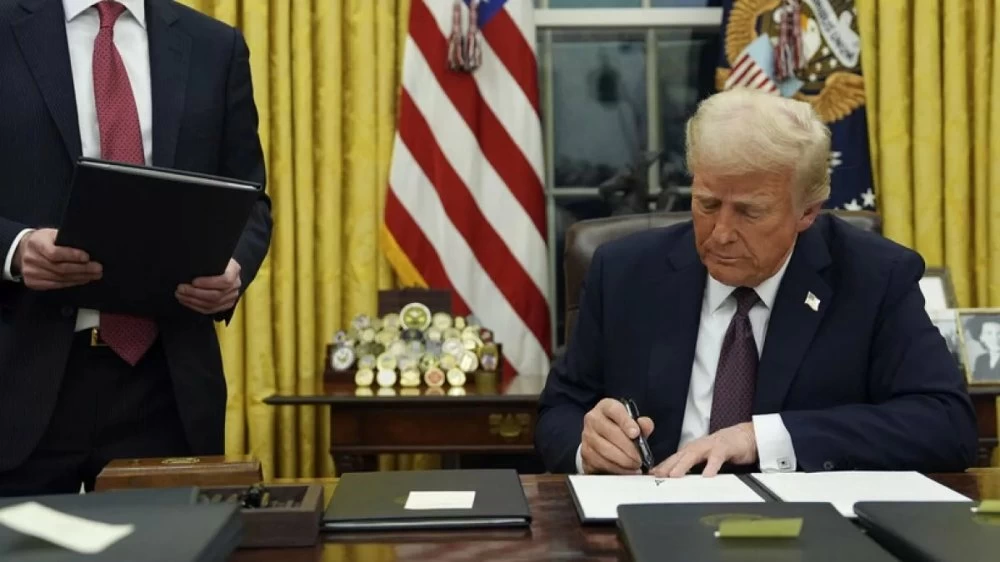
The American president also signed this week a long-awaited decree on the regulation of the sector. The text allows government control of the most advanced models in the name of cybersecurity, but only on a voluntary basis. This approach illustrates the persistent hesitation around more restrictive regulation of artificial intelligence.
Anthropic, founded by former members of OpenAI, has established itself as a laboratory promoting security and ethics in the development of its models. However, this image is worth reviews in part of the industry and within certain circles close to the White House, where the company is accused of exaggerating the risks, or even of maintaining a form of “fear marketing”.
For two months, Anthropic has restricted the distribution of Mythos, its most advanced model, in order to integrate cybersecurity patches before making it more widely available. The laboratory says it plans to release models with equivalent performance in the coming weeks, while comparable systems are also expected from its competitors.
By proposing a concerted break, Anthropic is thus attempting to shift the debate. It is no longer just a question of knowing which laboratory will develop the most efficient model, but of determining whether AI players can agree, collectively, to slow down when the risks exceed the capacity of companies to control them.