Loading Text-to-Speech…
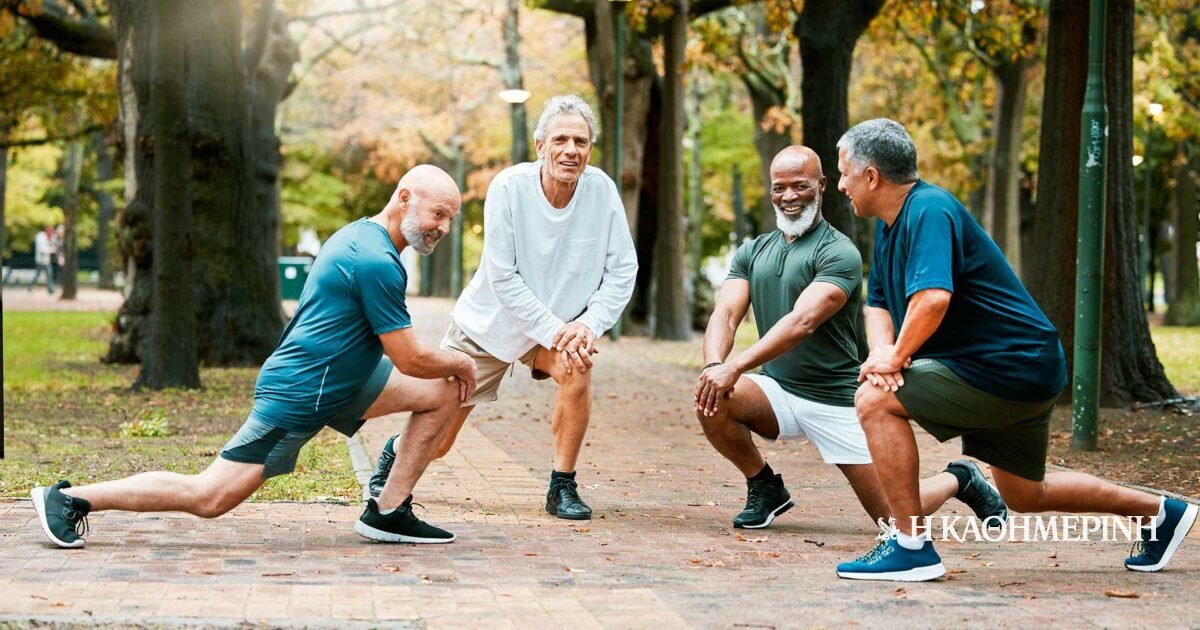
If you don’t feel as strong as you used to, it’s not unusual. We all lose muscle mass as we age. Muscle weakness in the lower limbs can make it difficult to get up from a chair, walk or climb stairs. It also increases the risk of falls. But muscle weakness is not inevitable. You can develop leg strength and stability with a targeted exercise program. A recommended exercise is leg extensions.
“Many of my patients look at me in disbelief when I show them the leg projection,” she says Christina Ruggeri, physical therapist at the Harvard affiliate Spaulding Rehabilitation Center. “But it’s great exercise, especially for older people.”
What are foot projections?
A lunge is a lower extremity exercise that is similar to a variation on the single leg squat.
For the basic front view, you start with your feet closed. Step forward into a lunge position, with one foot in front and the other behind. Bend your knees to lower your body and return to a standing position. “Your back knee will practically almost touch the floor,” says Ruggeri. Other variations include back view, walking view, and side view.

The muscles worked during leg extensions are the quadriceps (front of the thigh), hamstrings (back of the thigh), and glutes. Leg extensions also activate the hips, core and lower back muscles.
Leg extensions are great for older people as they help with strength, flexibility, coordination and balance. “These are essential for performing leg projection while using these skills for basic daily activities such as walking, stairs, or even getting up off the floor,” says Ruggeri. If you’re sitting on the floor playing with your grandkids or you accidentally fall and have trouble getting back up, the way to give yourself the push to get back up is to go through the leg projection position.
What you need to do the leg projection
Screenings are usually safe for everyone, including the elderly. But there are exceptions. “To avoid injury, you need to have the strength in your legs to perform them correctly,” says Ruggeri. “You shouldn’t push yourself when doing a leg projection.” The strain can cause muscle or tendon injuries that may take weeks to heal. People with significant knee, hip or lower back problems should first consult their doctor, a physical therapist or personal trainer before starting an exercise program that includes leg extensions.
If you don’t have sufficient lower extremity strength, don’t avoid projections. Instead, train yourself to gradually gain the strength to do so. Start light, slow and progress once you feel strong enough.
The best leg projection variations
“If someone is trying to make projections and is struggling, I suggest starting with simple modifications,” says Ruggeri. For example:
• Instead of lowering the back knee until it almost touches the floor, go only halfway or even less. Gradually increase the depth of views.
• If you have balance issues, lean against a wall and then lower your body partially. You can also hold on to a handrail or walking stick for balance. If your right foot is in front, hold the support with your left hand for stability.
• Place your front foot on a low step or box to reduce range of motion.
Once you’ve mastered the modified version, continue to progress until you can perform a full forward leg extension. Ruggeri suggests starting with two sets of 10 lunges, lowering the body a quarter of the distance, over several weeks. Once you feel strong enough, perform one set going down half the distance and one set going down a quarter distance. Continue to increase the distance every few weeks. Do these and other strengthening exercises three times a week at least one day apart.
If you find it difficult to do a front lunge, try a back lunge by starting with your feet together and stepping back into the lunge position. This may be easier if you kneel down. Another way to make screenings easier is to do them in a pool. When you exercise in water, buoyancy supports your body weight. You can practice leg lunges and other exercises with less stress on your joints.

It takes about nine weeks of systematic training to build strength. Everyone moves at a different pace. “Feel how your body reacts to the exercise,” says Ruggeri. “If you feel like you haven’t reached the goal yet, stay at the same level until you are able to move forward.”
Other projection variations
Once you’ve mastered the forward leg projection, you can move on to other variations. For side lunges, take a side step out and bend your knee. This way you also strengthen the hips. “This is a more advanced exercise because we’re not walking sideways,” says Ruggeri.
For a walking projection, move forward with each projection, alternating legs. This requires better balance and coordination.
Once you are able to do the leg extensions easily, you can increase the difficulty by adding weights. Start by holding 2.5 kg or less and gradually increase the weight.
Alternative solutions to increase your strength
If you don’t yet have the strength to do a leg projection, you can start with the variations described above, or try a basic squat or sit-up. To stand up from a sitting position, stand in front of a chair. Lower your body as if you’re going to sit down, but just touch the seat with your butt, then stand up again.
If this is too difficult, place a pillow on the chair. Do two sets of 10 repetitions resting on the pillow. Keep practicing until you can remove the pad. “Sit-to-stand exercise is great for maintaining strength for activities of daily living, such as getting out of bed, the toilet, and getting out of the car,” says Ruggeri.
Try these variations on leg views

Front view: Stand upright, back straight, feet hip-width apart and hands on your hips. Take a step forward with your right foot. Bend the knees and lower the torso vertically down until your right thigh is almost parallel to the floor. Hold and then return to the starting position. Repeat, stepping forward with the left leg.

Side view: Stand upright, back straight, feet hip-width apart, toes facing forward, and hands on your hips. Bend forward from the hips, bend your right knee and shift your weight to your right leg. Pause, then shift your weight to the left leg, bending the left knee and projecting the leg to the left.

Rear view: Stand in an upright position with your feet hip-width apart and your arms by your side. Step back with your left leg, bend your right knee and move your arms forward (with elbows bent, for balance). Return to the starting position and repeat with the opposite leg.