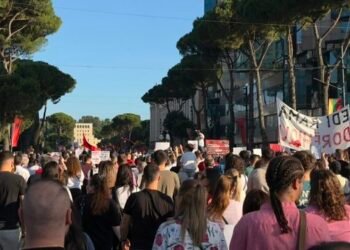
From Spain to Israel, other countries have found themselves in situations similar to ours today. We can learn from their experience, but no country can offer us definitive answers about what awaits us after June 7. Like it or not, on June 7 we will write our future ourselves
What future awaits us after Sunday? To answer this question I have recently tried to understand what has happened to other countries that have found themselves in similar situations. So, a situation where due to political polarization the country finds itself in a continuous blockade and consecutive elections. Thus, in the last four columns, I have written what we can learn from the experience of Israel, Bulgaria, Greece and Spain. Each of these four countries offers a possible future that awaits us after June 7.
If we have Israel’s fate it means that the country will be locked in a continuous election cycle and political polarization will continue to sabotage our efforts at progress. Five pairs of early elections were organized in Israel within three years. The sixth election will be held this year. Despite the continuous victories of the largest party, the united opposition refused any kind of cooperation with them. From the Israeli example, we learn that the toxic polarizations between the position and the opposition can close Kosovo in a vicious circle from which it will be very difficult to get out. In such toxic environments where most see themselves as protectors of “the will of the citizens“, while the opposition sees itself as “savior of democracy.”“, elections lose their meaning.
If we have the fate of Bulgaria, then our future is still gloomy, but a little more optimistic than the Israeli one. In Bulgaria, eight pairs of early elections had to be held within five years for the country to finally get out of the political blockade. Even there, as here, the blockade was a consequence of the deep political polarization between the “old guard” and the “new hope”. At every step the “new hope” was sabotaged by the “old guard”, but on the other hand the “old guard” could not triumph over the “new hope”. Thus, two political camps entered the trenches and blockaded the country for five consecutive years. Frustrated with both camps and the whole situation, the citizens turned to a third party which unexpectedly turned the Bulgarian political scene upside down and helped Bulgaria get out of the five-year blockade. From the Bulgarian example we learn that Kosovo can only be at the beginning of a blockade which will last a considerable time. As in Bulgaria, two camps – the “old guard” and the “new hope” – risk sinking deeper and deeper into their political trenches with each election and dragging the whole country with them. This will create circumstances for the birth of a third political force which will benefit from the created blockade and citizen frustration with two political camps.
If we have a future like the Greek one then this whole blockade will end very soon. In Greece, although the largest party won the election, it insisted that the victory was insufficient, and in order to prevent the country from being blocked by the opposition, it insisted on new elections. In the campaign that followed, the largest Greek party portrayed the new elections as a referendum between the responsible position and the irresponsible opposition. Between stability and chaos. The message from Greece’s largest party was clear – we want a majority to end the country’s paralysis. And this is exactly what the Greek citizens gave him. From the Greek example, we learn that the political blockade can end after June 7. In this future, the citizens will give Kurt the majority he needs to govern unhindered by the opposition.
The Spanish future is again an optimistic one. Spain went through exactly what we are going through today – two elections in five months as a result of political paralysis. And as with us, the blockade became fashionable, while compromise became a dirty word. In Spain, although the largest party won elections, the creation of institutions became impossible due to the blockade of the opposition. After holding two sets of elections, Spanish citizens penalized the opposition for blocking institutions and rewarded the largest winning party. Thus, only after understanding the civic message, the opposition decided to be constructive, to end the political blockade and enable the creation of new institutions. In the long run, this constructiveness of the opposition will reward it with victory in the next election. From the Spanish example, we learn that a possible future for Kosovo after June 7 is one where nothing significant changes in terms of political forces. So, Kurti will not grow enough to break the blockade, but neither will the opposition grow to impose its will on Kurti. In this kind of situation, our opposition will do what the opposition in Spain has done – it will put the state before the party and thus allow the creation of new institutions. In the short term, the opposition will be blamed for “political treason” and cooperation with “dictator Kurti” by radical elements of the public discourse, but in the long term this political constructiveness will be rewarded by the citizens.
By traveling back in time to Israel, Bulgaria, Greece and Spain, the purpose of this series of writings has not been to find a definitive answer to the situation we find ourselves in today. The goal has been to try to get informed about what are the structural and personal factors that cause political crises like ours and what are some of the best practices to overcome them. “All models are wrong, but some are useful” – is the famous statement of statistician George Box. Consequently, our analogies may be flawed, but they are definitely useful. In the end, looking for definitive answers about our future in the stories of others is a meaningless enterprise. Like it or not, we will write our future ourselves on June 7.