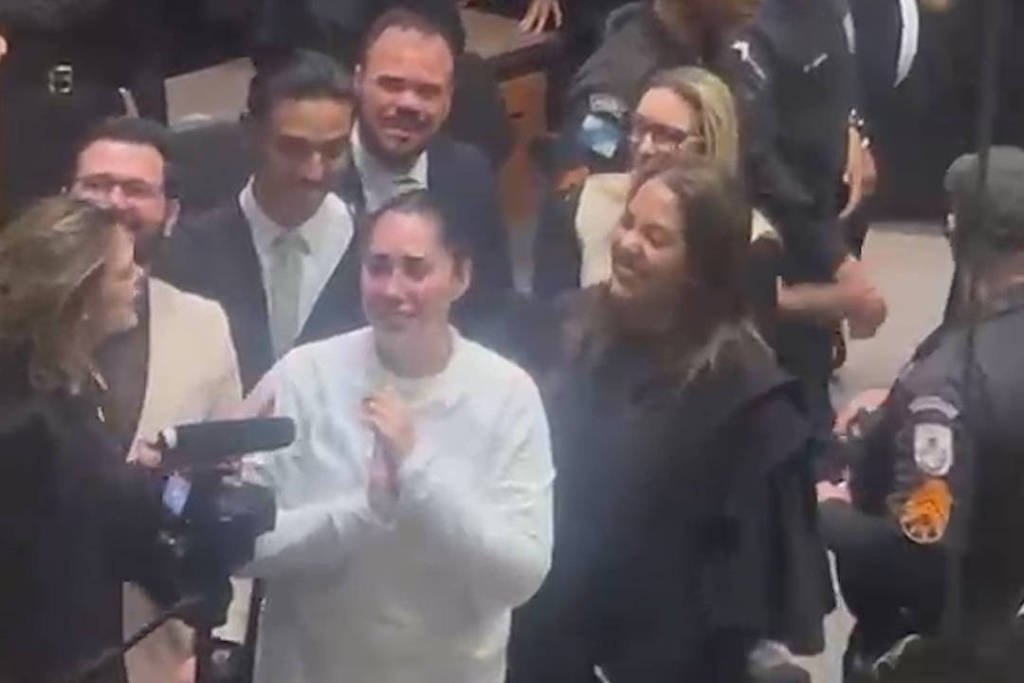
THE Public Ministry of River appealed the sentence that resulted in conviction of Monique Medeiros for omission in the face of the torture suffered by his son, Henry Borel, and in the downgrading of the charge from intentional homicide to manslaughter — when there is no intention to kill. Monique left prison on Thursday afternoon (4).
The appeal was filed after the jury closingin the early hours of Thursday, and questions the change in one of the questions submitted to the jurors during the vote.
According to prosecutor Fábio Vieira, the main controversy involves the formulation of the question regarding the conduct attributed to Monique. According to the minutes of the trial, the Public Prosecutor’s Office challenged the vote after the jurors’ response to the 27th question, arguing that the wording originally presented dealt with intentional omission, as stated in the indictment.
THE Sheet Vieira stated, this Saturday (6), that the detailed reasons for the appeal will still be presented. According to him, the appeal has already been filed, but the legal grounds will be sent to the Court over the next week.
When contacted this Saturday, lawyer Hugo Novais, also responsible for Monique’s defense, said he had not yet had formal access to the appeal.
“I need to have access. The appeal needs to be received by the magistrate. Afterwards, I will have the opportunity to respond. There is still a process. I will wait to be notified of the appeal to comment,” he stated.
The discussion took place after Monique’s defense claimed that there was an error in the formulation of the question, as they understood that the question should reflect the defensive thesis of negligence, and not intentional omission. Judge Elizabeth Machado Louro accepted the request and ordered the question to be reformulated.
The controversy precisely involves the difference between intentional homicide, when there is intention to kill or assumption of the risk of causing death, and culpable homicide, when the result occurs without intention, due to negligence, imprudence or incompetence.
In the decision recorded in the minutes, the judge stated that the initial wording contained a mistake because it asked the jurors about intentional omission, while the defense supported the disqualification for manslaughter. According to the judge, maintaining the original text could mislead jurors and compromise the free expression of the sentencing council.
The Public Prosecutor’s Office, however, maintains that the change occurred after the vote had already been taken and argues that the original question correctly corresponded to the accusation brought to trial. For the Prosecutor’s Office, the change may have influenced the result related to holding Monique responsible for her son’s death.
The full reasons for the appeal have not yet been added to the process. According to the Public Ministry, the grounds for the appeal will be presented in the coming days.
Defense hits back
After reading the sentence, in the early hours of Thursday (4), lawyer Florence Rosa, who is part of Monique’s defense, stated that the correction merely adapted the question to the thesis actually defended in plenary.
“This is absurd. You who were following the trial saw that during my argument I spoke about negligence, which was precisely the thesis accepted by the sentencing council. Negligence is one of the substrates of guilt. So, yes, there was, in fact, a mistake and this is not a maneuver”, he declared.
According to the lawyer, the error was in the reference to intentional omission in an issue that should deal with the thesis of culpable homicide supported by the defense.
“If this mistake had not been corrected, the trial would certainly have been annulled because it would have been contrary to what the defense requested,” he stated.
Conviction
The trial ended in the early hours of Thursday (4), after ten days of sessions, the longest in the recent history of the Rio Jury Court.
Jurors sentenced Jairinho to 43 years, 9 months and 20 days in prison for double qualified homicide, torture and coercion during the process. He was also ordered to pay R$400,000 in compensation for moral damages to Leniel Borel, Henry’s father.
In Monique’s case, the jurors dismissed the charge of intentional homicide and recognized the practice of manslaughter. As the Jury Court only has jurisdiction to judge intentional crimes against life, it was up to the presiding judge to apply the legal consequences of the disqualification.
Elizabeth Machado Louro granted judicial pardon for manslaughter and set a sentence of one year and four months in detention for the omission in relation to the torture suffered by Henry. As Monique had already remained in prison during the process for a period longer than the sentence imposed, the magistrate declared the punishment fully served and ordered her release.