Sancti Spíritus/State workers already have the order to participate in the “process” called “My signature for the Homeland”, which began this Sunday with your own signature by Miguel Díaz-Canel, with which the regime intends to counteract the pressure from the United States for a change in Cuba.
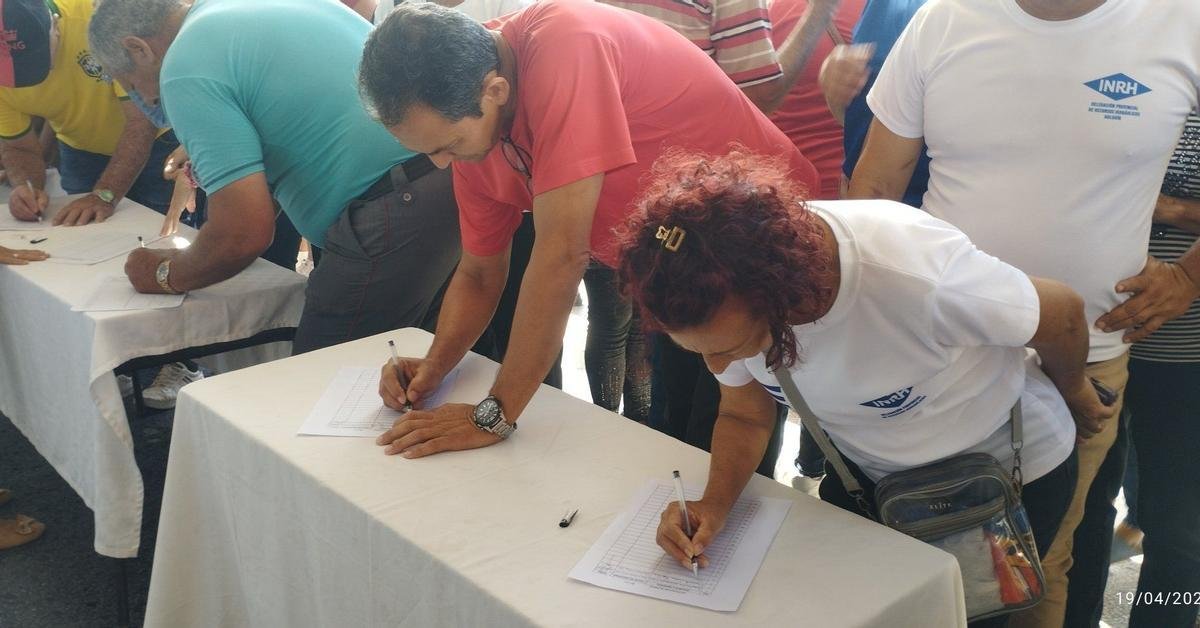
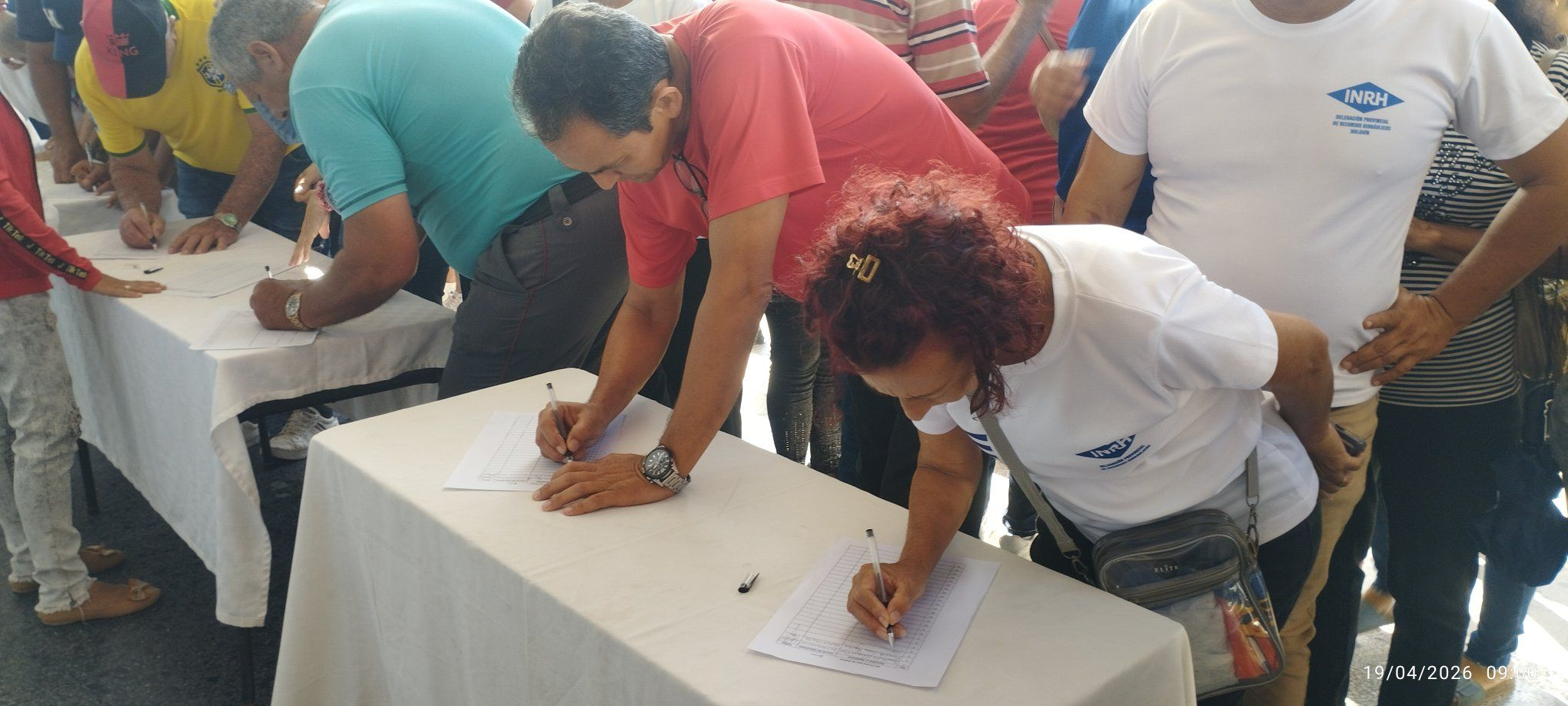
“They did not set up signing points in the workplace, but rather they set up points in the library, the House of Culture and other places, and companies are being told that they have to go and sign there,” he tells 14ymedio a Sancti Spíritus employee who prefers to keep his name to himself. How do you control that the workers went to sign? “They sign on a list as if they were going to sign,” the man responds.
The Committees for the Defense of the Revolution (CDR), in addition, have mobilized to go house to house. This is how another neighbor from Ciego de Ávila says: “They came to touch my mother and she, who is very old, signed, know what they told her, I already told my husband not to even think about opening the door.”
The woman compares it to what happened in 2002, as a result of the Varela Project launched by Oswaldo Payáwhen the then president Fidel Castro ordered the CDR to force citizens to sign a “counterproject” that ended up crystallizing in the Constitution “the irrevocable and inviolable character of socialism,” which popular humor baptized as “constitutional mummification.” “None of that is signed in my house,” the woman asserts.
“They came to touch my mother and she, who is very old, signed, know what they told her, I already told my husband not to even think about opening the door.”
The newspaper of Ciego de Ávila, Invaderthis Monday gives a good account of the deployment of the ruling partynot so much in terms of drawing power as in the use of triumphalist prose. Thus, Lianet Pazo Cedeño, member of the Municipal Bureau of the Party, declared that the people of Avila “are willing to demonstrate to the world the free will of the Cuban people to preserve the sovereignty and independence of the nation, but without submitting to blackmail or renouncing their principles.”
Leaders of the provincial government, such as Odelsys Valcárcel Pérez, general secretary of the Cuban Women’s Federation, contributed to the slogans reported by the state newspaper: “Let us unite and denounce barbarism. Let us make our position the firmest and most resolute condemnation of all policies contrary to the life and rights of the Cuban people and in support of the Declaration of the Revolutionary Government.”
Several post officials also showed the queues formed in front of tables assembled in Holguín for the signatures – which will last until May 1 –, although the faces did not show much enthusiasm. From Guantánamo, a resident reports to this newspaper that the CDRs visit each home “collecting data on people who are sick and those who are fit to present themselves to defend the homeland.”
The call, disguised as a civil society initiativeintends, in the words of the statement issued by the Presidency, to support “the call made by the president at the event for the 65th anniversary of the declaration of the socialist character of the Revolution, to organizations in Cuba and the world so that the truth of Cuba is known in every corner of the planet”, seasoned, of course, with an allusion to the “commitment of this people to peace” and “the firmness and willingness to defend sovereignty.”
“At least don’t sign out of inertia, think about it for a while, let’s try for a moment to be civil and responsible with our destiny, don’t give away your signature”
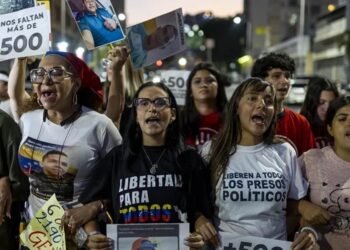
Immediately, activists inside and outside Cuba attacked the initiative. An example is the social media campaign #PorEsoYoNoFirmo, to which users have joined by accompanying the hashtag with images of the situation on the Island, whether with the repression of peaceful demonstrations, the blackouts or the giant uncollected garbage dumps.
The art historian Miryorly Garcíahe reflects on his Facebook wall: “And there many people will go to sign once again irresponsibly, because the Cuban has adapted to the double standard,” and asks his fellow citizens: “At least don’t sign out of inertia, think about it for a while, let’s try for a moment to be civil and responsible with our destiny, don’t give away your signature, don’t give away your approval.”
On this unchecking, he reasons, “it may depend that they have more fear than what they try to impose on us through repression, that fear changes sides and they pick up a suitcase and run away, because they know clearly that they are not supported.” Regarding the same idea, he elaborates: “You have a business that works poorly because you almost never have power, you have a salary that is not enough, you live off a remittance from someone who had to leave to help you live… For all this you need not to sign, you no longer have anything to lose. What are you doing to keep your job? What a job, in a country that is paralyzing!” And he concludes: “You have to decide to do your bit if you want to see the sand of an entire beach. Cuba changes if we change.”