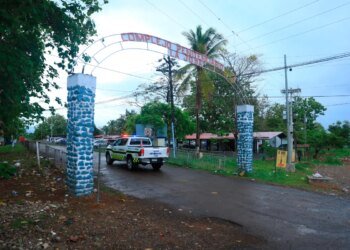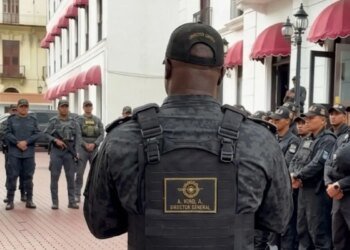
The search continues. While patrolling the National Police They tour communities in eastern Panama and the authorities maintain operations to locate those who escaped from La Joyita, the penitentiary system faces one of the most critical moments in recent years.
The escape of 195 prisoners from La Joyita prison not only triggered a nationwide recapture operationl. It marks a before and after for the authorities. Not only because of the magnitude of the evasion, but because it once again exposed the weaknesses of a system that for years has faced problems of infrastructure, security, overcrowding and prison administration.
The Government Minister herself, Dinoska Montalvo, recognized the dimension of what happened.
“What happened is no small thing, it is serious,” he stated during a press conference in which he updated the numbers of recaptured people and defended the actions taken by the Government.
Until the last official report, the authorities had recaptured 148 prisoners. Added to that figure are three deaths, whose cases are being investigated by the Public Ministry.
The minister explained that four other people had surrendered voluntarily, but as of yesterday at noon they had not been formally reincorporated into the prison system, so they did not appear in the official count.
In total, 151 of the 195 escapees had already been located by the authorities. As of yesterday, the figure left around 44 people pending capture.
For Montalvo, the state response must be forceful.
“One that we are missing is one that is dangerous for the country and we are going to find them,” he warned.
The message was accompanied by a direct call to the escapees.
“The safest place they have at this moment is the penitentiary center. Go back. In the end, the State is going to find you no matter what,” he said.
The day everything changed
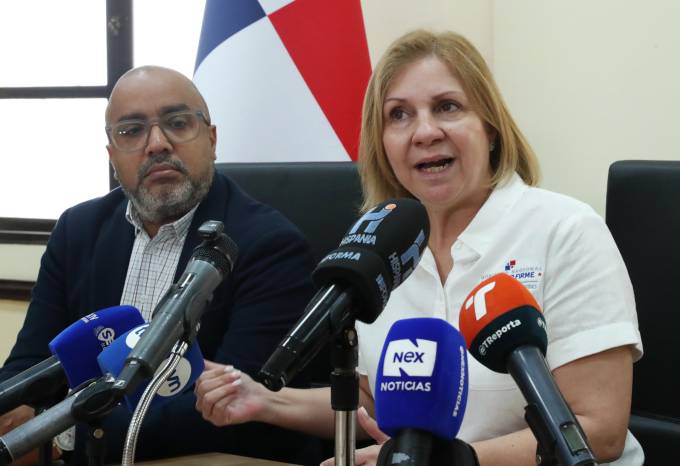
The Minister of Government, Dinoska Montalvo, assured that the escape from La Joyita marks a before and after for the Panamanian prison system.
The minister did not hesitate to define the escape as a breaking point for the Panamanian prison system.
“Unfortunately, June 1 has a day before and a day after what happened. Everything changes,” he said.
The phrase summarizes the moment that the penitentiary administration is going through.
Research is advancing in several directions. The Directorate of Professional Responsibility of the National Police attempts to determine how a routine transfer ended up becoming a massive escape. At the same time, Internal Affairs of the Penitentiary System reviews administrative actions and the Public Ministry develops criminal investigations related to the escape and the three deaths recorded during the events.
“We are definitely talking about a homicide,” said the minister when referring to the deaths.
He also acknowledged that the situation forced personnel rotations and movements.
“When a situation like this occurs, of course we have to make immediate rotations,” he said.
However, it went further. “The corruption that existed and those channels of corruption within the system that we began to cut were an open secret,” he said.
Figures of a crisis
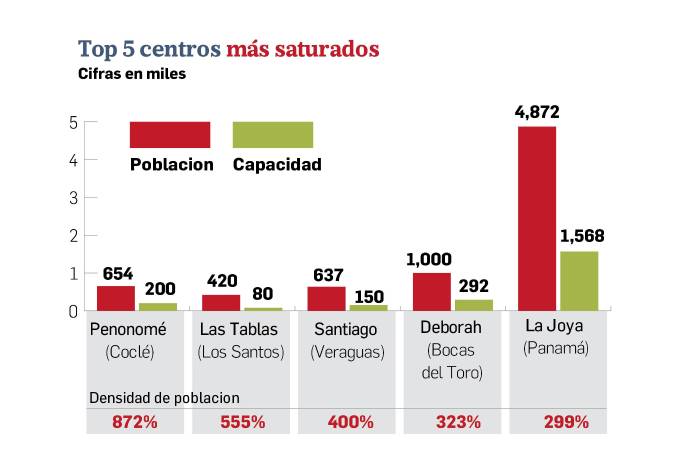
The differences between penitentiary centers are marked. Penonomé registers the highest level of occupancy, while La Palma maintains the smallest incarcerated population in the country.
The escape captured public attention, but the numbers reflect that the prison crisis goes far beyond a specific event.
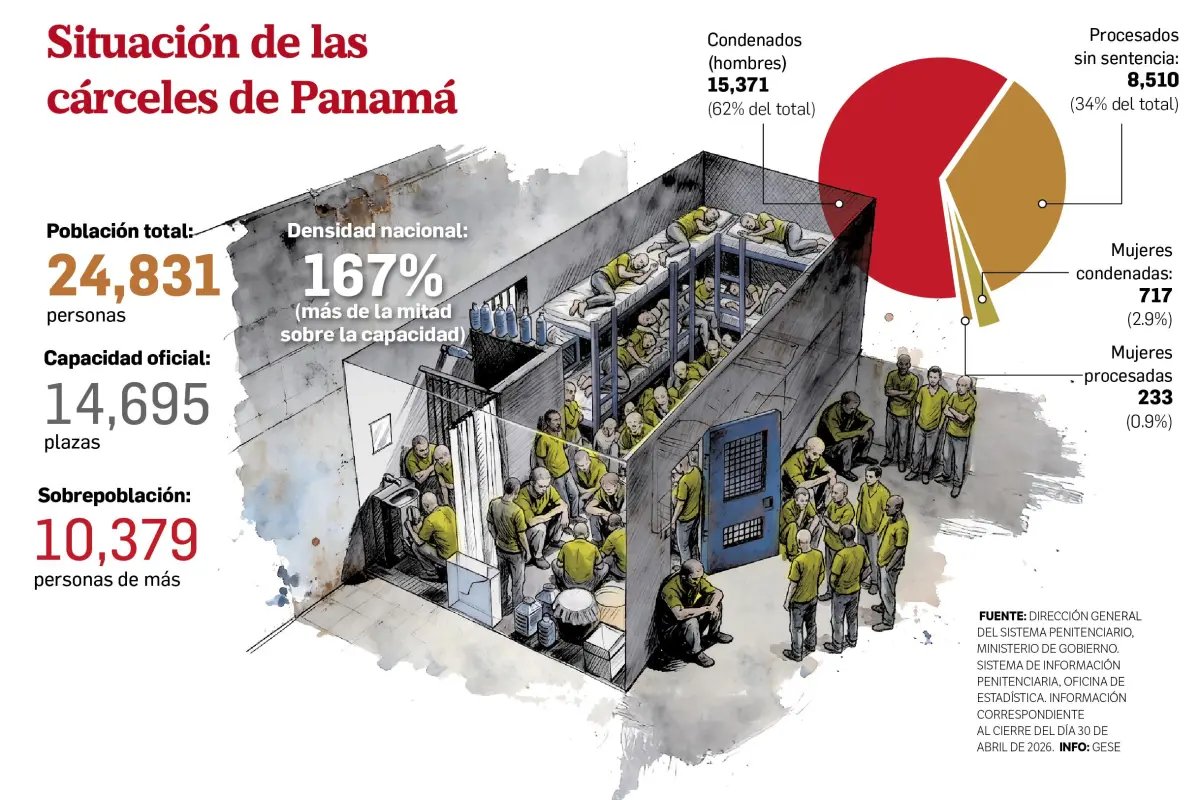
Currently, Panama maintains a prison population of 24,831 people, according to data updated as of May 30 by the General Directorate of the Penitentiary System of the Ministry of Government.
Of them, 15,371 men and 717 women are serving sentences. However, 8,510 men and 233 women remain prosecuted. They are people deprived of liberty who are still waiting for a final decision from the courts. Altogether there are 8,743 detainees without conviction.
The figure represents 35.2% of the entire national prison population.
In other words, more than one in three inmates in Panama remains incarcerated without an enforceable conviction.
The data acquires special relevance because it is produced in a system that operates well above its installed capacity.
Interactive map: Geographic monitoring of the 21 penitentiary centers in Panama on satellite view. Touch the grouping spheres to display the centers of each province and know their critical levels of overpopulation.
Prisons on the limit
The country’s prisons were designed to house 14,695 people. They currently house 24,831.
The difference is equivalent to an overpopulation of 10,379 prisoners. The national occupancy level reaches 167%.
Some centers register more critical situations. Penonomé houses more than three times the number of people it was built for. Las Tablas exceeds five times its original capacity.
Santiago and Deborah in Bocas del Toro also present occupancy levels much higher than expected.
La Joyita, where the recent escape occurred, holds 4,788 prisoners in facilities designed for 2,837 people. La Joyita registers 4,872 inmates.
Together with Nueva Joya, with 5,599 inmates, these centers concentrate a good part of the national prison population.
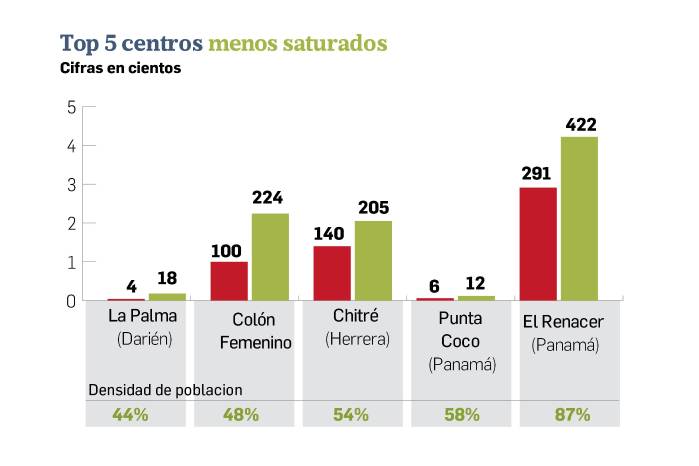
The differences between penitentiary centers are marked. Penonomé registers the highest level of occupancy, while La Palma maintains the smallest incarcerated population in the country.
The commitment to new prisons
Faced with this panorama, the Government is committed to expanding prison infrastructure.
Minister Montalvo assured that the administration plans to have five penitentiary centers built or in an advanced phase of construction before the end of the current government period.
“The facts speak for themselves,” he said when referring to the need for new investments in prison security.
One of the most ambitious projects is the construction of a Maximum Security Penitentiary Center under the Public-Private Partnership (PPP) model.
The estimated investment is around $130 million and the facility would have capacity for approximately 2,000 people deprived of liberty.
At the end of May, the project received authorization to advance to the next structuring phase.
As explained by the Minister of the Presidency, Juan Carlos Orillac, the model will allow not only construction, but also maintenance and long-term operation to be incorporated into the contract.
The objective is to strengthen prison classification and improve security controls.
“The mega jewel has already fallen short”
For the general director of the Penitentiary System, Jorge Torregrozathe need for new prisons responds to a reality that the system has been facing for years.
“La Mega Joya has already fallen short of the criminal problems that exist in the country,” he stated.
As he explained, the new center will accommodate prisoners classified as extremely dangerous and will have specialized security components.
Torregroza confirmed that the projected investment for this facility is around $130 million.
The Government is also developing a prison for central provinces valued at approximately $172 million and a Compensation and Rehabilitation Center in Las Garzas, whose public act amounts to $85 million.
“The penitentiary centers that are currently in place are already exceeding overcrowding and it is necessary to take corrective measures,” he noted.
The judicial response
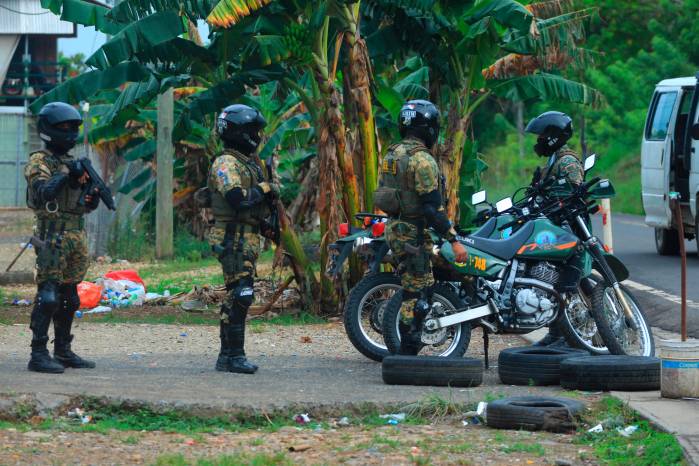
The authorities continue the search for the escapees who are still at large after the massive escape recorded on June 1.
While the Executive promotes new investments in prison infrastructure and maintains operations to locate the escapees, the Public Ministry advances with the criminal investigations derived from the mass escape from La Joyita.
The Attorney General’s Office reported that, to date, 145 people linked to the evasion have been arrested.
As a result of the investigations and the work of prosecutors before the courts of justice, 13 guarantee control hearings were held related to these events.
The proceedings led to seven provisional arrests and six convictions through sentencing agreements. Among the sanctions are three sentences of three years in prison, two of three years and six months, and one of three years and eight months.
These sentences are added to the sentences that those deprived of liberty were serving before carrying out the escape, so they will remain in state custody for longer.
In total, the Attorney General’s Office brought 54 people linked to the escape before guarantee judges. Of them, 48 were placed under provisional detention and six received sentences through sentencing agreements.
The authorities specified that hearings are still in progress and that investigations continue to determine responsibilities related to the escape that occurred in the prison complex.