Jaap van Dissel explained it all one more time, on Friday at the parliamentary inquiry committee into combating the corona crisis. The former chairman of the Outbreak Management Team (OMT) and director of the RIVM Center for Infectious Disease Control clearly showed how he viewed the questions from the committee members during the interrogation that lasted more than three hours.
“You forgot to mention the most important thing.”
“I would like to correct you.”
“You make too great a distinction.”
“You make it way too black and white.”
“I understand that (…) you apparently want to indicate that we were deficient. But that is not correct.”
You stick to a case definition that is apparently on a website, but the practice of testing was already very different
That last comment summarized the interrogation: in broad terms, Van Dissel thought that he had always made the right decisions during the corona crisis with the knowledge he had at the time. And that the committee underestimated the complexity of the situation with its questions and relied too much on hindsight.
There were plenty of questions prior to the interrogation. Hadn’t the OMT underestimated the character and severity of the virus, causing the national response to start too late? Wasn’t the role that carnival could play in the spread of the virus misjudged? Weren’t the RIVM test guidelines too restrictive, allowing sick people to spread the virus unnoticed at the start of the outbreak? Didn’t politicians give too much power to the OMT?
The committee did touch on these topics, but rarely explored them in depth. Her questions were unfocused, imprecise and not detailed. As a result, Van Dissel was always able to explain in extensive sentences why the committee members did not understand it properly, why everything was slightly different, why their assumptions were incorrect.
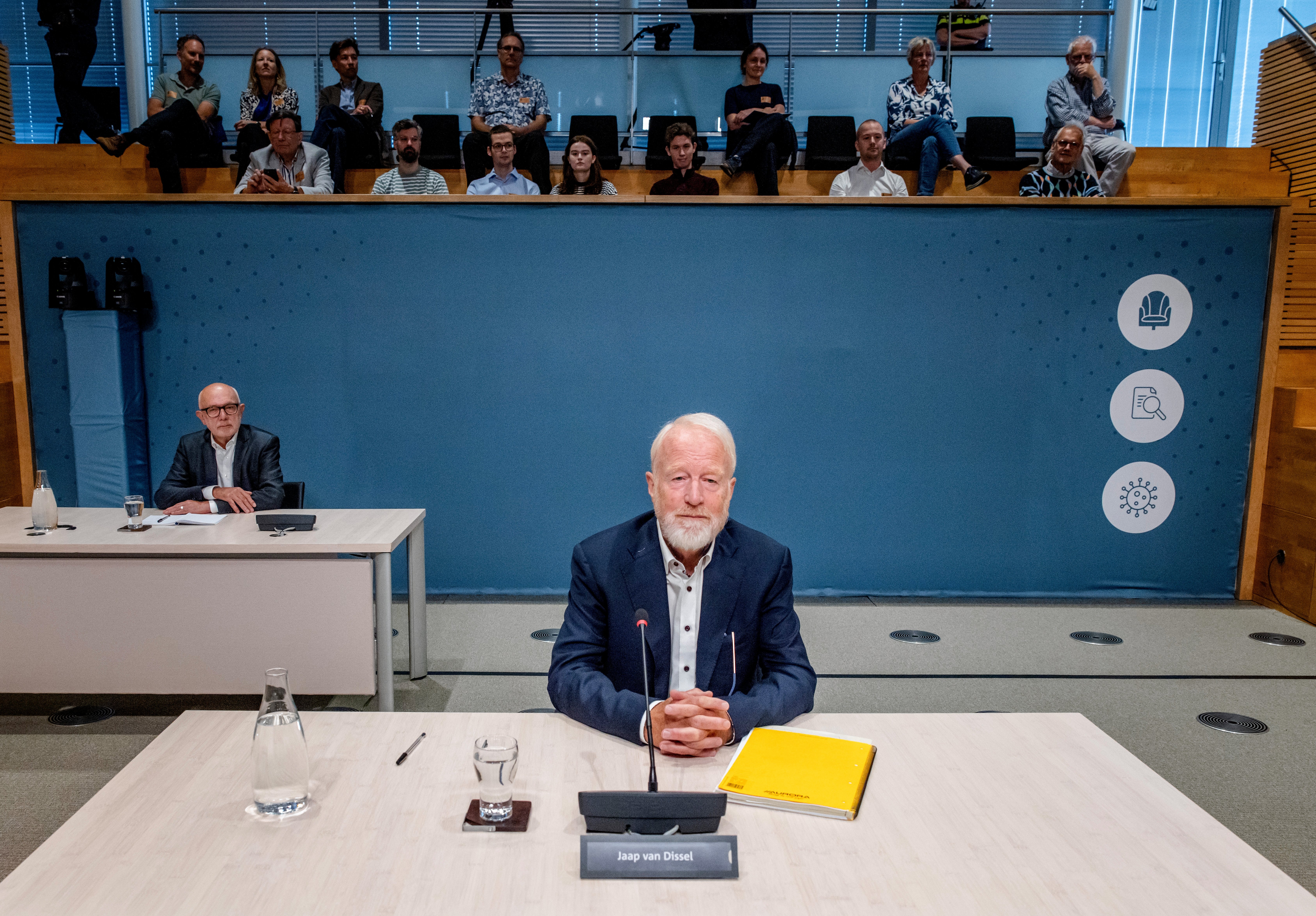
Jaap van Dissel: “We have relied far too much on the WHO. I should have been more critical.”
Photo Bart Maat
Testing: important and pointless
An example was the committee’s question about the testing guidelines in mid-March 2020. They were so strict that many potential virus carriers were not eligible for a corona test and they contributed to the spread of the virus in society.
Van Dissel dismissed criticism of those guidelines. “You stick to a case definition that is apparently on a website, but the practice of testing was very different.” But that website was the site of his own RIVM, on which general practitioners and the GGD based their testing. Van Dissel meant that testing was done more often within hospitals, but the criticism in 2020 was that many people with corona did not make it to the hospital at all, and that testing was necessary to keep the virus in view.
During the interrogation, Van Dissel seemed to express two opposing opinions about testing: yes, it was very important and was applied well. And no, there was actually no point in intensive testing. He used a separate argument for the latter: without sufficient testing material, test streets and employees to subsequently trace contacts of the virus carrier, it does not work. And all that was missing, so there was no point in testing. In other words: that reasoning was not based on insights from public health, but on feasibility and scarcity. While he emphasized during the interrogation that these types of matters required political consideration and did not belong with the OMT.
Also read
‘Every epidemic also affects the position of women in society’
:format(webp)/s3/static.nrc.nl/wp-content/uploads/2025/04/09160122/data129572342-43dfb5.jpg)
‘Not very contagious’
Van Dissel also said he had done well by recognizing the rapid spread and seriousness of the virus. It just so happens that there was a lot of uncertainty and that she based her decision on data from the World Health Organization (WHO). “We relied on that far too much,” said Van Dissel. “I should have been more critical.”
But there were also all kinds of other sources outside the WHO, not least the media reports from China. While emergency hospitals were now being built in Wuhan, the RIVM tweeted on January 28, for example: “Based on what is now known, the disease does not appear to be very contagious. The disease also does not appear to be easily transmissible from person to person.” The committee did not ask further questions about this either.
Just like when Van Dissel explained that a German study “opened our eyes” that infection could occur without symptoms and the virus would therefore spread much faster. But on Twitter at the time, the RIVM rejected that study because it allegedly contained “many errors”. The committee did not ask about that either, nor about the lack of attention to carnival, which quickly spread the virus among southern Dutch people, a possibility that Van Dissel downplayed at the time.
‘Never to be contained again’
An important topic is whether action had been taken quickly enough, after it became clear – at the beginning of March 2020 – that the virus was already much more widespread among the Dutch population than thought. Then physician-microbiologist Jan Kluytmans, also an OMT member, decided to test all patients and employees of the Brabant Amphia hospital. He doubted that you had to come from a risk area, such as China or later Northern Italy, to be eligible for a corona test. After all, more and more patients had not been to these regions at all, but had become critically ill.
On March 4, Kluytmans shared the findings with Van Dissel: many more people had already been infected than thought. Carnival might have had a “super-spreading effect.”
Choosing the wrong corona measure too early can completely ruin things
This was an eye-opener for Van Dissel. “The infections did not correspond to the usual clinical picture. We can never contain this again, I thought at the time,” he said on Friday. From this moment on, according to Van Dissel, everything was aimed at reversing the rising graphs and not allowing the intensive care units to overflow. Yet it took eight days before the cabinet announced measures to this end. So the committee asked: why did it take so long?
“This point is much more complicated than you think,” said Van Dissel. He doubted whether it would have made much difference if the choice to keep people at home as much as possible had been made a few days earlier. “You would have to suppress such a virus every time.” He pointed out the insight that you had to close down society at every turn, because the virus would resurface after every opening.
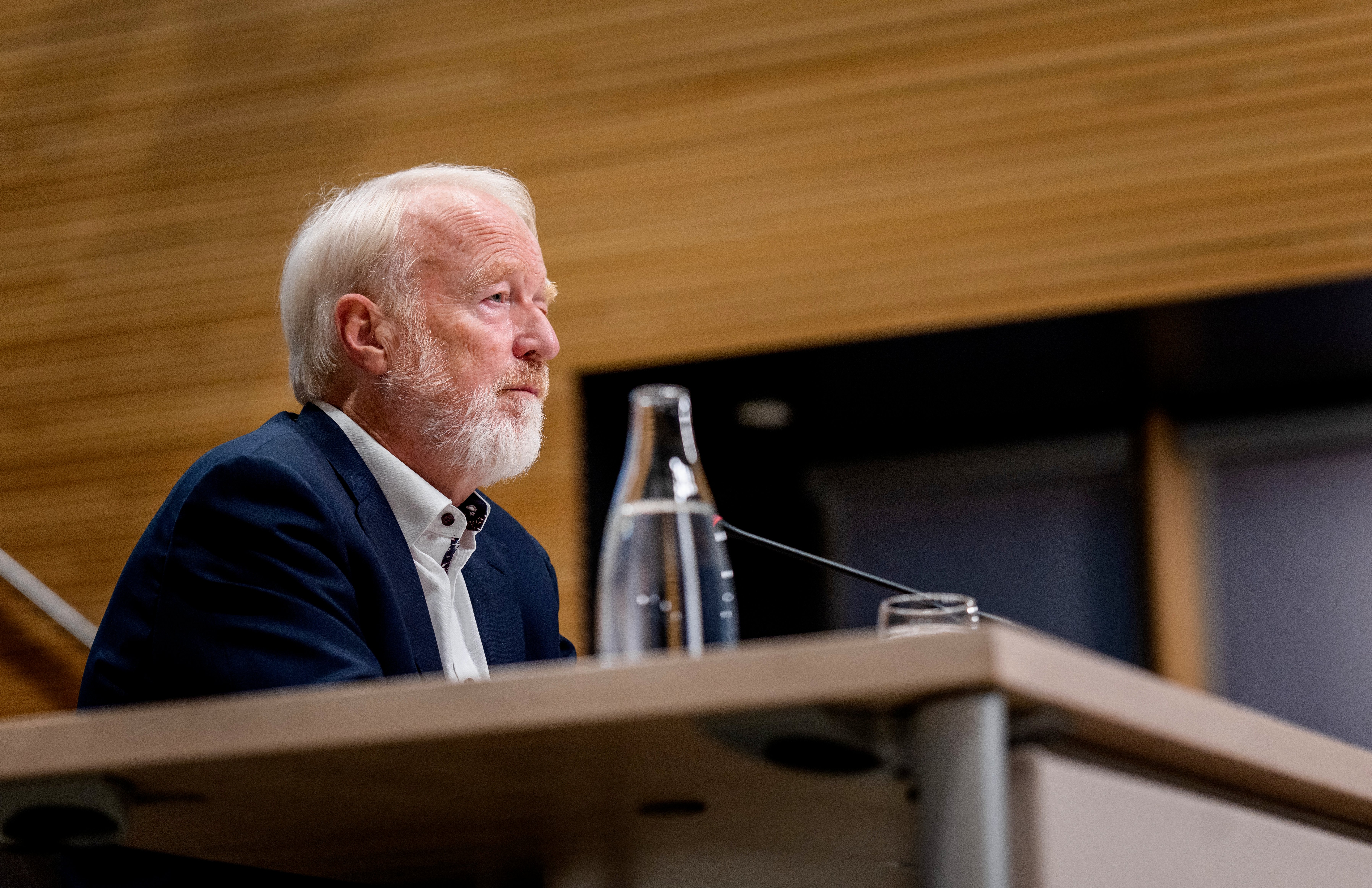
Jaap van Dissel “absolutely does not want to say” that the cabinet hid behind the OMT.
Photo Bart Maat
‘Fierce and passionate’
And that had disadvantages: “A wrong measure chosen too early can completely ruin things. I don’t know whether people in the Netherlands would support that. And if people don’t adhere to it, how do you get confidence back?”
Van Dissel made it clear that he had unwillingly become the figurehead for the fight against the virus. The cabinet had canonized advice from the OMT and always referred to the medical experts after unpopular decisions. “I certainly don’t want to say that the cabinet hid behind the OMT,” said Van Dissel, but it did make the position of the OMT and its chairman “vulnerable.”
At the end, Van Dissel wanted to say one more thing: if he came across “occasionally fierce and passionate”, it was because he felt “a lot of passion” for the subject.
Van Dissel is being interrogated a second time, about face masks, the curfew and the corona admission ticket, among other things.
Also read
Jaap van Dissel, fierce opponent of the face mask requirement, is accountable to the inquiry committee
:format(webp)/s3/static.nrc.nl/wp-content/uploads/2026/06/04121335/040626BIN_2034158053_dissel1.jpg)
:format(webp)/s3/static.nrc.nl/wp-content/uploads/2026/06/05115953/050626WEE_2034095510_dissel1.jpg)
Jaap van Dissel, former director of the RIVM Center for Infectious Disease Control, prior to the interrogation by the parliamentary corona inquiry committee.
Photo Bart Maat