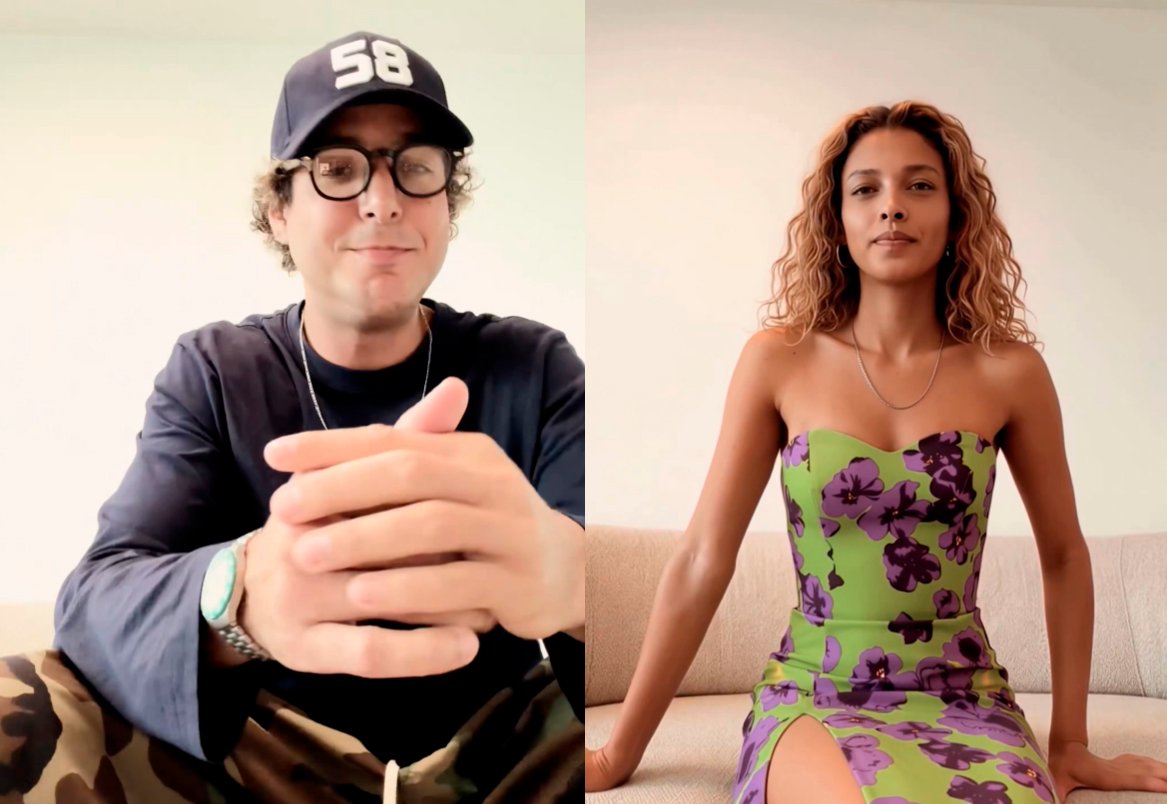
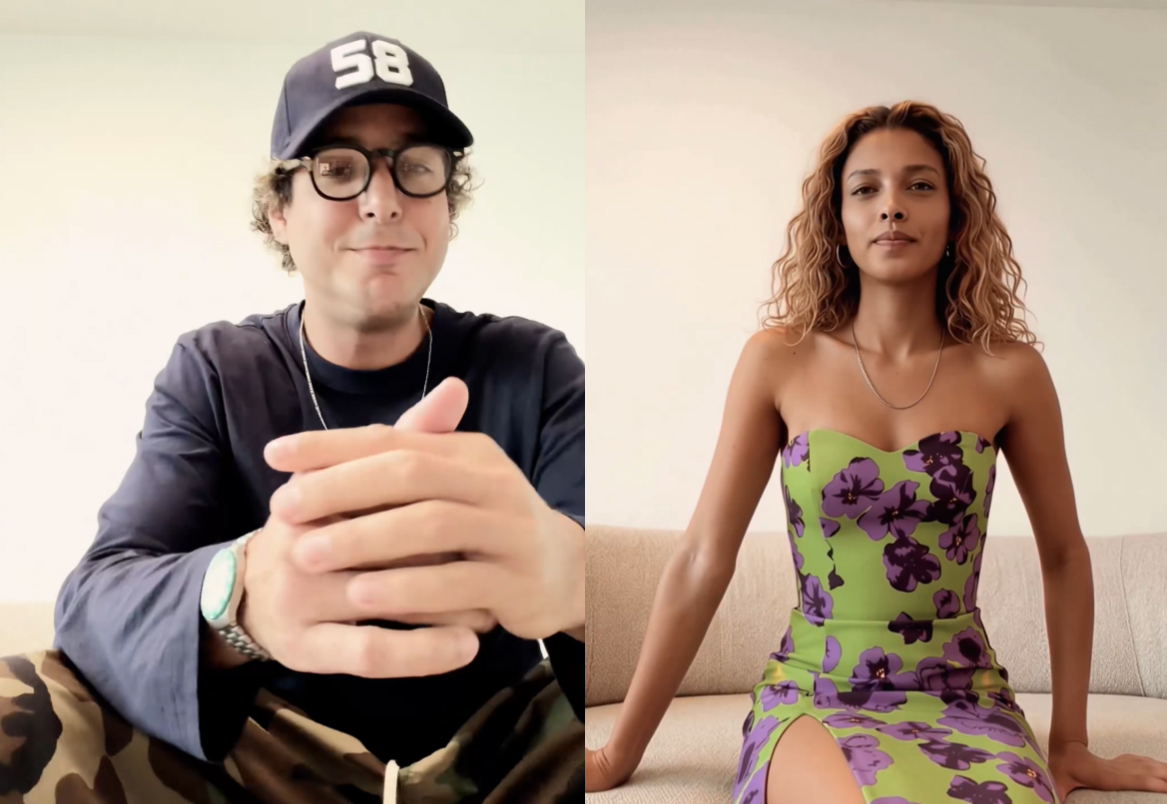
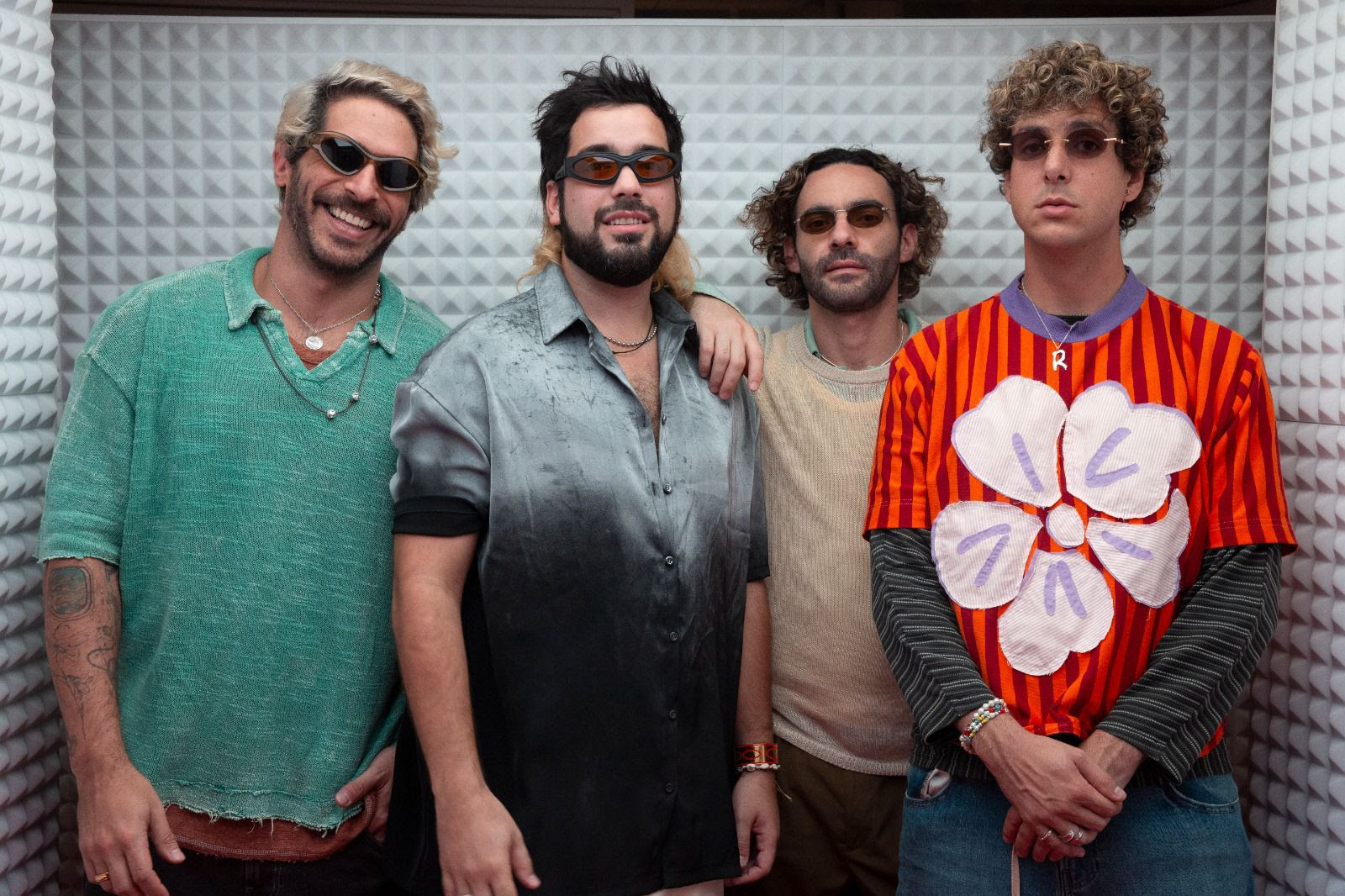
A hyper-realistic figure, digitally designed, that functions as the image of Rawayana’s tour | Photos
The irony did not go unnoticed. Rawayana, the Venezuelan band that turned a xenophobic insult against migrant women into an anthem of collective pride, this week is at the center of a controversy that involves, precisely, the representation of Venezuelan women.
Only this time there is no real woman involved.
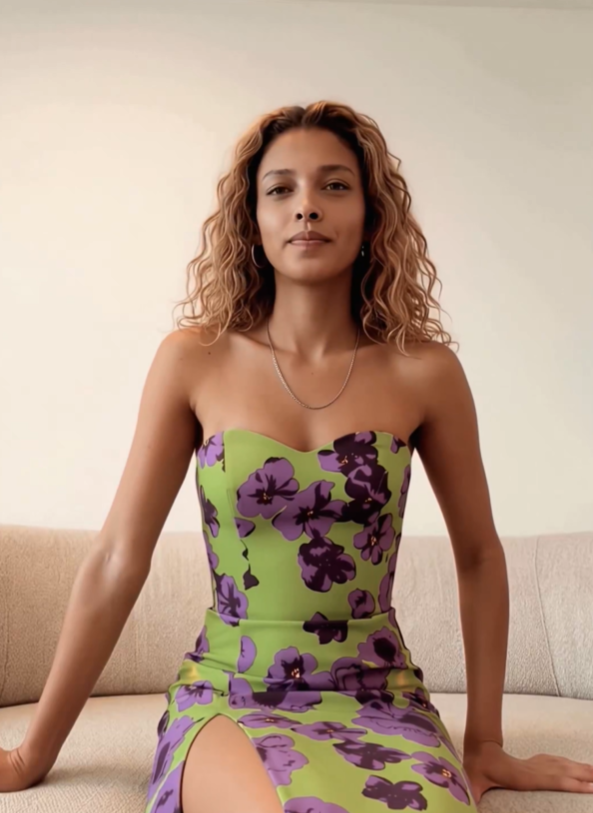
The grouping led by Beto Montenegro, winner of a Grammy and a Latin Grammycurrently on a world tour, uses in its promotional campaign for the Where is the After? WorldTour a female character generated with artificial intelligence who has been called “Homeland”.
The young woman is a hyper-realistic figure, digitally designed, that functions as the image of the tour. The revelation circulated on social networks and ignited a discussion that goes beyond aesthetics.
What was said on networks
Users on X indicated that Rawayana is “promoting the tour using a girl named Patria.”
The most forceful criticism was accompanied by an economic and cultural argument.
“I can understand the use of AI in creative cases or where the artist himself relies on his creative process, but this is already ridiculous. There is any Venezuelan shit that you can grab to advertise and you pay it without needing this.”
The comment garnered divided responses. Some users supported this, arguing that the use of AI in visual campaigns is a legitimate creative decision within the industry. However, The vast majority disagreed with the choice of Venezuelan artists.
There are two ways to interpret the motherland
One like a woman at the height of Santa Maria and another like Rawayana does: a generation of AI in a bikini
Rawayana built a good part of its recent cultural capital on the concept of the Venezuelan woman.
“Veneka”, a hit that earned her a Latin Grammy and unleashed the wrath of Nicolás Maduro’s government, was designed as a vindication of migrant female identity.
The group has maintained a strong stance of cultural resistance, using their platforms and even speeches at awards ceremonies to call for freedom and better conditions for their compatriots.
His music has also become an anthem of identity for the more than 7 million Venezuelans who were forced to migrate, redefining terms that were previously derogatory and turning them into symbols of pride.
So, the contrast between that message and the use of a virtual model where a real Venezuelan woman could be It is what fuels the discussion.
Rawayana and an industry that already knows the debate
The use of female figures generated with AI in commercial campaigns has been the subject of similar debates in recent months. Rawayana’s case is not unique.
In the fashion industry, for example, Guess? It has been using models created with AI for a couple of years. Last July, Mango introduced its first AI-generated campaign to promote clothing for teenagers. And in March 2023, Levi’s announced that it would begin testing AI-generated models to ensure greater diversity of body types and skin tones in its marketing.
The Rawayana thing deeply disappointed me. It is sad to see how in Venezuela it is almost impossible for thousands of artists to grow, play or make a living from their work, while the most recognized band in the country turns to AI to build part of its visual proposal.
Critics, and even fans, expressed concern about the facts and consider that these decisions are driven by costs rather than innovation.
Furthermore, they point out that when an artist builds his public narrative on the identity and representation of his community, the creative decisions of his campaign also read as statements.
In December 2024, Venezuelan President Nicolás Maduro accused Rawayana of “a humiliating attack against Venezuelan women”, which led to the cancellation of her tour of Venezuela.
Since then, the band has operated from exile.
The North American leg of his current tour, promoted by Live Nation and Rimas Nation, begins October 15 in San Francisco and includes stops in cities such as Atlanta, Toronto, New York, Chicago, Los Angeles and Miami.
Previously, the band will tour Europe in September with performances in Valencia, Milan, Zurich, Berlin, Amsterdam, Paris, London and Madrid. In total, The new shows expand the tour to almost 50 concerts.
The tour accompanies the release of Where is the After?album published at the beginning of 2026, which brings together 23 songs and has collaborations with Elena Rose, Servando y Florentino, Joaquina, Manuel Turizo, Carín León, DannyLux, Grupo Fronteraamong others.
She is Homeland and that is how Rawayana sees the Venezuelan woman | Photo
The question that remains open
The band has not spoken publicly about criticism of the use of Patria.
The discussion, however, raises a genuine tension that exceeds Rawayana: can an artist who makes cultural identity his creative banner delegate that identity to an algorithm when it comes to his commercial image?
Where does the aesthetic decision end and where does the responsibility with the community it represents begin?
I have no proof but I do have a strong suspicion that for the AI model that Rawayana made they used the likeness of Yulimar Rojas, it is like a beautified AI version of her, I imagine that to complement the joke that her name is Patria…
— Antonjorch ✨Available for Work✨ (@Antonjorch) April 14, 2026
The debate is still open. The tour too. AND Homeland, without ever having existed, He already takes up more space in the conversation than many real people who could have given him face.