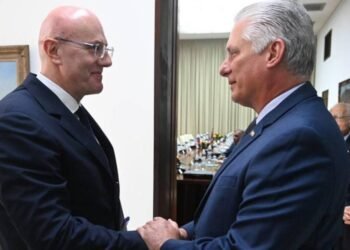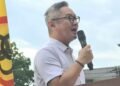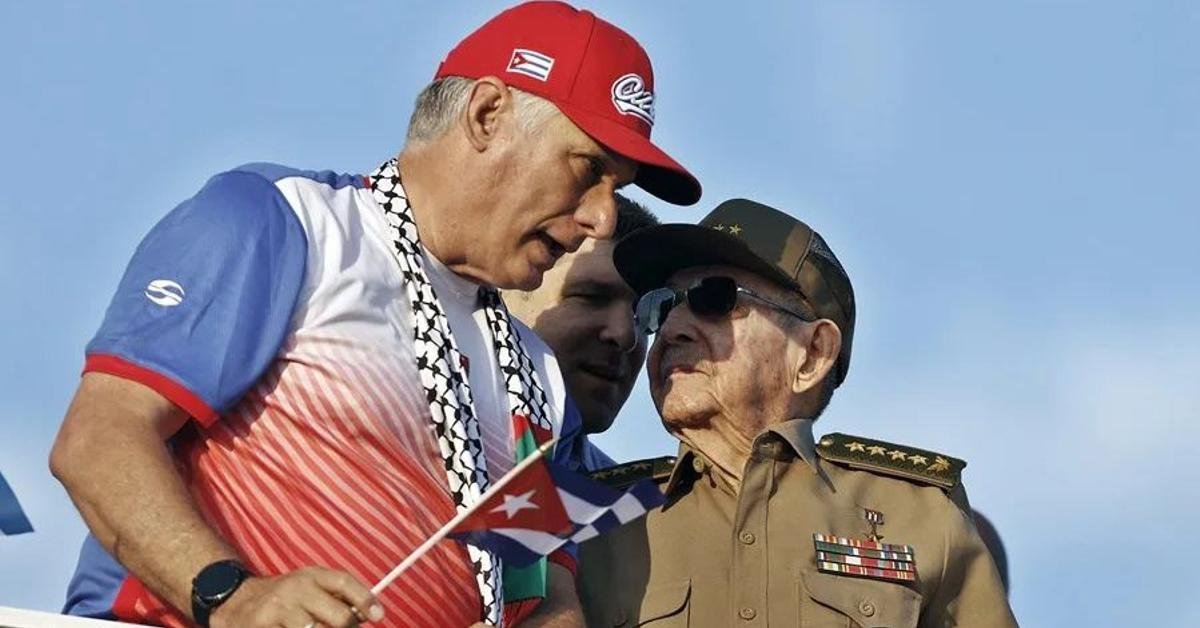
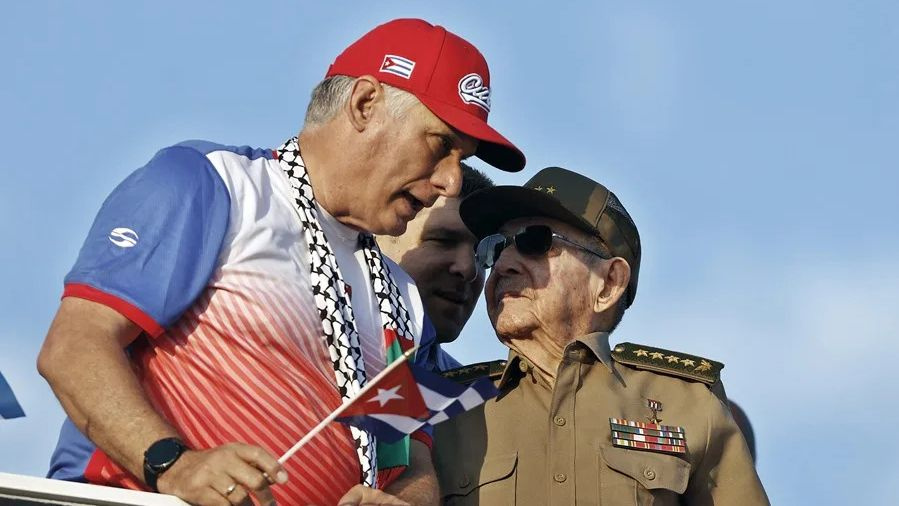
Havana/Washington’s new offensive against Havana aims this time directly at the family, political and military heart of the Cuban regime. The United States Treasury Department included this Thursday in his sanctioned list the ruler Miguel Díaz-Canel, his wife Lis Cuesta Peraza, her son, Manuel Anido Cuesta, and Alejandro Castro Espín, son of Raúl Castro. Raúl Alejandro Castro Calis, son of Castro Espín, was also sanctioned.
The measure, announced on June 4, incorporates the five names to the list of Specially Designated Nationals, which implies the blocking of any property or interest under US jurisdiction and prohibits US citizens, companies and banks from carrying out transactions with them. The decision is adopted under Executive Order 14404, signed by Donald Trump on May 1, which expanded the framework of sanctions against people and entities linked to the repression in Cuba or considered a threat to the national security and foreign policy of the United States.
The official list identifies Díaz-Canel as being born in Santa Clara on April 20, 1960. Lis Cuesta appears as being born in Holguín on March 28, 1971 and directly linked to the Cuban ruler. His son, Manuel Anido Cuesta, resides in Madrid, date of birth November 3, 1994 and place of birth in Holguín. In recent years, Anido has been seen in several official delegations alongside Díaz-Canel, although the Cuban Government has never publicly specified his position, his salary or the institutional functions he performs.
The list leaves out, however, Raúl Guillermo Rodríguez Castro, known as El Cangrejo
The inclusion of Alejandro Castro Espín has special political weight. Son of Raúl Castro, a senior official in the Ministry of the Interior and for years one of the least visible but most influential figures in the security apparatus, he appears in the registry of the Office of Foreign Assets Control (Ofac) with the alias “El Tuerto.” His son Raúl Alejandro Castro Calis was also added. With this, Washington not only hits the formal president of the country, but also a direct branch of the Castro family.
The list leaves out, however, Raúl Guillermo Rodríguez Castro, known as El Cangrejo, grandson of Raúl Castro and son of the late General Luis Alberto Rodríguez López-Callejas, head of Gaesa for years. The omission is striking because his name has been mentioned in recent months by US media as one of the interlocutors in discreet contacts between Washington and Havana.
The sanctions package also includes five Cuban entities: the Amistur Cuba SA travel agency; the Cuban Institute of Friendship with the Peoples; the Committees for the Defense of the Revolution; Minera La Victoria SA; and the Ministry of the Revolutionary Armed Forces. In the case of the latter, the measure reinforces the siege on the military framework that controls strategic sectors of the national economy, from tourism to foreign currency trade.
Executive Order 14404 authorizes sanctions against those who operate in sectors such as energy, defense, mining, financial services or security of the Cuban economy; against Government officials or directors; against persons responsible for serious human rights abuses or corruption; and also against adult relatives of already designated persons. The text allows for blocking assets, suspending entry to the United States and imposing restrictions on foreign financial institutions that facilitate significant operations for those sanctioned.
The risk, the Treasury specifies, extends to any entity in which these structures directly or indirectly own a stake equal to or greater than 50%.
The scope of the measure was reinforced with a new FAQ published by Ofac on the same day. FAQ 1258 warns that, as of June 4, the state conglomerate Gaesa, the Ministry of the Interior and the Ministry of the FAR are blocked under Executive Order 14404. The risk, the Treasury specifies, extends to any entity in which these structures directly or indirectly own a stake equal to or greater than 50%. It also warns that non-U.S. persons or companies, including foreign financial institutions, may be exposed to sanctions if they conduct transactions with designated persons or entities.
The warning is especially sensitive for foreign companies with operations in Cuba. The Island’s economy depends on companies, correspondent banks, shipping companies, payment processors, insurance companies and hotel chains that need to interact with state or military entities.
The decision comes at a time of strong financial pressure on the Cuban regime. In previous weeks, Washington had already imposed measures against officials of the security apparatus and organizations linked to the Ministry of the Interior. The inclusion now of Díaz-Canel, his family circle and figures from the Castro family raises the political level of the confrontation.