South Korea’s local elections on Wednesday stood out not only for their scale, but also for record figures that point to changing demographics, uneven competition and the sheer cost of running nationwide local polls.
Voters cast ballots to choose leaders across multiple levels of local government, including governors, mayors, education superintendents and local council members.
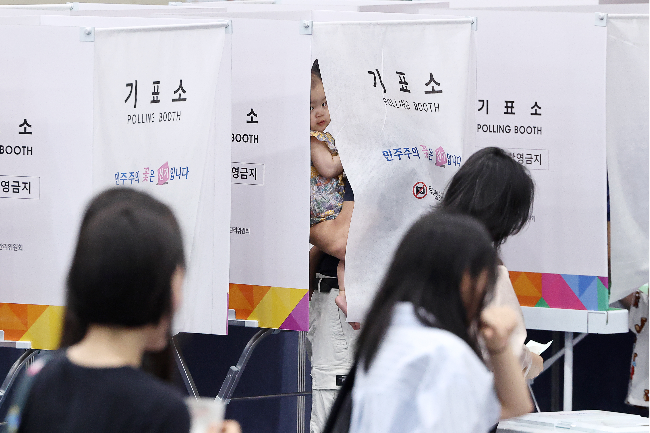
151,532 foreign national voters
The number of foreign nationals eligible to vote in this year’s local elections reached a record 151,532, up 18.7 percent from the 2022 local elections.
Foreign residents in South Korea can vote in local elections if they meet certain residency requirements, including holding permanent residency status for at least three years.
Although foreign voters still account for only 0.34 percent of the electorate, their growing presence reflects South Korea’s changing demographics. The foreign resident population reached 2.58 million as of October 2025, according to the Interior Ministry, whose figure include naturalized citizens.
The total number of eligible voters stood at 44,649,908, including 195,907 voters aged 18 and 19.
504 candidates uncontested
The National Election Commission said 504 candidates were expected to win without prevailing on the ballot due to a lack of competitors.
While the figure is below the record of 733 uncontested wins in the 1998 local elections, it is the highest level in recent years, raising concerns about declining competition in some local races.
Experts say strong regional party alignment can lead to repeated landslide victories by dominant parties, weakening electoral competitiveness. They also warn that uncontested races can undermine the election’s role in scrutinizing candidates and holding local power to account.
Education superintendent races see 3.6-to-1 competition
A total of 7,767 candidates competed for 4,241 posts in this year’s local elections, resulting in an overall competition rate of 1.8 to 1.
Education superintendent races recorded the highest level of competition, with 58 candidates vying for 16 posts across metropolitan cities and provinces, a ratio of 3.6 to 1.
Superintendent races have typically been shaped by efforts to consolidate candidates into two-way contests between progressive and conservative blocs. This year, however, some races became more fragmented due to failed candidate unification efforts and withdrawals of endorsements. Eight candidates ran in Seoul, while five competed in Daejeon.
Parliamentary by-elections were also held in 14 districts, following disqualifications and resignations linked to candidates running in the local elections. These races had a competition rate of 3.3 to 1.
1.25 trillion won election budget
The National Election Commission allocated nearly 1.25 trillion won ($817 million) for the local elections.
That is higher than the 386.7 billion won spent on last year’s presidential election and 439 billion won spent on the 2024 parliamentary election.
A significant portion of the budget, 42.6 percent, was set aside for campaign cost reimbursements. Candidates who receive at least 15 percent of the vote are eligible for full reimbursement, while those who receive between 10 percent and 15 percent can receive partial reimbursement.
The budget also covers election staff compensation, security operations, venue rentals and costs related to election disputes, which were set at about 13 billion won.
314,000 election personnel deployed
Around 314,000 personnel were mobilized to support the election process.
According to the National Election Commission, about 197,000 workers were assigned to 14,288 polling stations, which opened at 6 a.m. on Wednesday. Another 117,000 were deployed to 258 counting centers, where ballot counting began at 6:20 p.m. after polls closed.
forestjs@heraldcorp.com