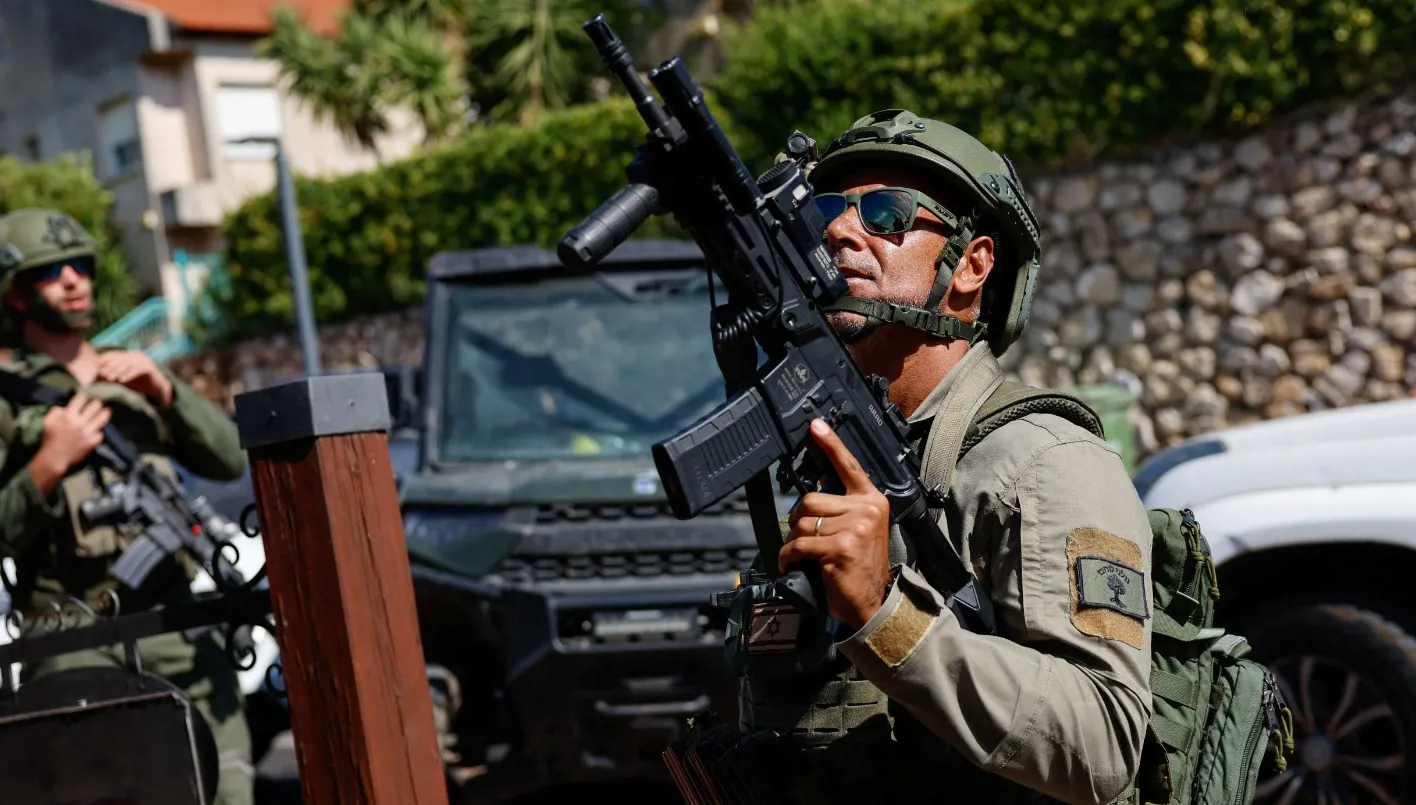
All eyes are on the Israeli Prime Minister’s decision Benjamin Netanyahu Expanding military operations in LebanonFrom occupying new sites in the south to threatening to target Beirut And the southern suburb. And while justifying Israel Its steps need to be prevented.”HezbollahIn order to restore its military capabilities, observers believe that the escalation goes beyond field calculations, and is also linked to the course of the American-Iranian negotiations and political and electoral considerations inside Israel.
Israeli Channel 12 revealed that Netanyahu held a small security meeting, the second in less than 24 hours, to discuss the transition from ground operations and control of field areas to a broader air campaign. On the other hand, international warnings are mounting about the dangers of the confrontation expanding, as it continues US Its efforts to push for a ceasefire between Lebanon and Israel, coinciding with the holding of a session of the UN Security Council at the request of France to discuss recent developments, especially the occupation Beaufort Castle.
America and the 60-day trap
Yoav Limor in “Israel Today” considered that Hezbollah’s escalation is not fleeting, but rather falls within familiar equations. From his point of view, if Israel has crossed the “permissible” lines, then the party has also done the same, which makes the current escalation likely to continue.
He pointed out that Hezbollah is trying to put pressure on decision-makers in Israel and deliver a message to the Lebanese government that the future of relations with Israel is not in its hands alone.
He felt that expanding operations Israeli army It may cause additional damage to Hezbollah, but it will not change the overall picture. Even potential field achievements will not change the complex security reality in the north.
He concluded that what is happening in the US-Iranian negotiations is still ambiguous, at a time when Tehran is seeking to include the Lebanon and Hezbollah file in any future understandings, allowing the party to restore its capabilities. On the other hand, Israel hopes that he will not respond Donald Trump For this proposal, while the American President tends to reach a temporary agreement with… Iran The ceasefire is extended for 60 days, in preparation for discussing controversial issues and reaching a permanent agreement.
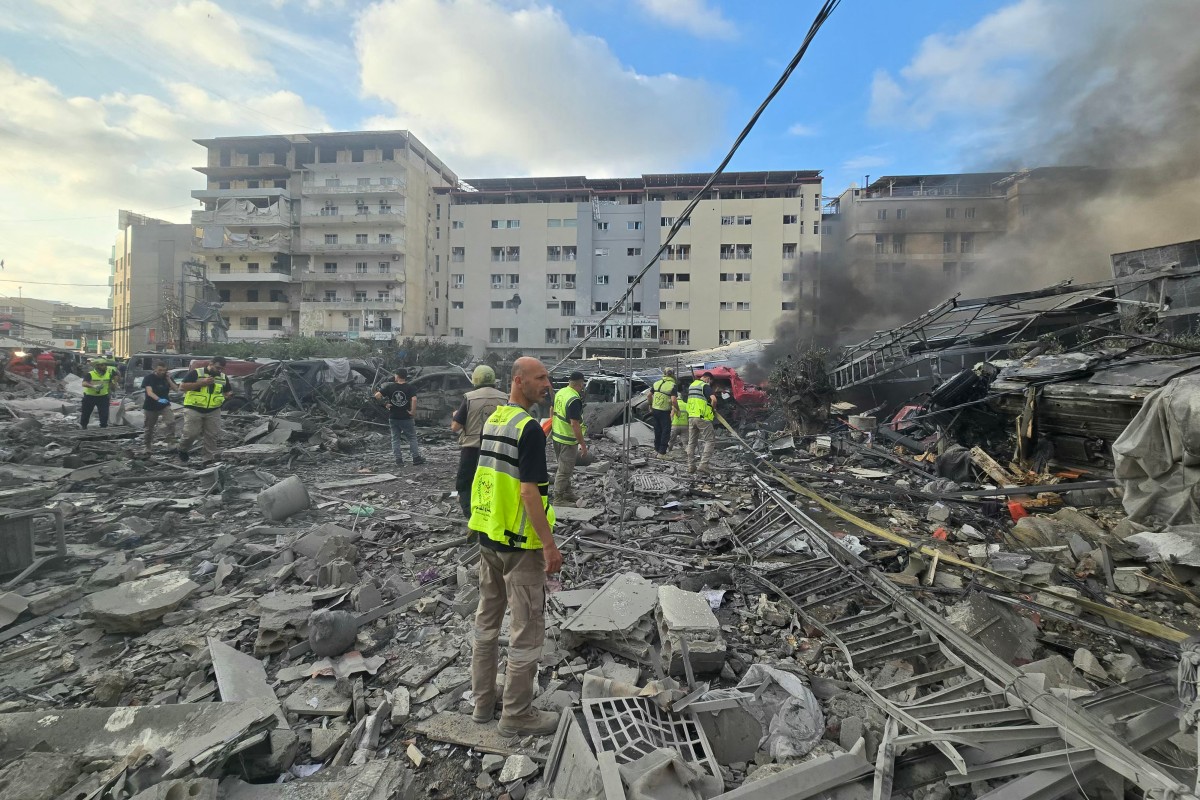
Members of the ambulance and civil defense teams inspect the damage at the site of an Israeli raid near a hospital in the city of Tyre, south of Lebanon. (AFP)
From the “yellow line” to the suburb
Yedioth Ahronoth’s military correspondent, Elisha Ben Kimon, explained that the Israeli army practically drew a new line of control known as the anti-tank defense line, and it includes 55 Lebanese villages whose residents were prevented from returning to them, which effectively turned the area into a security zone known as “Yellow line“.
He believes that the gap between the declared goals and the reality on the ground is constantly widening, which prompted Israel to move from targeting the south and the Bekaa to returning to attacking Southern suburb For Beirut.
In the same context, retired Brigadier General Guy Hazot, a researcher at the Institute for National Security Studies, revealed that 57% of Israelis support the establishment of a permanent security zone in South Lebanon. But he warned that recent developments showed Hezbollah’s continued ability to adopt guerrilla tactics, as well as deficiencies in planning the military operation and political divisions within Israel.
As for the military analyst at Haaretz, Amos Hariel, he considered that the occupation of Beaufort Castle would not eliminate the threat of drones, warning that field expansion might turn into a new exhaustion without achieving decisive results.
Netanyahu between negotiations and elections
In parallel, Avi Ashkenazi saw in Maariv that Israel is sliding towards a war of attrition whose end does not appear to be near, pointing to increasing criticism within the security establishment regarding the ability of the military operation to achieve its goals.
In his interview with Al-Nahar, analyst and expert on Israeli affairs, Nehru Jamhour, estimates that the declared goals of the escalation are related to preventing infiltration and confronting missiles and drones, but there are other political goals, which include using Lebanese territory as a pressure card at the negotiating table.
He added that Israel seeks to achieve two basic goals: separating the Lebanese file from the US-Iranian negotiations, and advancing the path of disarming Hezbollah or reducing its military presence south of the Litani through simultaneous Israeli and Lebanese pressure.
He pointed out that Netanyahu is moving on two parallel tracks: “The first is diplomatic, aiming to distance Lebanon from any regional understandings with Iran, and the second is military, based on intensifying field and political pressure on Hezbollah.”
Jamhour concludes that the electoral factor remains strongly present in Netanyahu’s calculations, as he seeks to turn the escalation in Lebanon into a political card that strengthens his internal position and gives him the image of a “firm leader” as the upcoming electoral elections approach.