NOT IMMEDIATE:
Taiwan has a chance to appeal the proposed 10 percent tariff before it starts, while other countries face a 12.5 percent tariff from the trade office
Taiwan is among 60 economies determined by the US to have failed to impose or enforce a ban on the importation of goods produced with forced labor, according to a notice released on Tuesday by the Office of the US Trade Representative (USTR), which proposed imposing an additional 10 percent or more tariff on them.
The USTR in a statement said that following an investigation, it had determined under Section 301 of the Trade Act of 1974 that the failure of the 60 economies to impose and effectively enforce a prohibition on the importation of goods produced with forced labor is “unreasonable” and “burdens or restricts” US commerce.
The probe, launched on March 12, came less than three weeks after the US Supreme Court struck down sweeping global tariffs imposed by US President Donald Trump, and it is widely seen as an attempt by the Trump administration to rebuild tariff pressure on trading partners.
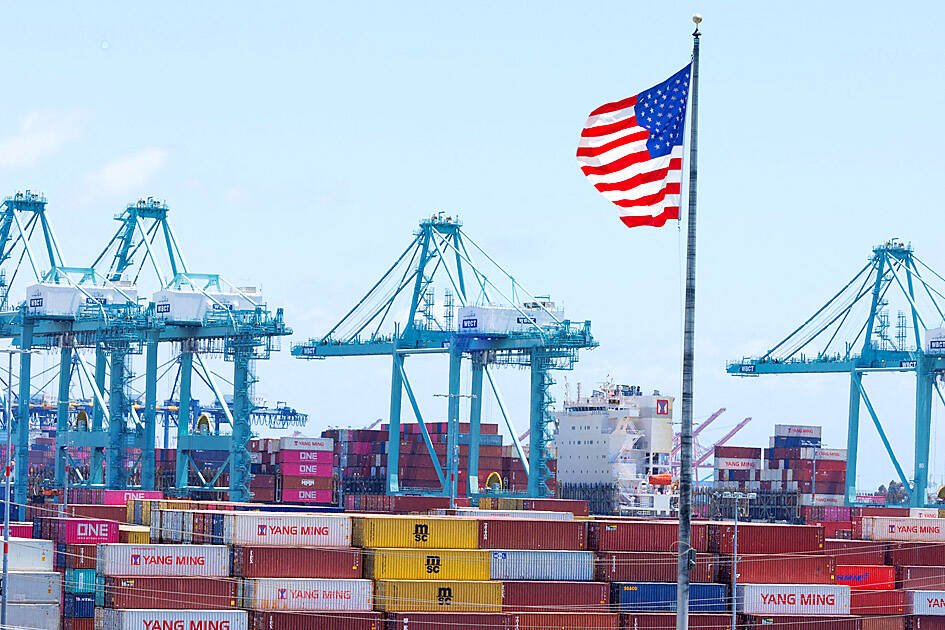
Photo: Reuters
According to the USTR notice, Taiwan has “undertaken commitments” to ban goods produced with forced labor in the Agreement on Reciprocal Trade (ART), which it signed with the US in February.
It is therefore grouped with economies that have made similar pledges in their respective ART, including Bangladesh, Cambodia, Indonesia and Malaysia.
Other economies in the category include those that have imposed — but not effectively enforced — an import ban on goods produced through forced labor, such as Canada, the EU, Mexico and Pakistan, as well as those that only imposed a “partial ban,” such as the UK.
In total, the office proposed imposing an additional 10 percent tariff on 14 economies, while the remaining 46 — including Japan, South Korea, China and India — that have “failed to impose and effectively enforce” a forced labor import prohibition could face a 12.5 percent tariff, based on the office’s recommendation.
An accompanying report released by the USTR the same day stated: “Taiwan appears to be taking steps to implement its ART commitment to the United States with respect to prohibiting the importation of goods produced with forced labor.”
“However, at this time, Taiwan does not forbid legally the importation of goods produced with forced labor,” the report said.
Taiwan’s government noted that the USTR’s proposals are not final and that it can dispute the recommended action within five days after a hearing held by the USTR on July 7.
The recommended tariff rate on Taiwan would not take immediate effect and would not be stacked upon existing tariffs under Section 232 of the Trade Expansion Act of 1962, the Executive Yuan said in a statement.
The Executive Yuan said the results of the Section 301 probe would be announced late next month and expressed confidence that Taiwan would receive relatively favorable treatment among countries running trade surpluses with the US, while retaining the favorable terms it has secured so far in Taiwan-US trade talks.