As an exit poll projected Democratic Party of Korea candidate Chong Won-o would defeat incumbent Seoul Mayor Oh Se-hoon on Wednesday, political analysts said the race underscored Seoul Mayorship’s outsized role in Korean politics.
The powerful local office can serve either as a national launchpad or as a counterweight to the sitting administration.
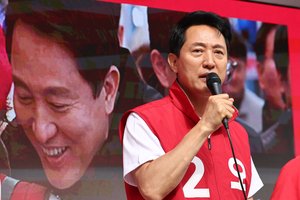
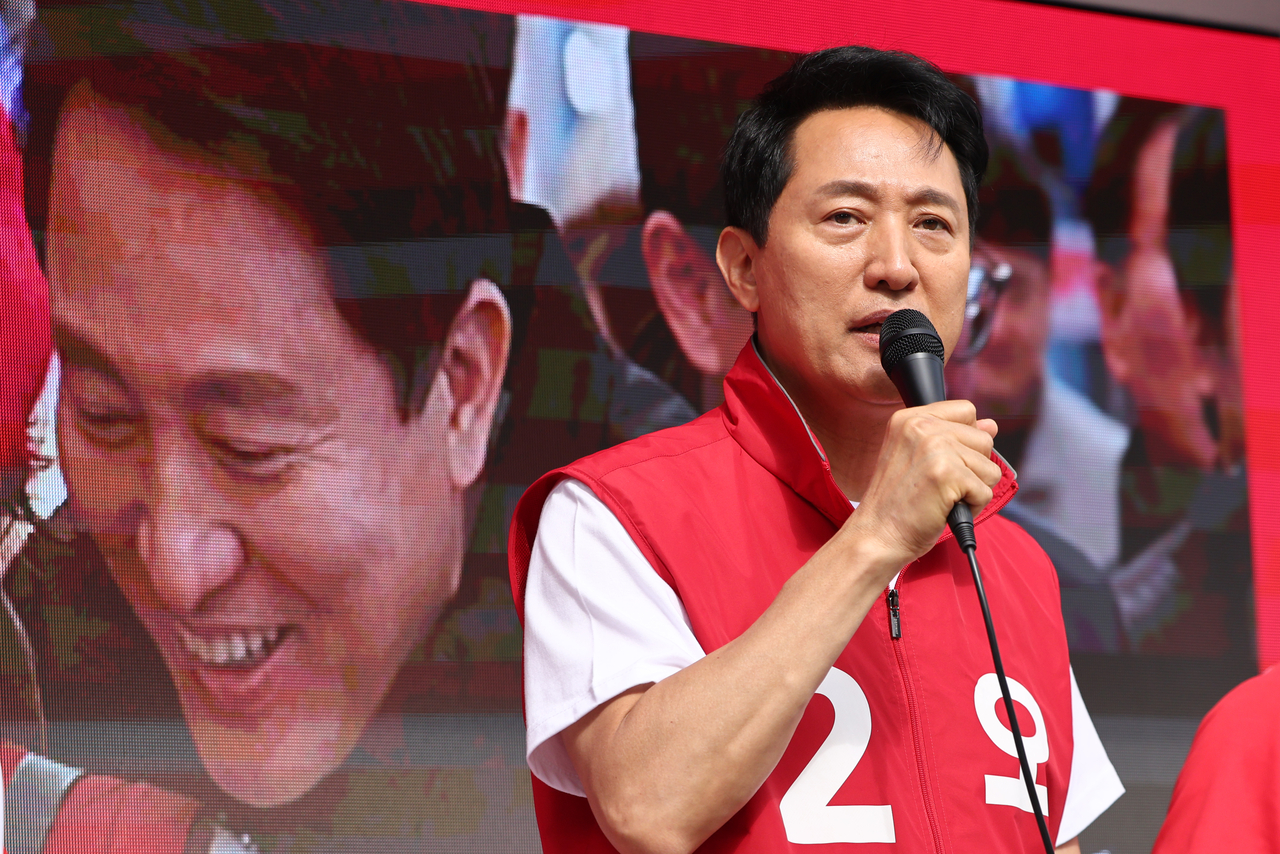
The exit poll conducted by KBS, MBC and SBS for this year’s local elections showed Chong leading with 51.4 percent support, compared with 46.0 percent for Oh, who was seeking a fifth term as mayor of the capital. As of publication, vote counting was still underway and no winner had been officially declared.
Seoul mayor is a local post, but the office has long carried national political weight. Former Seoul Mayor Lee Myung-bak went on to win the presidency, while both Oh and the late Park Won-soon were regarded at various points as potential presidential contenders.
The capital has also frequently served as a barometer of national sentiment. A Seoul mayor from the same party as the president can reinforce the ruling bloc’s governing momentum, while an opposition mayor can become a visible counterweight to the administration.
If Chong’s lead is confirmed, the result would place Seoul City Hall under the control of the same political bloc as the Lee Jae Myung administration.
In contrast, former Seoul mayor Park spent much of his time in office (2011-2020) with conservative presidents Lee Myung-bak and Park Geun-hye. Former President Lee Myung-bak was in office from 2008 to 2013, and Park Geun-hye served from 2013 to 2017. Oh’s third and fourth Seoul mayor terms — from 2021 to present — overlapped with liberal former President Moon Jae-in and conservative Yoon Suk Yeol.
Though Seoul’s mayor and the sitting president have not always belonged to opposing parties, the capital has frequently served as a political counterweight to the government of the day. Analysts said unified control of both the presidency and the country’s largest city could strengthen the ruling camp’s political momentum at a time when Lee seeks to consolidate support in the early years of his term.
That is why the exit poll immediately fueled debate over what either outcome would mean not only for Seoul, but also for the Democratic Party, the People Power Party and the next presidential race.
“Losing Seoul would mean surrendering one of the conservatives’ most important and reliable political strongholds,” said Choi Jin, head of the Institute of Presidential Leadership. “The conservatives would lose their most important political base while demands for party reform would grow much louder.”
Choi predicted that an Oh defeat could strengthen calls within the People Power Party for sweeping reforms, with the incumbent mayor potentially emerging as a leading voice in that debate.
Park Sang-byeong, another Seoul-based political commentator, offered a similar assessment, arguing that the defeat of a sitting Seoul mayor would be interpreted as a sign that conservative forces had failed to maintain support in the capital.
“Such a result would likely intensify calls for reform and restructuring within the conservative bloc,” Park said. He added that Oh’s defeat could trigger broader public demands for a reorganization of conservative politics.
The projected loss also carries implications for the next presidential race, analysts said.
Park noted that Oh has long been viewed as one of the conservative camp’s most viable presidential hopefuls. “A defeat would remove one of the conservatives’ most prominent potential candidates and create uncertainty over who would emerge as the standard-bearer for the party in the next presidential election,” he said.
Choi likewise suggested that the race was less a referendum on the individual candidates than a reflection of broader political currents.
“The decisive factor was not the center vote but public evaluations of the Lee administration’s first year in office,” he said, arguing that the Seoul race was shaped more by larger political trends than by factional dynamics within either party.
On the other hand, a win by Oh would likely reshape the political landscape ahead of the next presidential election while dealing a significant blow to the Lee administration, political analysts said.
Choi said an Oh victory would immediately elevate him to the top tier of potential presidential contenders within the conservative camp, and would be interpreted as a sign of growing public dissatisfaction with the government and the ruling party.
Park likewise argued that an Oh victory would carry implications far beyond Seoul City Hall, saying it would deliver a “considerable political shock” for the ruling bloc while strengthening Oh’s standing as a leading conservative figure.
Meanwhile, at Chong’s campaign headquarters in central Seoul, supporters erupted in cheers as the exit poll results were announced, with lawmakers and campaign officials applauding and embracing one another. Campaign aides, however, cautioned that the official vote count had yet to be completed.
The mood was markedly different at People Power Party headquarters in Yeouido. Party leaders watched the exit poll broadcast in silence after projections showed the Democratic Party leading in key mayoral and gubernatorial contests nationwide.
The conservative party also voiced frustration over ballot shortages reported at several polling stations in Seoul earlier in the day, with senior officials demanding an investigation into the election management process.
While the final outcome remained uncertain as of Wednesday evening, the exit poll has already intensified scrutiny of Seoul’s role in the national political landscape — and of how the capital’s vote could shape party leadership battles, reform debates and the road to the next presidential election.
mkjung@heraldcorp.com