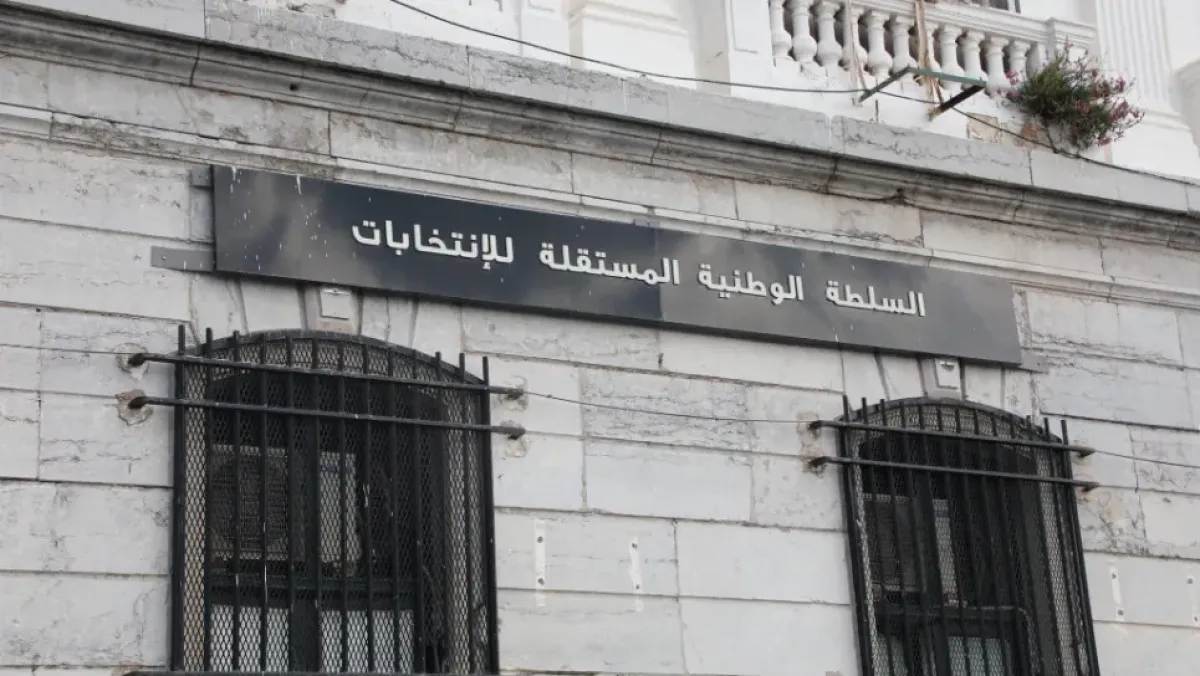
The decisions to drop a number of candidates from the legislative elections sparked mixed reactions, ranging from shock, self-restraint, or breaking their silence to defend their positions and clarify the backgrounds of the decisions to reject their candidacy files.
Despite the pain of the moment and the enormity of the loss, a number of those excluded from the electoral race did not hesitate to reveal the reasons for their exclusion without complications or embarrassment, through blog posts and public statements on social media platforms.
Parliamentarian Halim Ben Sherif (Oum El Bouaghi) published three successive blog posts on his personal account, in which he addressed the decision to exclude him from the candidacy, stressing that this would not deter him from continuing his activity.
The previous framework in the education sector explained that the reason for the rejection, according to what was stated in the document it received, was based on the provisions of Article 1 of the Organic Law related to the electoral system and related to the ethics of political life.
The concerned person explained that he was surprised by the presence of additional explanation or referral to other legal articles that he considered inconsistent with the basis on which the decision was based, expressing his reservations regarding the method of reasoning.
He added that he will initiate appeal procedures before the competent judicial authorities, considering that the documents in his possession are sufficient to prove his point of view during the appeal stage before the Court of Appeal in Constantine, noting that his file is with his lawyer, and that he reserves the right to reveal all the details in the event that he is not treated fairly, according to what was stated in his blog post.
In another context, Representative Suleiman Zarqani published a blog post on his personal account, in which he considered that the decision to exclude him from the candidacy was based on a “discretionary administrative justification” related to “questioning the credibility of the state (government) in serving the citizen.”
He explained that, after years of parliamentary practice within the legislative institution, he considers that the representative’s oversight role is based on taking sides with citizens’ concerns and holding the executive branch accountable within the framework of the constitution, wondering about the possibility of this being considered skepticism that empties parliamentary work of its content, as he put it.
Representative Ben Omar Fawzi (Tlemcen) wrote a lengthy post in which he discussed the decision to exclude him from the candidacy, indicating that his file was not accepted by the Independent National Election Authority in accordance with established procedures, and that the reason for the rejection was due, according to him, to observations related to a suspected connection to financial and business circles, which he denied.
He explained that he had a career in trade and agriculture before assuming the responsibility of mayor of Hammam Bougrara (Mughniyeh) for three terms (2007-2021), before being elected as a deputy to the National People’s Assembly in 2021, stressing that he performed his duties within the framework of serving citizens.
His post attracted hundreds of comments, with commentators saying that “positions do not last, but the impact remains,” and those who believed that “political accountability includes everyone,” in addition to other supportive comments that praised his experience and his local path, while the former MP, Ramadan Taazibt, pointed out an incident related to a female candidate whose file was rejected due to what was described as “inappropriate behavior” by an administrative committee, which resulted in her husband resorting to the judiciary to request a divorce without official confirmation of these data so far.